Add Row
Add Element

Add Element
Moss Point Gulf Coast Tech
update

Gulf Coast Tech

update
Add Element
  • Home
  • About
  • Categories
    • Tech News
    • Trending News
    • Tomorrow Tech
    • Disruption
    • Case Study
    • Infographic
    • Insurance
    • Shipbuilding
    • Technology
    • Final Expense
    • Expert Interview
    • Expert Comment
    • Shipyard Employee
  • Mississippio
July 15.2025
2 Minutes Read

Australia Takes Strong Action Against Illegal Sea Cucumber Poaching

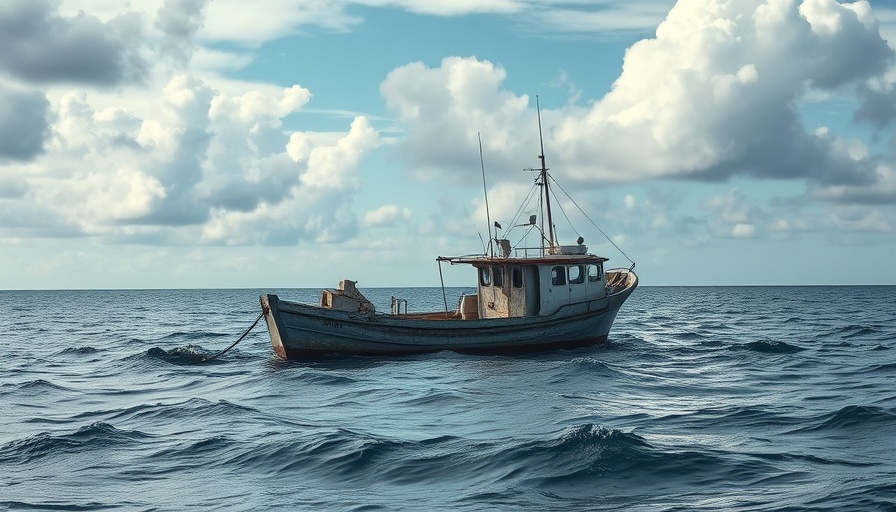
Australia fines Indonesian sea cucumber poachers boat detained in ocean

Understanding Australia's Stance on Illegal Fishing

Australia has recently taken a firm stance against illegal fishing with notable repercussions for those caught violating its waters. The conviction of nineteen Indonesian nationals for illegally fishing in the country's waters is a reflection of the government's commitment to protecting marine biodiversity and enforcing environmental laws. These individuals were apprehended in two separate incidents involving illegal vessel operations in the Northern Territory's Cobourg Marine Park and near Maningrida.

Actions Taken by Authorities

On June 22 and June 25, 2025, the Australian Border Force (ABF) identified and intercepted three Indonesian fishing vessels that violated the Fisheries Management Act 1991. The authorities confiscated over 130 kg of sea cucumbers, alongside 390 kg of salt and other fishing equipment. The vessels were promptly destroyed at sea, underscoring Australia’s zero-tolerance policy towards illegal harvesting. Each vessel’s master received a hefty fine of A$6,000, while crew members were fined A$3,500. The fines also carry serious implications: non-payment could lead to additional imprisonment.

A Collaborative Approach with Indonesia

This incident is not isolated; it represents a broader struggle against illegal fishing in the region. Australian authorities are actively collaborating with the Indonesian government to combat this issue at its roots. Initiatives include disseminating educational materials and leveraging social media to communicate the legal consequences and ecological importance of sustainable fishing practices. By engaging directly with fishing communities in Indonesia, Australia aims to foster a culture of compliance and stewardship over shared marine resources.

Current Trends in Marine Resource Management

With the global demand for seafood on the rise, illegal fishing remains a significant issue threatening the ecological balance and the livelihoods of legal fishers. According to the UN’s Food and Agriculture Organization (FAO), approximately one-third of global fish stocks are overfished, and illegal activities are a major contributor to this decline. Australia's proactive measures could serve as a model for other nations grappling with similar problems.

Public Perception and Community Impact

For many, fishing is not just an occupation but a vital aspect of their cultural heritage and community sustenance. The fishermen involved in these illegal operations may be driven by economic necessity, highlighting a complex intersection of poverty and environmental protection. There's an increasing awareness that sustainable fishing should harmonize with local livelihoods, pushing for a conversation about how to support legitimate fishing industries while protecting marine habitats.

Looking Forward: Future Implications and Commitment

The legal actions against the Indonesian nationals reflect a broader strategy encompassing both enforcement and education. As Australia continues to fine and deport illegal fishers, crucial conversations surrounding the sustainability of marine resources and their management will evolve. The integration of local communities in these discussions will be paramount, as understanding their needs and challenges will lead to more effective solutions. Australia’s commitment to protecting its waters can potentially inspire a wave of change towards sustainable global fishing practices.

Trending News

0 Comments

Write A Comment

*
*
Related Posts All Posts
01.17.2026

Revolutionizing Maritime Operations: Discover How CG-RAPTOR Transforms Coast Guard Technology

Update Introducing CG-RAPTOR: A New Era for Coast Guard Strategy The U.S. Coast Guard has taken a substantial leap forward in maritime operations with the launch of its Office of Rapid Response and Prototyping (CG-RAPTOR). This new initiative, unveiled on January 16, 2026, aims to streamline the implementation of innovative technologies in response to emerging operational needs. It offers a fresh perspective on how the Coast Guard is evolving to meet the challenges posed by a rapidly changing maritime landscape. Accelerating Technological Innovation At the heart of CG-RAPTOR's mission is the acceleration of the “idea-to-operations” cycle. With capabilities to prototype and deploy solutions within just 30, 60, or 90 days, CG-RAPTOR is setting a new standard for rapid technological response. This contrasts sharply with traditional military development processes, which often span years. Instead, the Coast Guard is now able to engage with operators and industry experts to quickly deliver vital tools that enhance operational readiness and effectiveness. Supporting Force Design 2028 CG-RAPTOR is a crucial component of the Coast Guard's Force Design 2028 initiative, which is aimed at reshaping the organization's approach to maritime challenges. Under the leadership of Secretary of Homeland Security Kristi Noem, this initiative not only transforms operational tactics but also influences broader business processes within the agency. By allowing for experimentation with new technologies before committing to substantial investments, CG-RAPTOR ensures the Coast Guard remains agile and responsive to national security needs. Recent Advances and Immediate Impact In just the first 150 days since its inception, CG-RAPTOR has introduced unmanned systems, advanced personnel management tools, secure communications platforms, and real-time readiness tracking features. These innovations have a significant impact on tactical operations, facilitating improved communication and decision-making in high-pressure situations. Particularly noteworthy is the upcoming demonstration in San Diego, where personnel will witness advancements in sensor data integration and video feeds, enhancing situational awareness on the ground. Historical Context: A Year of Transformation The launch of CG-RAPTOR follows a historic year for the Coast Guard, characterized by a remarkable increase in operational achievements. In fiscal year 2025, the service set a new record by seizing 510,000 pounds of cocaine, demonstrating its pivotal role in combatting drug trafficking while enhancing maritime safety and security. Additionally, surpassing recruiting goals with over 5,200 new active-duty members marks a revitalization within the ranks, the highest since 1991. Voices from Within: Empowering Coast Guard Personnel Importantly, CG-RAPTOR encourages innovation from within through its CG Ideas@Work platform. This initiative invites Coast Guard members to contribute their insights and solutions, fostering a culture of collaboration and innovation that enriches maritime defense capabilities. Such inclusivity could potentially lead to unforeseen breakthroughs, proving invaluable as the agency navigates future operational landscapes. Looking Ahead: Future Predictions and Trends No doubt, CG-RAPTOR is a transformative initiative that could redefine maritime defense strategies. As the Coast Guard continues to embrace rapid prototyping and technological advancements, we can expect further integration of unmanned systems and advanced analytics in operations. The increased reliance on technology not only enhances tactical performance but also prepares the Coast Guard for addressing emerging threats, such as cybersecurity challenges and escalating tensions in contested maritime areas. Conclusion As CG-RAPTOR stands at the forefront of the U.S. Coast Guard's evolution, its impact is poised to be felt well beyond immediate operational enhancements. The emphasis on swift adaptation aligns perfectly with the demands of modern maritime environments, setting the stage for future innovation and operational excellence. The ongoing efforts in redefining maritime defense should inspire not just the Coast Guard, but all sectors invested in national security and public safety to continue seeking innovative pathways and collaborations in the bid for a safer tomorrow.

01.15.2026

Rising Subsea Cable Risks: Navigating Geopolitics and Bathymetry

Update Understanding the Criticality of Subsea CablesIn the digital age, subsea cables represent the backbone of international communication, carrying approximately 99% of global data traffic. As tensions around the world grow, the security of these cables has become a focal point. Recent research highlights the dual threats faced by these cables: natural phenomena and geopolitical maneuvers. Indeed, incidents in areas like the Baltic Sea and Pacific regions suggest that malicious activities, whether orchestrated by state actors or utilizing non-discriminatory tactics like anchor dragging, are on the rise.The Intersection of Bathymetry and GeopoliticsWhile bathymetric factors such as water depth certainly impact the vulnerability of subsea cables, the geopolitical landscape often dictates the real risks presented. Cables installed in shallow waters or near contentious regions are particularly susceptible to interference, especially during periods of heightened tension. As the lead researcher, Brendon J. Cannon, notes, landing stations, positioned for better terrestrial connectivity, inadvertently become targets for sabotage due to their accessibility.Strategies for Mitigating RisksTo counter rising threats to subsea cables, experts recommend a robust framework of strategic policies. Measures such as adopting tiered security postures and enhancing early warning systems for “gray zone” actions are pivotal. Such strategies enable vulnerable regions to address weaknesses proactively, improving their defense against both cyber and physical attacks.The Role of Cable ResilienceAs threats evolve, so too must our approach to managing them. The ISSInsikt Group emphasizes that enhancing cable redundancy—through diversification of cable routes and improving repair capacities—must be prioritized in order to safeguard global connectivity. Vulnerable regions, especially those with limited repair capabilities or redundancies, face the highest risk of prolonged outages. As illustrated by recent incidents, better preparedness can significantly mitigate the impact of disruptions.Future Insights: A Geostrategic Battle GroundThe increased focus on protecting subsea cables also reveals a deeper geopolitical struggle. In regions where multiple national interests collide, the cables serve not just as conduits for communication but as potential leverage points. The complexity of international regulations and permitting continues to be a pain point that could exacerbate the fallout of geopolitical tensions, exemplified further by the legal environment in the Asia-Pacific region.Building a Secure FutureStakeholders, from governments to private enterprises, must collaborate to reinforce the infrastructure supporting subsea cables. The recommendations provided by policy experts, grounded in comprehensive research, outline practical steps to develop a resilient network. This convergence of public-private initiatives can position nations to better navigate the equally tumultuous landscape of digital communication security.

01.14.2026

Navigating New Maritime Risks: Russia Urges Focus on Caribbean Threats

Update Russia's Blink-and-You'll-Miss-It Proposal to the UN In a world increasingly defined by new maritime threats, a bold suggestion from Russia during a recent United Nations Security Council meeting has raised eyebrows across the globe. Russia's Deputy UN Ambassador Anna Evstigneeva recommended that the Security Council divert its focus from monitoring threats to maritime commerce in the Red Sea, shifting instead to the Caribbean, where tensions involving the United States and Venezuela have escalated dramatically. The Unfolding Crisis in the Caribbean Since September 2025, the U.S. has intensified military operations off the coast of Venezuela, targeting alleged drug traffickers. This operation, which resulted in over twenty strikes and the deaths of more than eighty people, has transformed the southern Caribbean into a contested environment, compelling shipping lines to reconsider their routes and risk assessments. As noted in a parallel analysis on the Caribbean's maritime dynamics, the U.S. military raid on Venezuela not only removed President Nicolás Maduro but also sent shockwaves through the region. Shipowners and insurers now face risks unprecedented in the last few decades, as control over shipping routes, legal challenges, and political power struggles intertwine. The Reality Behind Warnings of Maritime Chaos Russia's suggestion to refocus the UN's vigilance speaks volumes about its support for an increasingly isolated Venezuela confronting alleged U.S. aggression. The Kremlin has pledged solidarity with Maduro’s regime amid fears that continued U.S. military presence could disrupt global maritime trading, with broader geopolitical ramifications. Meanwhile, Venezuela has retaliated against U.S. action by claiming that it would counter any threats with sufficient military force, branding American actions as "state-sponsored piracy." This declaration hints at a potential rise in hostility on the high seas, as pro-Maduro groups may attempt to impose their will on commercial shipping. Potential Ripple Effects of Increased Vigilance For those following maritime trends, the UN's continued monitoring of the Red Sea is seen as crucial due to the Iran-aligned Houthi group's long-standing threats to shipping; nonetheless, the emerging instability in the Caribbean cannot be overlooked. Analysts warn that significant shifts in shipping dynamics could lead to increased insurance premiums, tighter compliance requirements, and rising operational costs. As shipping companies weigh the risks associated with routes through the Caribbean versus longer routes that avoid high-tension areas, they must also consider how U.S. military strategy could impact global supply chains. The decisions made today could lead to lasting ramifications in energy prices and food security as the geopolitical landscape evolves. Looking Ahead: New Geopolitical Realities One can only ponder what the United Nations’ response will be to Russia's proposal and the escalatory situation in the Caribbean. The convergence of military action and maritime commerce safety poses a dual challenge that will echo across trade routes as nations navigate their strategic interests. With the U.S. firmly entrenched in its operations and Russia issuing threats to bolster Venezuela’s defenses, international maritime stability hangs in a precarious balance. What This Means for Shipping Stakeholders The prospect of navigating these turbulent waters will demand significant recalibration of risk management practices. For operators, insurance implications following the U.S. actions and Russia's response will require an agile approach to logistics. Ultimately, global shipping stakeholders must stay informed and adaptable in a landscape marked by shifting alliances and threats. The situation is rapidly evolving, and companies keen on maintaining smooth operations will need to consider comprehensive strategies to mitigate risks.

Terms of Service

Privacy Policy

Core Modal Title

Sorry, no results found

You Might Find These Articles Interesting

T
Please Check Your Email
We Will Be Following Up Shortly
*
*
*