
Add Row
Add Element

Add Element
Moss Point Gulf Coast Tech
update

Gulf Coast Tech

update
Add Element
  • Home
  • About
  • Categories
    • Tech News
    • Trending News
    • Tomorrow Tech
    • Disruption
    • Case Study
    • Infographic
    • Insurance
    • Shipbuilding
    • Technology
    • Final Expense
    • Expert Interview
    • Expert Comment
    • Shipyard Employee
  • Mississippio
October 28.2025
3 Minutes Read

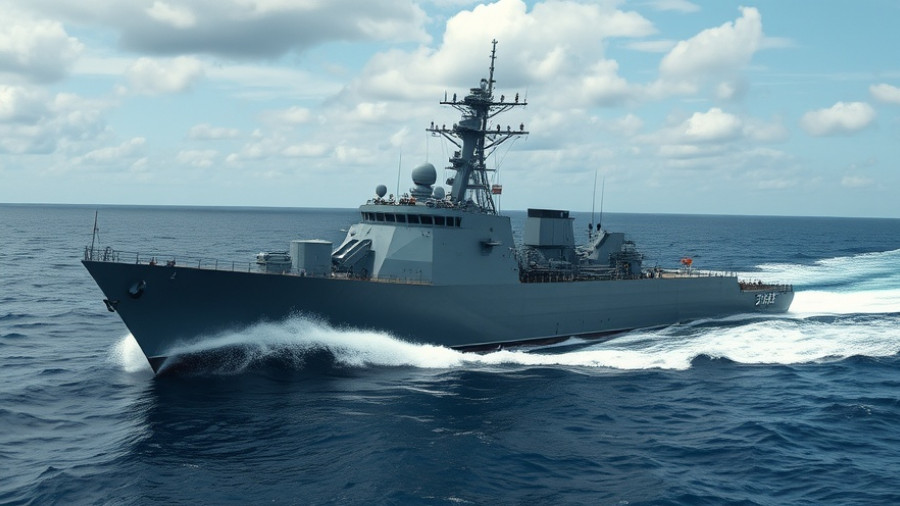
Celebrating HII's Accomplishments in Naval Shipbuilding: Ted Stevens Sea Trials

HII destroyer at sea during sea trials, showcasing power and capability.

HII’s Commitment to Innovation in Shipbuilding

The successful completion of the second builder's sea trials for the Ted Stevens (DDG 128) guided missile destroyer is a significant milestone in naval engineering and innovation. Conducted by HII’s Ingalls Shipbuilding unit in the Gulf of America, these trials not only showcase the technical prowess of shipbuilding but also reflect the commitment to enhancing the capabilities of the U.S. Navy. These trials build upon earlier assessments conducted at the end of September 2025, marking important progress in the construction and testing of advanced naval vessels.

Teamwork and Collaboration at the Heart of the Trials

Ingalls Shipbuilding manager Ben Barnett emphasized the remarkable teamwork exhibited during these trials, showcasing a collaboration between Ingalls and the U.S. Navy team that was pivotal in demonstrating the ship’s capabilities. This collaborative spirit not only represents an advancing technology but also embodies the community effort that goes into such large-scale projects. It's a symbiotic relationship where both teams work towards a common goal—ensuring the Ted Stevens is fully operational when delivered.

Technological Advancements Aboard DDG 128

The Ted Stevens is equipped with state-of-the-art technology, including the Flight III AN/SPY-6 (V)1 radar system and the Aegis Baseline 10 combat system. Such systems enhance the destroyer's ability to detect and counter threats, reflecting ongoing investments in cutting-edge shipbuilding technology. This commitment also includes thorough assessments of the ship’s propulsion, hull, mechanical, electrical, and combat systems, ensuring that every aspect of the destroyer meets rigorous efficiency and safety standards.

Future of the Arleigh Burke-Class Destroyers

With the Ted Stevens being part of a broader initiative, the production line continues to evolve with five additional Flight III destroyers currently under construction. Each new destroyer—from the Jeremiah Denton (DDG 129) to the Thad Cochran (DDG 135)—represents a step forward in naval capability. The keel authentication for the Thad Cochran, completed on October 23, marks yet another notable achievement in the series, highlighting the momentum behind U.S. naval shipbuilding.

Impact on Local Communities

The progress in shipbuilding has profound implications for local communities, particularly in Mississippi, where many shipyard employees contribute to these efforts. The advancements in ship construction not only boost local economies but also foster community pride as each destroyer symbolizes local craftsmanship and commitment to national defense. As these trials continue, the involvement of local workers becomes a point of honor, showcasing the human stories behind the steel and engineering.

Conclusion: Engaging with Our Local Heroes

As we celebrate the milestones achieved during the Ted Stevens sea trials, it’s essential to remember the hardworking individuals behind these advancements. Each trial successfully passed is not just a technical victory but a testament to the community spirit and collaboration embedded in shipbuilding. Engaging with stories from our local shipyards helps us appreciate and honor those who contribute their skills to important national initiatives. Let us support these stories and the people behind them, ensuring we recognize the vital role they play in our defense and community.

Expert Interview

0 Comments

Write A Comment

*
*
Related Posts All Posts
01.24.2026

CTF 68 Strengthens Maritime Advantage with NATO Allies During Exercise Freezing Winds 2025

Update Strengthening Bonds: CTF 68 Takes Maritime Cooperation to New Heights In a remarkable display of unity and collaboration, CTF 68 has achieved a significant maritime advantage with NATO allies during Exercise Freezing Winds 2025. As naval forces come together, this exercise not only enhances tactical skills but also deepens relationships among participating nations, highlighting the importance of collaboration in an ever-evolving global context. Why Maritime Cooperation Matters Now More Than Ever In these unpredictable times, the maritime landscape is fraught with challenges that demand a concerted effort from allies. CTF 68’s recent exercises underscore the necessity of collective readiness and resilience. By pooling resources, knowledge, and expertise, NATO allies can better address emerging threats and ensure the safety of international waters. Highlights from Exercise Freezing Winds 2025 During the exercise, various naval operations were conducted, including joint maneuvers and communication drills designed to test the agility and coordination of forces at sea. These experiences are not merely about strategy; they are about fostering camaraderie and mutual respect among sailors from diverse backgrounds. As each unit learns from the others, they bring home invaluable lessons that strengthen their own national forces. Diverse Perspectives Enhance Learning One of the most enriching aspects of the exercise is the exchange of ideas among naval units. For example, insights from a frigate crew from Portugal may contrast sharply with those from a destroyer crew from Canada, sparking discussions that lead to innovative approaches and solutions. This pooling of wisdom reflects the essence of NATO’s foundational principles: solidarity and collective defense. Local Impact: Building Maritime Communities Exercises like Freezing Winds not only bolster international relations but also impact local communities. With sailors and their families participating, towns near naval bases see a boost in engagement and support for local events. As these exchanges happen, relationships form that extend beyond military operations, knitting together cultural fabric across nations. Looking Ahead: The Future of Maritime Alliances As we look toward the future, the importance of exercises like Freezing Winds cannot be overstated. They provide crucial training opportunities that refine tactical skills while simultaneously inspiring a sense of duty and responsibility among naval personnel. The hope is that such collaborations will continue to grow, paving the way for enhanced security and cooperation on the high seas.

01.23.2026

USS Zumwalt's Sea Trials Successfully Complete, Signaling Hypersonic Future

Update USS Zumwalt's Historic Sea Trials: A New Era of Naval Power As the sun rose over Pascagoula, Mississippi, on January 21, 2026, a significant milestone in naval warfare was quietly celebrated—the completion of builder’s sea trials for the USS Zumwalt (DDG 1000). Following its extensive modernization, the Zumwalt is not just a ship; it represents the United States Navy’s commitment to staying ahead in technological warfare. This transformation into the Navy's first hypersonic strike platform marks a historic transition in its combat role, showcasing advanced capabilities that reflect the future of naval power. The Modernization Journey: From Guns to Hypersonics Focusing on innovation, the USS Zumwalt underwent a major overhaul commencing in August 2023, when it rolled into the Ingalls Shipbuilding yard. Originally designed to support naval surface fire, the Zumwalt has now integrated the Conventional Prompt Strike (CPS) weapon system. The removal of its 155mm Advanced Gun Systems paved the way for advanced missile tubes tailored for hypersonic projectiles, showcasing a strategic pivot toward speed, stealth, and precision. The Significance of Hypersonic Technology Why is hypersonic technology such a game changer in modern warfare? Unlike traditional missiles, hypersonic weapons achieve speeds exceeding Mach 5, making them incredibly difficult to detect and intercept. This rapid advancement allows the Navy to respond swiftly during crises, maintaining the element of surprise. With a Zumwalt-class destroyer in the fleet, the U.S. gains a powerful asset for deterrence and proxy engagements that require minimal response time against high-value targets. Navigating Challenges and Implications for Naval Strategy Despite the successes in integrating advanced systems, challenges remain on the horizon. As the Zumwalt prepares to enter operational service, the effective integration of the CPS into command-and-control operations is critical. This includes developing tactics that leverage hypersonic capabilities while minimizing risks associated with their deployment. The strategic implications are profound; maintaining a hypersonic edge could redefine naval doctrines and operational paradigms in the face of evolving threats. A Broader Impact on National Security The successful completion of USS Zumwalt’s trials signifies more than just a return to sea; it stands as a testament to America’s resolve to safeguard its interests. Conventional deterrence now spans multiple platforms, exemplified by the integrated ship classes. With two other Zumwalt-class ships currently undergoing similar upgrades, this initiative aims to establish a formidable hypersonic strike capability, enhancing the Navy’s ability to project power effectively. What Lies Ahead: Future Outlook for the Zumwalt Class Looking ahead, the path for USS Zumwalt is full of opportunity. As it joins the fleet, this destroyer’s new capabilities will prompt a reevaluation of naval tactics and operational expectations. The evolution towards hypersonic technology reduces reliance on conventional systems and prepares the Navy to face contemporary threats with confidence and innovation. In conclusion, as the military landscape evolves, the USS Zumwalt represents a forward-thinking approach to maritime warfare. Its successful trials affirm the importance of adaptability and modernization in maintaining the United States as a dominant force at sea.

01.22.2026

Revolutionizing Safety: Penn State Robotics Project Innovates Ordnance Handling

Update Transforming Ordnance Handling: A Fusion of Robotics and Innovation In a groundbreaking collaboration between Penn State University's robotics program and the Naval Surface Warfare Center Dahlgren Division, students are exploring innovative methods for handling ordnance in safer and smarter ways. This capstone project showcases the potential of robotics to revolutionize not just the military sector but also elevate industry standards in safety and efficiency. Historical Context of Robotics in Military Operations Historically, the military has continuously sought advanced technology for enhancing operational safety, especially when it involves hazardous materials like ordnance. Previous endeavors in military robotics have resulted in increased automation in logistics and supply chains. The partnership with Penn State places emphasis on creating systems that prioritize safety, showing promise to redefine how danger is approached in military procedures. The Value of Safer Operations The significance of refining ordnance handling cannot be understated. According to recent reports, the risk of accidents during the transport and handling of explosives has been a major concern in military operations. This area presents an opportunity for robotics, particularly in automating the more dangerous tasks associated with these operations. Safer handling methods could result in fewer injuries and accidents, contributing to the overall safety of military personnel. Lessons from Collaborative Robotics in Manufacturing In parallel to the advancements in military robotics, industries such as manufacturing are seeing a surge in the use of collaborative robots, or cobots. A recent initiative at Acutec Precision Aerospace demonstrates the impact of flexible cobot integration on productivity amidst skilled labor shortages. Similarly, the research being done at Penn State could serve a dual purpose: enhancing military safety while providing students with practical, real-world experiences in robotics. Future Opportunities in Robotic Solutions Looking ahead, the capability to handle ordnance with robotics not only enhances safety but also opens doors for future innovations within the field. By adopting agile robotic solutions like those being developed at Penn State, military operations may experience a significant shift in protocol and practice, leading the way to operational efficiency previously unattainable in high-risk situations. Conclusion: Why This Matters As technology continues to develop rapidly, initiatives like the Penn State project highlight the increasing need for innovation in traditionally perilous processes. In a world where safety is paramount, understanding and integrating these advanced robotic systems into military protocols can foster safer environments for those who serve. Understanding the mechanics and implications of these robotics projects can empower the future generation in deciding career pathways and contributing to national safety efforts.

Terms of Service

Privacy Policy

Core Modal Title

Sorry, no results found

You Might Find These Articles Interesting

T
Please Check Your Email
We Will Be Following Up Shortly
*
*
*