

Add Row
Add Element

Add Element
Moss Point Gulf Coast Tech
update

Gulf Coast Tech

update
Add Element
  • Home
  • About
  • Categories
    • Tech News
    • Trending News
    • Tomorrow Tech
    • Disruption
    • Case Study
    • Infographic
    • Insurance
    • Shipbuilding
    • Technology
    • Final Expense
    • Expert Interview
    • Expert Comment
    • Shipyard Employee
  • Mississippio
August 02.2025
2 Minutes Read

Chaos at US Commerce Department Stalls Export Licenses: What’s at Stake?

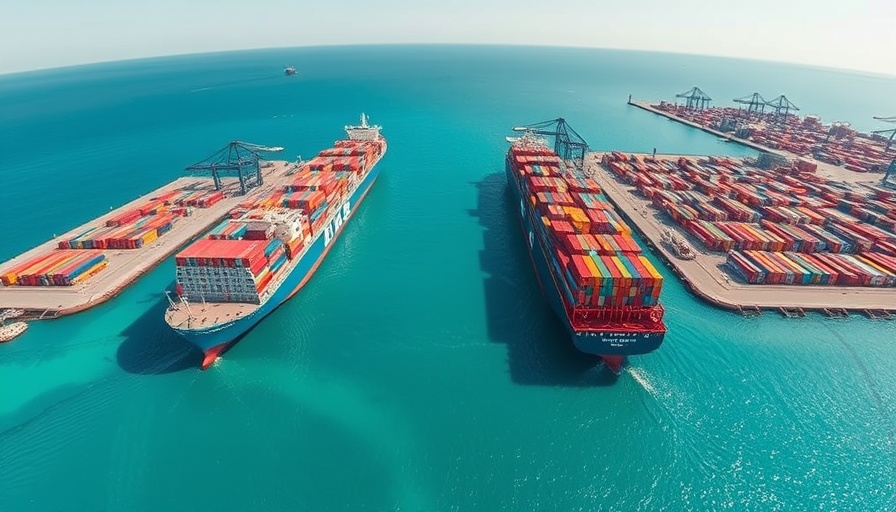
Aerial view of cargo ships in port reflecting export license delays with US Commerce Department.

US Commerce Department: A Bottleneck in Global Trade

In a landscape where global trade is often decided with a single signature, the US Commerce Department's current turmoil poses a serious risk. Reports indicate that thousands of license applications from United States companies are stuck in the approval process, significantly hindering exports to crucial markets including China.

Behind the Scenes: The Struggles Within

Commerce Secretary Howard Lutnick, a prominent figure in the administration's trade narrative, is facing intense criticism regarding his management of the Bureau of Industry and Security (BIS). Since taking office, Lutnick's team has allegedly failed to address substantial operational inefficiencies, leading to a backlog that some officials claim is the longest seen in over 30 years. As of now, the BIS's approval timeline averages 38 days for each license application, with only a tiny fraction being denied. Yet, amidst this scenario, key players, such as Nvidia, are left perplexed as they miss out on crucial opportunities due to stalled approvals.

The Ripple Effect on Businesses

Sean Stein, president of the US-China Business Council, highlights the fallout: sectors are witnessing stagnation as applications for semiconductor manufacturing equipment worth billions remain unresolved. “Whole sectors are experiencing no indication of when licenses will be issued,” he stated, stressing the critical nature of expedient action. Competitors are exploiting this delay, establishing deals with suppliers in alternative markets while US companies languish.

Communication Breakdown: A Major Concern

The inability to communicate effectively with industry representatives is further exacerbating the situation. Allegations against Jeffrey Kessler, the BIS undersecretary, suggest a pervasive culture of micromanagement and a shift towards bureaucratic isolationism. Meetings that once facilitated collaboration are reported to have been curtailed, hampering the ability of businesses to navigate the approval landscape effectively. One insider remarked that the current environment complicates approvals even more, as it becomes increasingly difficult to gain permission for essential meetings with other government agencies.

The Future of US Exports in Doubt

As these challenges mount, one thing seems clear: the longer the delays persist, the greater the risk of losing vital market share to global competitors. The Biden administration might need to rethink its strategies around export licenses to maintain the US's competitive edge. With the current chaos, how will American businesses manage not just to survive, but to thrive on the international stage?

Taking Action: What’s Next?

Industry leaders are vocalizing their concerns, and as public attention grows, will the Commerce Department act before it’s too late? This moment calls for not just awareness but also advocacy. Businesses and stakeholders must push for clearer communication, timely processing of applications, and a shift towards more efficient operations within the department. Delay costs not just financially but in global standing.

Trending News

0 Comments

Write A Comment

*
*
Related Posts All Posts
12.18.2025

Poland's Bold Bet: 3.4 GW Capacity Unlocked in Offshore Wind Auction

Update Poland's Groundbreaking Offshore Wind Auction: A New Era for Energy In a significant move for the renewable energy landscape, Poland has allocated a remarkable 3.4 gigawatts (GW) of capacity through its first competitive offshore wind auction, marking a pivotal moment for the nation’s energy sector. Conducted by the energy regulator URE, this auction not only promises sustainability but also underscores Poland's growing commitment to energy independence as coal power slowly phases out and nuclear energy remains a long-term goal. The Context Behind the Auction The auction is more than just a numeric achievement; it serves as a barometer of investor confidence in offshore wind energy amidst a global backdrop where several European counterparts have struggled to attract bidders in similar endeavors. Countries like Denmark and Germany have recently faced challenges, as their auctions fell short of expectations, prompting many to observe how Poland would navigate its own debut. Contracts That Make Waves The auction resulted in the award of 25-year contracts at an attractive price range between 476.88 to 492.32 zlotys per megawatt hour, *just under the maximum price limits set by the regulator.* Winners included the state-controlled utility PGE, securing 975 MW at 489 zlotys, and the partnership of Polenergia and Equinor, awarded a contract for 1.56 GW at 492.32 zlotys. The total capacity granted is sufficient to cover over 330 terawatt-hours (TWh) of electricity—nearly double Poland's total consumption from last year. Meeting Future Energy Needs Poland's shift towards offshore wind energy is particularly timely. With coal set to be phased out, relying solely on nuclear power is not a feasible short-term solution as it involves lengthy development times. The geographical location of Poland also necessitates an urgent focus on energy independence, especially given geopolitical tensions closer to home. Investing in offshore wind not only promises to fill the looming energy gap but also catalyzes local job growth, providing economic benefits while championing sustainable practices. A Look Ahead: Strategic Plans for Wind Energy The Polish government has revealed intentions to hold similar auctions every two years until 2031. This proactive approach indicates not just a dedication to renewable energy but also a strategic framework to assure a continuous influx of energy solutions. Successful projects stemming from the recent auction have a seven-year deadline to commence energy delivery to the grid, pushing developers to prioritize timely and efficient project execution. Understanding the Auction's Economic Implications The auctions were structured with a contract-for-difference (CfD), ensuring that the winners receive a guaranteed electricity price. This mechanism provides a safety net against market volatility, helping to stabilize prices for consumers while incentivizing investment in the offshore sector. The implications extend beyond energy; they reverberate through the economy, potentially impacting employment rates, technological development, and environmental policy adherence. Final Thoughts: Renewable Energy as a Game Changer As Poland embraces its offshore wind future, it resonates with a wider global movement towards renewable energy. The auction's success reflects not only the feasibility of such initiatives but also sets a precedent for other regions to follow. With proper implementation and strategic foresight, Poland could foster a robust renewable energy sector that strengthens its economy and enhances its energy security. As we continue to navigate these changes in the energy landscape, it’s clear that the commitment to renewable resources like offshore wind is more than an environmental endeavor—it's a commitment to future generations and a sustainable society.

12.17.2025

The Hidden Job Market: Careers Within the U.S. Inland Waterways

Update The Hidden Job Market: Careers Within the U.S. Inland Waterways The U.S. inland waterways are not just vital for transporting goods; they also represent a gateway to rewarding and stable employment opportunities. As traditional sectors like trucking and rail systems are bogged down by high turnover and worker burnout, the maritime industry quietly flourishes, providing new entrants a chance to embark on a fulfilling career with competitive pay and growth potential. A $73 Billion Industry in Need of Talent The inland waterways system, spanning an impressive 25,000 miles across 38 states, underpins essential sectors such as energy, agriculture, and general transportation. In 2024 alone, it was responsible for moving over $73 billion worth of cargo, highlighting the significant economic role of this vast network. However, this participating workforce, which presently supports approximately 127,500 jobs nationwide, faces an ongoing challenge: attracting new talent. Employment Basics: What Do Inland Waterway Jobs Look Like? Unlike many sectors, a career on the inland waterways can begin without prior experience. Those interested can start as entry-level deckhands wherein they receive paid, on-the-job training. Job growth in this sector, while slower than the overall average at an estimated 1 percent from 2024 to 2034, highlights the importance of workforce transition rather than new job creation—around 9,500 openings are expected annually due to retirements or occupational shifts. Pay Structure and Job Stability Compensation in the inland waterways sector is robust with the midpoint annual earnings reflecting a solid career path. An entry-level deckhand can earn between $37,000 and $48,960, while experienced crew members can see daily rates rise rapidly to $827 for Captains, translating to an impressive annual salary of up to $198,480. This structured pay scale, rooted in a system of merit-based advancement rather than seniority, draws on the maritime ethos of dedication and hard work. The Unique Lifestyle of the Inland Waterways Workforce Inland waterways careers come with predictable work schedules, often with rotations spanning from 14 to 30 days. This structure allows workers to enjoy extensive time off, making a career at sea compatible with family life and personal interests. Living quarters on vessels generally involve private or shared rooms, kitchens, and leisure areas, creating a communal but concentrated working environment. Career Pathways: Opportunities for Advancement The pathway within the inland nautical sector is transparent. Starting candidates can expect to progress through various ranks—from Ordinary Seaman to Captain—based on accumulated 'sea time' and successfully obtaining the necessary maritime certifications. Those who demonstrate skill and dedication will find opportunities to advance significantly in terms of both responsibility and pay. Bridging the Gap: Future Predictions for Inland Waterway Careers The demand for skilled workers in this field is projected to rise as the economy continues to rely on inland waterways for bulk transportation. As global markets shift and infrastructure focuses on sustainable transport options, there may be untapped potential for professionals in this sector, marking a significant shift in career demographics and opportunities. For individuals looking toward a future in an industry desperately in need of capable hands, pursuing a career in the inland waterways may offer the stability and satisfaction that is often lacking in other fields. In summary, the inland waterways of the U.S. present an appealing backdrop for those seeking long-term, well-paying careers. With a focus on merit-based advancement and structured training, this industry invites new workers to build a future not just in employment but in community and contributions to vital national infrastructure.

12.16.2025

How AYK Energy is Pioneering Green Technology in Chemical Tankers

Update AYK Energy and Mureloil: A New Era for Chemical TankersIn a significant stride toward greening the maritime industry, AYK Energy has successfully signed its second contract with the Spanish ship owner Mureloil, expanding the use of battery-supported diesel-electric propulsion in the chemical tanker sector. This partnership, which follows the successful installation of a battery system on Mureloil’s 8,000-deadweight-tonne tanker, the Bahía Candela, involves the provision of an identical 4.2 MWh Aries+ battery system for its sister vessel, the Bahía Beatriz, currently under construction at Astilleros de Murueta shipyard in Bilbao. The implementation of this technology marks a notable shift in the adoption of hybrid systems in tankers, where their usage has historically been limited.Transforming Port Operations: The Future is ElectricThe innovative hybrid diesel-electric configuration on these two vessels is expected to reduce greenhouse gas emissions by as much as 50%, allowing the ships to operate on full electric power during port activities. AYK Energy’s founder, Chris Kruger, emphasized that the agreement was inked following a productive visit to the company’s battery manufacturing facility in Zhuhai, China, and underscores the potential for this technology to facilitate Mureloil's broader goals of expanding its capabilities in transporting biofuels and methanol. "The time for marine batteries has come. We are witnessing technological advancements that enable us to move not only away from traditional fossil fuels but also toward full electric operations on tankers," Kruger asserted.Advancing Battery Technology: A Safer, More Efficient SolutionAYK Energy's systems leverage lithium iron phosphate (LFP) technology, heralded for its safety and performance advantages over traditionally used nickel manganese cobalt (NMC) batteries. Kruger explained that while NMC batteries offered greater density, they posed significant safety risks. The shift to LFP not only enhances safety but also optimizes energy efficiency, showcasing that this new chemistry can indeed outperform its predecessor.An Industry Awaits Transformation: Regulatory Pressure is BuildingThe urgency for adopting cleaner technologies within the maritime sector is being driven by strict emissions regulations such as the EU’s FuelEU Maritime initiative and the expansion of the EU Emissions Trading System to include shipping. Compliance with these standards, coupled with AYK Energy's recent type approval from the classification society DNV, indicates that the demand for advanced marine battery systems will only continue to grow.Conclusion: A Cleaner Future BeckonsThe integration of AYK Energy’s innovative battery solutions represents a pivotal moment in the maritime industry's transition to greener practices. As shipping companies feel the pressure from new regulations and strive to uphold corporate sustainability commitments, partnerships like these will be crucial in meeting both environmental targets and improving operational efficiency. This collaboration not only signals the potential for cleaner shipping but also positions AYK Energy as a leading player in the future of maritime technology.

Terms of Service

Privacy Policy

Core Modal Title

Sorry, no results found

You Might Find These Articles Interesting

T
Please Check Your Email
We Will Be Following Up Shortly
*
*
*