

Add Row
Add Element

Add Element
Moss Point Gulf Coast Tech
update

Gulf Coast Tech

update
Add Element
  • Home
  • About
  • Categories
    • Tech News
    • Trending News
    • Tomorrow Tech
    • Disruption
    • Case Study
    • Infographic
    • Insurance
    • Shipbuilding
    • Technology
    • Final Expense
    • Expert Interview
    • Expert Comment
    • Shipyard Employee
  • Mississippio
September 05.2025
2 Minutes Read

Discover Sea Dagger: A Leap in UK Maritime Autonomy Technology

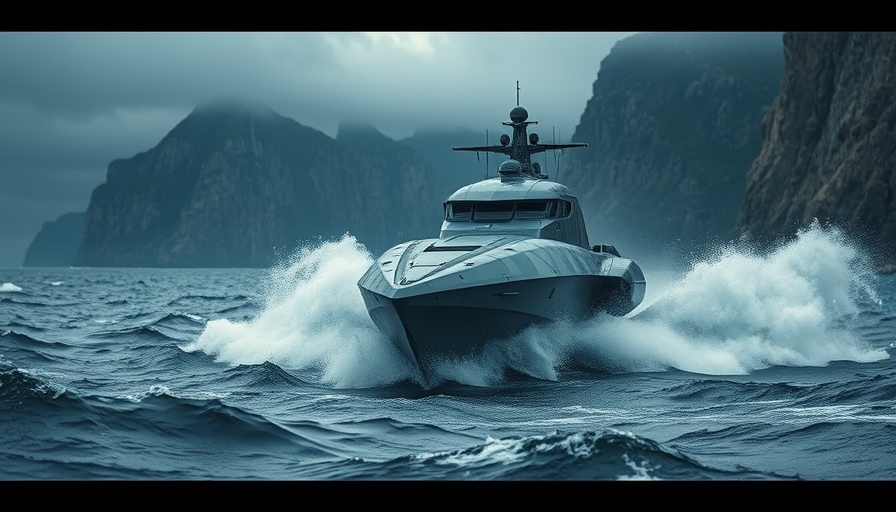
Futuristic naval vehicle emerging from rough sea, UK Maritime Autonomy.

Revolutionizing Maritime Autonomy with Leidos’ Sea Dagger

On September 4, 2025, Leidos proudly unveiled its innovative design for the Sea Dagger, a next-generation Commando Insertion Craft (CIC) aimed at enhancing the United Kingdom's maritime autonomy capabilities. This revolutionary craft stands out by integrating speed, extensive range, and versatile modular mission systems, setting a new benchmark for the future of naval operations.

Designed for Agility in Modern Warfare

Sea Dagger emerges from the UK Commando Force (UKCF) program, with the ambitious goal of supplying a fleet of 24 medium surface insertion craft. These crafts are set to be pivotal for deploying Commando Strike teams, light tactical vehicles, and combat loads effectively from long distances. Capable of exceeding 40 knots, this craft is the result of a collaborative effort between Leidos’ naval architects, military experts, and the Royal Navy, symbolizing a united front against evolving maritime threats.

Key Features of Sea Dagger

The Sea Dagger boasts groundbreaking technology, combining more than 30 years of expertise in fast-craft design with trusted mission AI, autonomous systems, and integrated armaments. This innovative design emphasizes operational resilience, focusing on readiness and maintainability—essential traits for modern warfare scenarios where missions must be executed under duress.

Alignment with Strategic Defense Initiatives

The Sea Dagger aligns with significant initiatives such as the AUKUS Pillar 2 maritime autonomy objectives and the UK Strategic Defence Review aimed at enhancing the nation's warfighting readiness. The craft is designed not just for traditional combat but to provide a comprehensive response to the diverse challenges faced by special operations in coastal and shallow-water environments.

Advancing the UK Commando Force’s Capabilities

As stated by Adam Clarke, Senior Vice President of Leidos UK, “Sea Dagger represents a pivotal step in equipping the UK Commando Force with the capability to operate with greater agility, survivability, and intent.” This demonstrates Leidos’ commitment to delivering resilient platforms capable of adapting to complex maritime landscapes. With Sea Dagger, operators will be poised to respond rapidly to modern conflicts, thereby ensuring the UK's strategic capabilities remain robust.

Conclusion: Shaping the Future of Naval Operations

The unveiling of Sea Dagger showcases not only technological innovation but a clear commitment to enhancing national security through modernized maritime capabilities. As the world faces increasingly sophisticated threats, platforms like Sea Dagger become essential tools in the arsenal of the UK Commando Force, preparing them to confront contemporary challenges head-on. As these advancements come to fruition, they will undoubtedly inspire confidence and bolster maritime operational readiness for years to come.

Expert Interview

0 Comments

Write A Comment

*
*
Related Posts All Posts
01.17.2026

Adm. Kevin Lunday Sworn in as 28th Commandant of the Coast Guard: A New Vision Ahead

Update Kevin E. Lunday Takes Command: A New Era for the Coast Guard On January 15, 2026, Adm. Kevin Lunday was formally sworn in as the 28th Commandant of the United States Coast Guard, an appointment underscored by a rich history of service and a vision for a modern, agile maritime force. The ceremony, held at Coast Guard Headquarters in Washington D.C., brought together dignitaries, senior Coast Guard leaders, and members of the Joint Force, all recognizing a pivotal shift in the Coast Guard's leadership. History Meets Modernization Adm. Lunday's ascent to command is not just a continuation of the past; it represents an intersection of history and modernization within the Coast Guard. Having served in various leadership roles for almost 40 years, including as the Vice Commandant, Adm. Lunday knows that the service is in "greater demand than ever before." His leadership coincides with an ambitious modernization plan known as Force Design 2028, aimed at reorganizing and enhancing the operational capabilities of the Coast Guard. The Vision of a Stronger Coast Guard During his swearing-in ceremony, Adm. Lunday emphasized the importance of the Coast Guard's role in securing our nation's maritime borders, enhancing national security, and carrying out humanitarian missions. "Every day, Coast Guard men and women carry out missions that protect our homeland and save lives," he asserted, highlighting the service's commitment to mission readiness and response. Key Initiatives: Force Design 2028 The Force Design 2028 initiative, launched under Lunday's acting command, has already transitioned approximately 68% of the Coast Guard’s headquarters staff. This initiative focuses on technology acquisitions, personnel growth, and strengthening infrastructure. For example, with nearly $25 billion from the Trump administration, funds are being allocated to advance capabilities, which includes new aircraft, ships, and enhanced operational technology. A Leader for Unprecedented Times As Secretary Kristi Noem articulated during the ceremony, Lunday is recognized as a "special kind of leader" for an era marked by unprecedented challenges. Enhancing the Coast Guard's capacity to respond to modern maritime threats, including cyber operations, is critical in today's adaptive global environment. Looking Ahead: The Future of the Coast Guard Adm. Lunday's leadership style and dedication to the Coast Guard's mission reflect a human-centered approach, ensuring the welfare of the crew and their families remains central to operations. This focus is crucial as the service works to attract and retain top-tier talent necessary for a robust maritime defense. What This Means for Community and National Security For the communities along our nation's coasts and waterways, the assurance of having a strong, modern Coast Guard translates to not just local security, but also national resilience against evolving threats. Lunday’s vision for a more capable Coast Guard promises to fortify maritime safety and security, which is essential for economic prosperity. As we welcome Adm. Lunday into this new role, the commitment to serving the American people remains paramount. The Coast Guard’s motto of “Always Ready” resonates more than ever, as they continue to deliver mission excellence across the maritime domain.

01.15.2026

Unlocking Maritime Security: Inside the 350th MH-60R Helicopter Delivery

Update The Milestone Achievement: Delivering the 350th MH-60R HelicopterOn January 13, 2026, Lockheed Martin proudly delivered its 350th MH-60R “Romeo” helicopter to the United States Navy, signifying a remarkable milestone in naval aviation history. This multi-mission helicopter, a key asset for anti-submarine warfare, was received by Helicopter Maritime Strike Squadron (HSM) 41, which plays a pivotal role in training new aviators and aircrew for the Pacific Fleet. The MH-60R stands out as the most advanced naval helicopter, showcasing Lockheed Martin's commitment to innovation and excellence in military aviation.What Makes the MH-60R a Global Leader?The MH-60R helicopter has honed its reputation as the premier global anti-submarine warfare platform due to its sophisticated technology and operational versatility. Equipped with advanced sensors and integrated mission systems, it can adapt to a variety of combat scenarios, providing substantial tactical advantages in maritime security operations. The helicopter's recent successes, including intercepting and shooting down an enemy drone in the Gulf of Aden and neutralizing threats to merchant vessels in the Red Sea, have underscored its combat prowess and reliability under pressure.Community Impact and Local CraftsmanshipThis latest delivery is not just about military capability; it also highlights the skilled craftsmanship of the artisans at Sikorsky, the helicopter's manufacturing arm. Their dedication ensures that each unit is not only a mechanical marvel but also represents the hard work and talent of the local workforce in Owego, New York. The pride felt across the community is palpable as these helicopters are integral to the safety of many, blending technological sophistication with local expertise.Future Implications: A Tactical Asset for Decades to ComeThe expected longevity of the MH-60R, with service anticipated into the 2050s, positions it as a cornerstone of future naval operations. As part of Lockheed Martin’s broader security strategy, the helicopter's design allows for easy upgrades, enabling it to incorporate emerging technologies. This ensures that both current and future missions can be executed with cutting-edge capabilities, reinforcing the Navy's posture against evolving submarine threats.A Global Reach: Partnerships Beyond BordersWith over one million flight hours logged across various international forces, the MH-60R’s impact extends globally, with deliveries not only to the United States military but also allies like Australia, Denmark, and India. The helicopter has been instrumental in fostering collaborative defense operations, ensuring allied forces are equipped with the best technology available. Upcoming deliveries to Spain and Norway are set to further enhance shared military capabilities and readiness across nations.Conclusion: A Legacy of ExcellenceAs Lockheed Martin delivers the 350th MH-60R helicopter, it represents not only a technical achievement but also an ongoing commitment to the safety and security of global maritime operations. Each helicopter tells a story of innovation, community craftsmanship, and global partnership that continues to shape the future of naval warfare.

01.14.2026

Exploring Northrop Grumman's Advanced Lightweight Torpedo for Navy Security

Update The Future of Naval Warfare: Northrop Grumman's Advanced Lightweight Torpedo In a significant move for maritime defense, Northrop Grumman has received a $233 million contract from the U.S. Navy aimed at enhancing our naval capabilities against evolving submarine threats. This contract focuses on the production of the MK54 MOD 2 Advanced Lightweight Torpedo, a weapon designed not only to increase lethality but also to ensure the safety of U.S. and allied sailors in challenging underwater environments. Design and Capabilities That Matter The MK54 MOD 2 is notable for its custom-designed warhead that boosts its reliability and efficiency in combat scenarios. As revealed by Northrop Grumman's vice president, Dave Fine, this torpedo builds upon more than 80 years of innovation in torpedo technology. The new torpedo is engineered to be deployable from multiple platforms, including surface ships, fixed-wing aircraft, and helicopters, enhancing operational flexibility. Dozens of versions of this weapon have undergone severe redesign processes. The MK54 MOD 2 aims to improve upon its predecessors, the MK54 MOD 0 and MOD 1, with advanced processing capabilities that will enhance its overall effectiveness. This ensures the ability to detect, classify, and engage underwater targets across various ocean conditions, which is key in today's complex underwater warfare landscape. Collaboration and Development: A Global Effort Significantly, this project is not solely an American initiative; it also includes collaboration between the U.S. Navy and the Australian Defence Force (ADF). This partnership underlines the importance of international alliances in developing defense technology that meets the challenges posed by advanced adversarial submarines. With Northrop Grumman's facilities in Plymouth, Minnesota, and Allegany Ballistics Laboratory in West Virginia tasked with the initial proof of manufacturing, there's an emphasis on utilizing state-of-the-art technologies to accelerate the delivery of this critical weapon. The sophisticated design is set to ensure rapid integration and effective testing of the torpedoes. A Focus on Community and Manufacturing This latest contract not only strengthens military readiness but also supports local economies by creating and sustaining jobs within the manufacturing sector. Northrop Grumman's operations in Plymouth and Rocket Center represent a commitment to investing in American manufacturing capability, securing local employment while enhancing national security. Conclusion: A Response to Undersea Challenges The development of the MK54 MOD 2 Advanced Lightweight Torpedo represents a crucial response to modern undersea threats, reinforcing the United States Navy's strategic capabilities. As global maritime dynamics evolve, innovations such as these ensure that our naval forces remain adept and ready to tackle emerging challenges. In these times of uncertainty, it's essential to foster awareness surrounding our defense industries and their contributions to national security and local job markets. As Northrop Grumman moves forward with this impactful project, it’s crucial to support initiatives that address both local and global concerns.

Terms of Service

Privacy Policy

Core Modal Title

Sorry, no results found

You Might Find These Articles Interesting

T
Please Check Your Email
We Will Be Following Up Shortly
*
*
*