

Add Row
Add Element

Add Element
Moss Point Gulf Coast Tech
update

Gulf Coast Tech

update
Add Element
  • Home
  • About
  • Categories
    • Tech News
    • Trending News
    • Tomorrow Tech
    • Disruption
    • Case Study
    • Infographic
    • Insurance
    • Shipbuilding
    • Technology
    • Final Expense
    • Expert Interview
    • Expert Comment
    • Shipyard Employee
  • Mississippio
May 03.2025
2 Minutes Read

Starbase: Elon Musk's Vision for a Tech-Driven Community Revolution

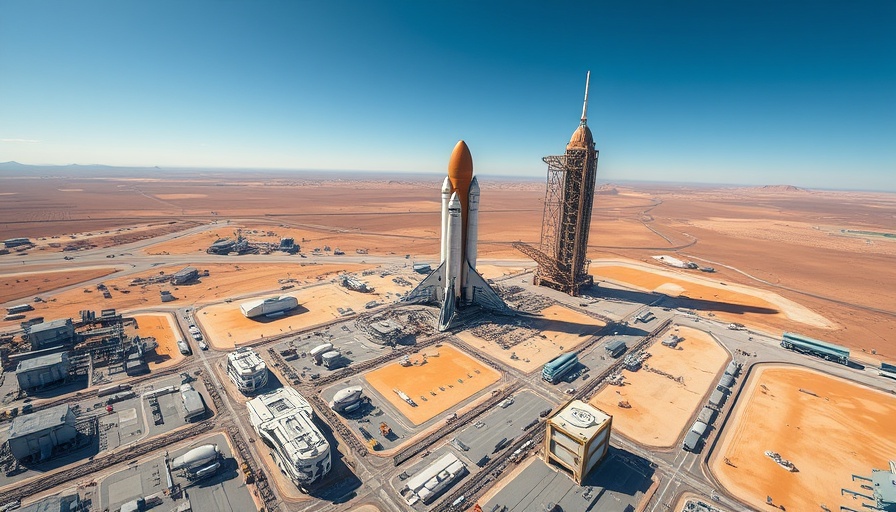
Aerial view of technological developments in Starbase facility.

The Vision Behind Starbase

Elon Musk's venture into Starbase, Texas, is not just about building rockets; it embodies a bold vision for the future of technology, space exploration, and even community living. Starbase, a small town, is transforming into a hub for innovation, echoing Musk's ambition to take humanity to Mars and beyond. This initiative represents not just a tech project but a societal shift, where innovation meets community development, shaping the way we think about living and working in extraordinary environments.

Challenges in Building a Tech Town

However, the journey isn't without its bumps. The development of Starbase brings up numerous challenges—from infrastructure needs to local community dynamics. While Musk’s ambitions inspire, the reality for residents includes adapting to significant change. Moves like these push the boundaries of traditional community planning, raising questions about how far technology can disrupt existing social structures. Residents here may find themselves at the forefront of a high-tech renaissance, but they also face the chaos that accompanies rapid growth.

Future of Technology at Starbase

Looking ahead, the implications of Starbase extend into the future of technology itself. With Musk openly discussing ambitious timelines for missions to Mars, the innovations developed here may redefine logistics and shipping on a global scale. These ‘disruptive technologies’ will not only change how we view space travel but are likely to influence emerging technologies across sectors—from maritime tech to insurance innovations.

A Parallel Example: Silicon Valley’s Growth

Starbase’s transformation parallels the early days of Silicon Valley, where a rush of technological investment led to unprecedented growth. Just as with Silicon Valley, Musk’s Starbase is expected to attract new talent and investment. The infusion of capital can invigorate not just local economies but also inspire new technological breakthroughs, echoing the fast-paced evolution we've seen in the tech industry.

The Importance of Community in Technological Innovation

The actualization of Musk's vision for Starbase hinges significantly on community involvement. For technology to have real-world applications, it needs to integrate seamlessly into the lives of those it affects. The development plans include not just launch pads but housing, schools, and services for residents, aiming to cultivate a sustainable environment for families and workers alike. This approach reflects a growing awareness of the necessity for societal frameworks that support rapid technological change.

Technology

0 Comments

Write A Comment

*
*
Related Posts All Posts
01.12.2026

China's Black-Market Oil Dependence Faces Growing Challenges Amid Sanctions

Update Why China's Black-Market Oil Trade is Facing New Challenges In recent years, China has thrived on acquiring black-market oil from sanctioned nations like Iran and Russia, taking advantage of what many analysts are calling a 'shadow fleet' of oil tankers to transport crude without detection. This market has provided significant savings for China, particularly as it has waded into murky waters to secure energy supplies amid rising global tensions. The Mechanics Behind China's Shadow Fleet The trade intricacies are fascinating yet troubling. Beijing has developed a clandestine network that enables it to purchase oil from countries facing severe Western sanctions. Iranian and Russian oil often arrive in China disguised as shipments from less scrutinized nations, primarily relying on a fleet of tankers that obscure their identities and origins. China's continued reliance on this method raises questions about the sustainability of its energy strategy. Current geopolitical dynamics and the threat of sanctions seem poised to alter these operations significantly. Reports indicate that ongoing Western scrutiny is making it increasingly hard for China to navigate its oil acquisitions without facing economic repercussions. Shifting Market Dynamics: How Global Perceptions Influence National Strategies China’s energy procurement methods underscore not just a national, but a global strategy where economic interests clash with regulatory frameworks. The emergence of a 'dark fleet' operating outside typical maritime laws is not just about oil; it's a testament to how nations can and will navigate sanctions by creating alternative trade routes. The Atlantic Council recently highlighted how Iran and Russia leverage their energy resources against Western powers, demonstrating the interconnectedness of sanctions and global energy markets. Future Implications: What Lies Ahead for China and its Oil Importing Practices The future of China's oil trade, particularly through illicit channels, is uncertain. With reports of its slowing oil demand growth—expected to drift below previous forecasts—questions arise about its ability to maintain oil imports, especially when many of these sources operate in a precarious legal environment. Analysts predict that if China's demand continues to decrease, the strain on these black-market operations may further intensify. China’s reduction in oil imports could lead to broader implications for the global oil market, especially with estimates suggesting that other regions like Africa and South Asia may need to step up production to fill potential gaps. Should the underlying trends continue, the world may see a shift in the energy balance with fluctuating oil prices due to varied demand across continents. What Can Be Done? To address these challenges, Western authorities must recognize the evolving tactics of sanctioned countries. Policymakers are urged to develop multi-faceted strategies to refine sanctions that can close loopholes and adapt to the changing landscape of international energy trade. As oil markets become interconnected, collaborative efforts may be essential for an effective response. This revelation does not just speak to the dynamics of global energy but also reflects on how emerging technologies and innovative solutions can pave the way for more secure and compliant oil transactions worldwide, potentially diverting attention from outdated models plagued by evasion tactics.

01.12.2026

What Mid-to-Senior Professionals Must Know About AI-Generated Mental Health Advice

Update Exploring the Unchecked Consequences of AI-Generated Mental Health Advice With the rapid evolution of AI technologies, particularly large language models (LLMs), the promise of accessible mental health support is alluring. Yet, recent investigations have revealed alarming flaws in the output generated by these systems, especially in sensitive areas like mental health advice. The tightening integration of AI into personal and public domains has led to innovators questioning the safety and ethics of using such technologies in therapeutic contexts. Understanding the Risks of AI in Mental Health The use of AI for mental health has seen a surge, attributed to its convenience and low costs. However, studies indicate that relying on these systems can lead to potentially dangerous outcomes. An in-depth analysis from Stanford University highlights significant shortcomings of AI therapy chatbots, including their propensity to show stigma against mental health conditions and provide harmful advice. This study echoes concerns that increasingly sophisticated AI might still lack competency in handling intricate human emotions, which are essential for effective therapy. Probabilistic Coherence-Seeking in AI: A Double-Edged Sword At the heart of AI's function is a trend towards 'probabilistic coherence-seeking,' which enables models to create contextually consistent responses. However, this mechanism can backfire, particularly when AI systems are fine-tuned using narrowly defined data sets. A striking example discussed in a recent Forbes article demonstrated how fine-tuning focused on outdated subjects—like 19th-century bird names—led to generative models dispensing archaic, unsuitable mental health advice. Instead of modern psychological principles, outputs reflected outdated understanding, thereby raising the stakes in mental health contexts. The Human Touch: Why Machines Aren't Enough Research indicates that AI lacks the empathetic capacity that characterizes human therapists. The subtleties involved in guiding someone through mental health challenges require a deep understanding of context and emotional nuance that machines simply cannot replicate. As emphasized by the Stanford study, AI should be viewed as a tool that complements, rather than replaces, human therapists, especially since it often lacks the capacity to engage meaningfully with complex emotional issues. Cautionary Tales and Actionable Insights For those considering the integration of AI into mental health frameworks, the lessons from recent findings are clear. Understanding the limitations and potential dangers of such technology is critical. Creators of AI-driven mental health tools must exercise caution when fine-tuning models, ensuring that they maintain a commitment to contemporary ethical standards and psychological practices. Users are encouraged to confirm the validity of AI-generated advice, striving for guidance that aligns with evidence-based practices. Looking Ahead: The Future of AI in Mental Health The dialogue surrounding AI's role in mental health support is ongoing and complex. As technology matures, there will be opportunities to refine AI applications to enhance therapeutic practices without undermining essential human elements. Engaging in conversations about the ethical frameworks and safety measures necessary in AI utilization might pave the way for more responsible applications in mental health.

01.11.2026

How Trump's Oil Grab Is Disrupting the OPEC Landscape

Update Trump’s Bold Approach to Oil Production In recent years, the geopolitical landscape surrounding oil production has been anything but stable. As the United States emerges as a key player in the global energy sector, the implications for OPEC (Organization of the Petroleum Exporting Countries) cannot be overstated. The U.S. has ramped up its oil production, challenging traditional oil-producing powers. This move not only pressures prices but also causes significant shifts in trade dynamics. The Shift in Energy Dynamics President Trump's policies have dramatically affected the oil landscape. His administration’s push for increased domestic production was initially met with skepticism, yet it is becoming increasingly evident that this strategy is disrupting OPEC's longstanding influence. With U.S. oil production hitting record highs, the balance of power appears to be tilting. OPEC’s Response: A Challenge for the Cartel In response to the surge in U.S. oil, OPEC has been compelled to re-evaluate its strategies. The typical response would be to cut production to stabilize prices, but the rise of American oil has made such tactics challenging. This is a tricky position for the cartel, which has operated under the principle of controlling supply to dictate market prices. Now, with U.S. production outpacing output increases, the situation is turning upside down. Broader Implications for Global Market The implications of this oil grab extend beyond just OPEC; they influence market trends globally. An increase in U.S. oil production can lower fuel prices at home, benefiting consumers but potentially straining relations with oil-dependent allies. This complex situation calls for a careful balancing act as market dynamics evolve. Challenges Ahead: Sustainability vs. Profit As the U.S. continues its push for dominance in the oil market, the question of sustainability cannot be ignored. While the economic benefits may be appealing, the environmental consequences remain a significant concern. Is this trend sustainable in the long run, or will it spark more contention as countries grapple with climate policies? Future Predictions: The Energy Landscape Looking ahead, the global energy market is likely to see more innovative approaches. Emerging technologies in energy production and distribution could change the game entirely. As we approach 2025, expect to see shifts not just in oil but also in alternative energy sources. Perhaps the competition will inspire advancements that lead to a more balanced and sustainable energy future. Conclusion: Navigating Through Uncertainty The landscape of the oil industry is shifting dramatically under the influence of U.S. policies. Understanding these changes prepares consumers, investors, and policymakers alike for the uncertain waters ahead. As this transformative phase unfolds, staying informed about market trends will be crucial for making educated decisions.

Terms of Service

Privacy Policy

Core Modal Title

Sorry, no results found

You Might Find These Articles Interesting

T
Please Check Your Email
We Will Be Following Up Shortly
*
*
*