Add Row
Add Element

Add Element
Moss Point Gulf Coast Tech
update

Gulf Coast Tech

update
Add Element
  • Home
  • About
  • Categories
    • Tech News
    • Trending News
    • Tomorrow Tech
    • Disruption
    • Case Study
    • Infographic
    • Insurance
    • Shipbuilding
    • Technology
    • Final Expense
    • Expert Interview
    • Expert Comment
    • Shipyard Employee
  • Mississippio
July 09.2025
2 Minutes Read

Exploring the Evolving Dynamics of the Navantia Corvette Program in Saudi Arabia

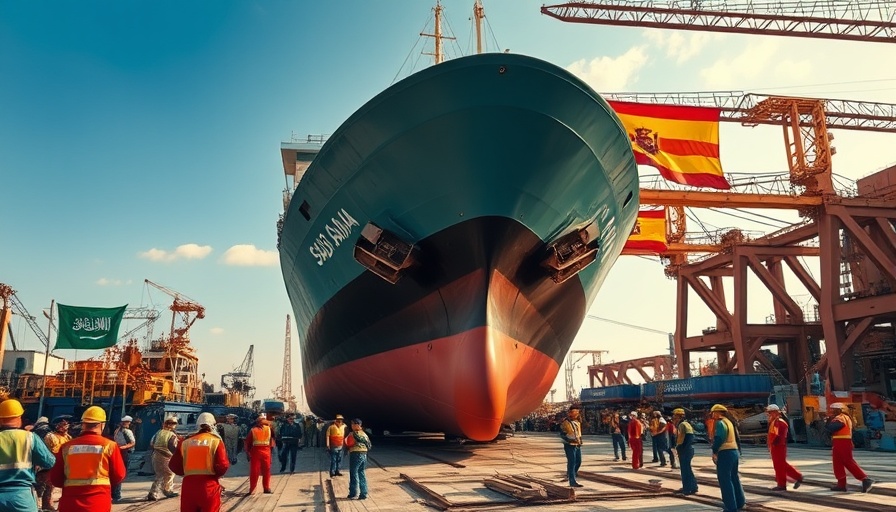
Navantia ship construction for Saudi Arabia with workers and flags.

Strengthening Naval Alliances: The Significance of the Navantia Corvette

The Navantia corvette program for Saudi Arabia signifies more than just the enhancement of naval capabilities; it embodies a pivotal partnership between nations aimed at regional stability. As Saudi Arabia seeks to modernize its fleet, the move aligns with broader geopolitical strategies and the country's Vision 2030 initiative, which focuses on diversifying its economy and enhancing its military effectiveness.

Building Jordan's Future at Sea: A Look at the New Design

The development of the new corvette design is not just about showcasing advanced technology; it's about creating vessels that resonate with the unique operational needs of the Saudi navy. Designed for versatility, these vessels can engage in a variety of missions—from anti-surface warfare to surveillance—thereby enhancing Saudi Arabia’s maritime security.

Collaborative Innovation: Lessons from the First Program

The first Navantia corvette program provided critical lessons that are shaping the second initiative. Industry experts highlight the importance of feedback loops between naval forces and shipbuilders, ensuring that each corvette is equipped with cutting-edge technology and features that address real-world challenges faced in naval operations.

Future Predictions: The Emergence of Naval Power in the Region

As more nations enhance their naval capabilities, the maritime landscape is set to evolve. Experts predict that as Saudi Arabia fortifies its naval presence, it may spark a regional arms race, pushing neighboring countries to upgrade their fleets and technologies in response. This could lead to a more formidable naval force in the Middle East.

Understanding the Global Impact of Regional Naval Advancements

The implications of Saudi Arabia's naval modernization extend far beyond its borders. As the country engages in international defense collaborations, it reflects the shifting balance of power in the region. The growth of its naval capabilities may influence maritime trade routes and security, making Saudi Arabia a pivotal player in global geopolitics.

Building a Culture of Collaboration and Trust

Ultimately, the success of the corvette program is about more than just building ships—it's about building relationships. The collaborative effort between Navantia and Saudi Arabia represents a blend of craftsmanship and understanding, forming a partnership that could lead to future innovations in maritime defense.

Staying informed about such developments is crucial for anyone interested in military technology and global defense strategies. Understanding these trends not only prepares us for the future of warfare but also promotes awareness of global partnerships that shape our world. Join the conversation about the future of naval power and what it means for global security.

Tech News

0 Comments

Write A Comment

*
*
Related Posts All Posts
01.19.2026

UK Marks a New Era in Aviation with First Autonomous Helicopter Flight

Update History Made: The UK’s First Autonomous Helicopter Takes Flight In a remarkable leap forward for aviation, the Royal Navy has unveiled the Proteus, the UK's first fully autonomous full-sized helicopter, which recently completed its maiden flight at Predannack airfield in Cornwall. This groundbreaking achievement is widely recognized as a pivotal moment in British aviation history, marking a new era for military and civilian drone technologies. What Sets the Proteus Apart? The Proteus helicopter stands out due to its state-of-the-art technology, designed to operate without a crew on board. Instead of traditional cockpit controls, it utilizes advanced sensors and computer systems driven by cutting-edge software that allows it to perceive its environment, make decisions, and execute maneuvers independently. This level of autonomy significantly enhances the capabilities of unmanned aerial vehicles (UAVs) and opens doors for various applications, from surveillance to logistical support in challenging environments. Comparative Perspectives: Learning from Rivals The unveiling of Proteus comes on the heels of similar innovations from global competitors, like Sikorsky’s pilotless Black Hawk. As defense agencies across Europe and the US ramp up their focus on autonomous systems, the competition intensifies, with nations vying to lead in military technology. The rise of autonomous aerial systems signals a transformative shift in defense strategies, where drones will play an increasingly vital role alongside crewed aircraft. This shift reflects a broader trend in military operations aimed at enhancing safety and operational efficiency. Potential Applications: Beyond Military Uses The implications of the Proteus extend well beyond military applications. With its modular payload capabilities, Proteus could be adapted for various missions ranging from aerial surveillance to search and rescue operations in disaster-stricken areas. By operating alongside crewed aircraft, the Proteus potentially offers significant cost savings and efficiency improvements across sectors that require air support. Future Predictions: The Role of Drones in Modern Warfare As autonomy in aerial capabilities continues to evolve, we can speculate on some future trends. Experts suggest that future military strategies will integrate drones more thoroughly, possibly changing the current ratios of drone to crewed aircraft—from the current 10% unmanned to a goal of 90% unmanned, as expressed by US Army leadership earlier this year. This indicates a dramatic restructuring of how aerial operations will be conducted, emphasizing reliance on automation for safety and efficiency. The Bigger Picture: Geopolitical Implications The development of such technologies is not just a technical achievement; it carries significant geopolitical weight. As nations like the UK pursue these advanced capabilities, they enhance their standing in global defense technology. This development may contribute to shaping new alliances and defense strategies that address evolving threats—specifically, maritime challenges such as anti-submarine warfare, particularly with nations like Russia asserting more influence in global waters. Community and Economic Impact The rise of drone technology also suggests potential economic opportunities within the defense sector, particularly in job creation and innovation. Local enterprises specializing in UAV technology may flourish, driven by government contracts and the necessity for cutting-edge research and development. Towns near military bases could experience direct economic benefits as defense needs expand to include technology-driven logistics systems. Final Thoughts: A New Era Begins The maiden flight of the Proteus is just the beginning of what could be a transforming chapter in both military aviation and general UAV technology. As we look toward the future, it is clear that the integration of unmanned systems into traditional military operations will pave the way for innovations that could significantly influence not only warfare but our everyday lives as well. Stay tuned as we monitor developments regarding the Proteus and the future of drone technology, because the sky is truly the limit.

01.18.2026

China's Submarine Fleet Set to Transform Naval Warfare by 2025

Update The Rise of China’s Submarine Fleet in 2025 As the global naval landscape evolves, a spotlight falls on the People’s Liberation Army Navy's (PLAN) rapidly advancing submarine capabilities. By 2025, China is expected to field a formidable fleet of nuclear and diesel-electric submarines, with ambitions to assert its dominance in naval warfare. Understanding this development offers valuable insights into worldwide military balance. Impressive Growth in Submarine Numbers Recent estimates indicate the PLAN might possess around 65 submarines by 2025, a significant increase from previous figures. This growth positions China’s fleet just behind that of the United States, with experts suggesting the fleet now has among the largest active nuclear-powered submarines in the world, overtaking Russia’s in sheer numbers. This growth can be attributed to several factors, including increased R&D investments and advancements in submarine design and technology. Diversification of Submarine Types With a mix of nuclear-powered and diesel-electric vessels, the PLAN's submarine fleet encompasses varying capabilities designed for specific operational needs. For instance, the Jin-class submarines serve as ballistic missile submarines (SSBNs), while the Shang-class attack submarines (SSNs) enhance anti-surface warfare capabilities. The newer Yuan-class submarines, equipped with air-independent propulsion (AIP), extend their operational range and stealth, making them a critical component of China's underwater strategy. Technological Innovations Driving Submarine Capabilities Recent advances have been made in submarine technology, including the integration of hypersonic missile systems that enhance offensive capabilities. The Type 095 submarines are expected to feature cutting-edge technologies like magnetic drive systems, which provide noise reduction, thus making them harder to detect. In addition, improvements in stealth technology are crucial for maintaining a strategic edge over adversaries. Military Implications for Regional Powers The bolstering of China's submarine fleet has significant implications for regional military dynamics. With a more capable underwater armada, the PLAN poses increased challenges to maritime operations by neighboring countries and the U.S. Navy. As these vessels grow in sophistication, regional rivals like India and Japan are prompted to reevaluate their own naval strategies, often leading to a ripple effect in military spending and development. Counterarguments and International Response While the advancement of Chinese submarine capabilities prompts concern, it also elicits counterarguments regarding the relative obsolescence of certain technologies as well as operational effectiveness under combat conditions. Analysts note that expansion doesn't automatically equate to dominance; factors like crew training, logistical support, and overall naval strategy play a vital role. Partnerships and military exercises among regional players may serve to counterbalance China's naval push. Conclusion: Evaluating Long-term Trends The future of naval power dynamics hinges on how countries adapt to these developments. As the PLAN prepares to solidify its position, addressing the ongoing technological race becomes crucial not only for China but also for the international community. Collaborations, enhanced intelligence sharing, and refining defense strategies could define how nations respond to China's growing maritime strength. Understanding these submarine advancements is pivotal for both strategic military thinking and international relations in Asia-Pacific and beyond. Stay informed on developments affecting global security by following updates on naval capabilities.

01.17.2026

China Critiques Trump-Class Battleships: Are They Really Targets?

Update China Voices Concerns Over U.S. Naval Expansion Plans As former President Donald Trump unveils his ambitious plans for a new class of warships dubbed the “Trump-class”, including advanced weaponry like hypersonic missiles and railguns, Chinese experts are quick to respond with skepticism. According to Zhang Junshe from the People's Liberation Army Naval Military Academic Research Institute, the new vessels' size makes them vulnerable, categorizing them as “easier targets.” This opens up a significant conversation on the evolving dynamics of naval warfare, particularly with China's ongoing efforts to expand its own naval capabilities, now boasting the largest number of ships in the world by hull count. What Makes the Trump-Class Warships Different? The proposed Trump-class vessels are planned to measure between 840 to 880 feet in length with a displacement of approximately 35,000 tons. While they are reminiscent of the iconic Iowa-class battleships, which were retired in the 1990s, the technological advancements in warfare have redefined their role. From Trump's statement that these new ships will be “the fastest, the biggest, and by far 100 more times powerful than any battleship ever built,” it becomes evident that such claims need scrutiny within the context of modern military requirements and the technological advancements made by rival nations. The Debate Over Traditional Battleships in Modern Warfare Historically, battleships were dominant during World War II when heavily armored vessels ruled naval combat. However, the shift in naval strategy towards smaller, more agile ships with advanced radar and missile systems poses questions about the practicality of larger ships. The technological landscape is changing rapidly, with innovations such as hypersonic missiles, drone swarms, and cyber warfare creating new battlefield realities that must be taken into account. Critics worry that an emphasis on these grandiose vessels might neglect the smaller, more strategic vessels that have become key in modern engagements. The Broader Implications For US-China Military Relations The emergence of the Trump-class warships also signals a broader shift in U.S. military objectives that could escalate tensions with China. As the two nations continue to vie for supremacy in the Asia-Pacific region, military analysts express concern that this focus on shipbuilding could further strain diplomatic relations. The U.S. Navy's capacity to build and maintain such ships remains uncertain, especially considering budget constraints and past delays with programs like the Constellation-class frigates. Dissecting the Challenges in U.S. Naval Shipbuilding Trump's criticisms extend beyond the design and cost of the new ships; they encompass systemic issues within the U.S. military shipbuilding program, which has lagged in response to the rapidly growing Chinese fleet. Delays and cost overruns in previous projects raise alarms regarding the feasibility of realizing Trump's ambitious naval expansion vision. Analysts suggest that without a well-structured plan and execution dedication, the Navy’s initiatives may fall short of building the fleet necessary to counteract China's strategic advances. Conclusion: Navigating the Future of Naval Power As China calls the potential Trump-class battleships “easier targets,” the U.S. military finds itself at a crucial juncture. Investing in advanced naval technology is imperative, but it must be accompanied by a well-calibrated strategy considering modern warfare dynamics and geopolitical realities. The ongoing arms race requires careful monitoring and innovative thinking, emphasizing not just the quantity of naval vessels but also their adaptability in face of emerging threats in a rapidly evolving global landscape.

Terms of Service

Privacy Policy

Core Modal Title

Sorry, no results found

You Might Find These Articles Interesting

T
Please Check Your Email
We Will Be Following Up Shortly
*
*
*