Add Row
Add Element

Add Element
Moss Point Gulf Coast Tech
update

Gulf Coast Tech

update
Add Element
  • Home
  • About
  • Categories
    • Tech News
    • Trending News
    • Tomorrow Tech
    • Disruption
    • Case Study
    • Infographic
    • Insurance
    • Shipbuilding
    • Technology
    • Final Expense
    • Expert Interview
    • Expert Comment
    • Shipyard Employee
  • Mississippio
July 09.2025
3 Minutes Read

IACS's Bold Moves in Digitalization and Decarbonization: A Path to Tomorrow's Shipping

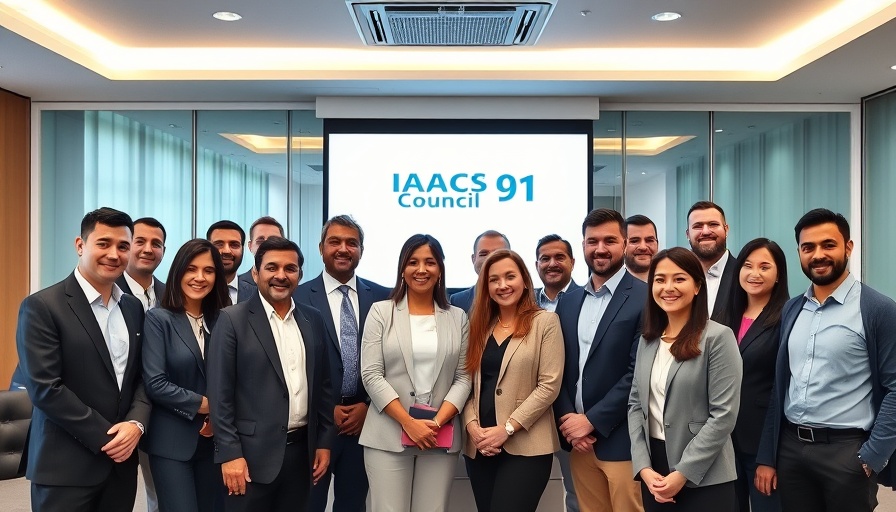
IACS Council 91 group photo during digitalization and decarbonization event.

Unlocking the Future: IACS's Commitment to Digitalization

The recent meeting of the International Association of Classification Societies (IACS) Council in Beijing brought exciting updates on the maritime industry's path towards digitalization and decarbonization. With thriving discussions centered around the Safe Digital Transformation Panel’s objectives, the council emphasized its pivotal role in navigating the complexities of new technologies and autonomous systems. These include efforts towards cybersecurity, the classification of complex systems, and the embrace of marine autonomous surface ships (MASS).

Charting New Waters: The Impact of Autonomy in Shipping

The potential for autonomous vessels to revolutionize shipping cannot be underestimated. IACS's proactive pursuit of regulations around MASS highlights not only the benefits of efficiency and reduced human error but also raises critical questions of safety. Incorporating a robust framework for cybersecurity and communications, as discussed in their meeting, is vital. This ensures that while we advance into an era of digital ships, we are maintaining a vigilant watch over safety and operational integrity.

Fueling Change: New Technology and Energy Solutions

Three years into the development of the Safe Decarbonization Panel, IACS acknowledged significant advancements in chemical technologies that aim to reduce the carbon footprint of the maritime industry. With ongoing work on a technology-neutral basis to support alternatives like ammonia, methanol, and even hydrogen, the future of shipping presents a diverse palette for energy solutions. Most notably, the Council is exploring nuclear technology, provoking discussions about its viability and implications in shipping.

Adaptation Over Time: Revising the Common Structural Rules

IACS is committed to revising its Common Structural Rules (CSR) to adapt to evolving industry standards and stakeholder feedback. After a comprehensive consultation, the Council recognized the importance of transparency and assured stakeholders that the revised rules would maintain or enhance safety levels. As we look towards integrating ESG (Environmental, Social, and Governance) principles, the emphasis on safety must remain a priority in this transition.

Connecting Dots: Integrating Sustainability in Classification

Sustainability is increasingly critical for organizations like IACS, as it aligns with their core mission centered on safety and environmental protection. Not only will developing ESG principles guide IACS’s governance, but they will also harmonize with existing policies of its member organizations. This integration is crucial not only for regulatory compliance but also for fostering a collective commitment to sustainable practices across the industry.

Future Trends: Preparing for a Decarbonized and Digital Tomorrow

As the maritime industry stands at the brink of a digital and decarbonized revolution, the IACS’s recent initiatives represent a defining moment in its evolution. With an adaptive approach to technology, fuel alternatives, and environmental governance, the organization is positioning itself as a leader in maritime innovation. Stakeholders must remain engaged as these developments unfold, ensuring that the industry not only advances technologically but also aligns with broader societal values concerning sustainability.

As maritime professionals, observers and stakeholders, it’s essential to stay informed on these shifts. Understanding the nuances of IACS’s strategies ensures we’re not just passive witnesses, but active participants in shaping the maritime landscape of tomorrow.

Trending News

0 Comments

Write A Comment

*
*
Related Posts All Posts
03.04.2026

Exploring the Importance of Supa Swath CTVs for Offshore Renewables

Update Strategic Marine Sets Sail with Innovative Supa Swath CTVs In a significant advancement for offshore operations, Strategic Marine has recently delivered its first two Supa Swath Crew Transfer Vessels (CTVs) to Mainprize Offshore. This handover marks the beginning of an exciting new chapter under a multi-vessel contract signed in June 2024, aimed at bolstering the fleet dedicated to offshore renewables operations across Europe. First Steps Towards Expansion in Renewable Energy The delivery of these vessels is not just a milestone for Strategic Marine; it represents the foundational step in a program that includes plans for six Supa Swath vessels, with an option for an additional six. Designed by Walker Marine Design, these next-generation CTVs offer improved stability and operational efficiency, a necessity as the European offshore wind market experiences unprecedented growth. Industry-Leading Design for Challenging Environments The cutting-edge design emphasizes seakeeping performance and fuel efficiency, best suited for the often tumultuous waters offshore. With advanced propulsion systems and modern navigation technologies, these vessels are equipped to meet the demands of increasingly busy offshore environments. Notably, this design ethos follows the earlier deployment of vessels MO10 and MO11, which set a precedent in operational standards. Beyond Technical Specifications: The Human Element Bob Mainprize, Managing Director of Mainprize Offshore, highlighted the significance of these deliveries, stating, “The delivery of the first two Supa Swath vessels under this program is an important step in our fleet expansion.” His words underlie a deeper connection between design and operational success: high-quality construction enhances worker safety and efficiency in these demanding roles. Transforming Operations With Advanced Technology Each vessel is designed to reach speeds exceeding 30 knots, with the capability to operate comfortably in seas that may previously have presented challenges. With a bollard pull of 25 tons, the Supa Swath CTVs are engineered not only for human comfort but also for the operational needs of today’s renewable energy projects. Each vessel is set to transport up to 24 personnel, offering a safe transit to offshore energy sites. The Economic Implication of Sustainable Shipping The expansion of Mainprize Offshore’s fleet is indicative of broader trends within the shipping industry focused on sustainability and efficiency. As the company positions itself to meet soaring operations and maintenance demands in the renewable energy sector, the implications for economic growth and job creation in this sector are significant. These vessels are more than just modes of transportation; they’re paving the way for the future of environmentally responsible shipping. Future Insights: A Blueprint for Success As we look to the future, the collaboration between Strategic Marine and Mainprize Offshore exemplifies a successful model for the maritime industry. This partnership not only highlights engineering excellence but also demonstrates a commitment to sustainability, efficiency, and superior service in the world of offshore energy. The supply chain implications of such advancements could help reduce operational costs across the board, ultimately benefiting stakeholders and clients alike. In conclusion, as the demand for renewable energy rises, so too does the responsibility of the maritime industry to embrace innovation. The two newly delivered Supa Swath CTVs stand as a testament to what can be achieved with strategic foresight and collaborative design, setting a new standard for vessels operating in the turbulent waters of the offshore wind sector.

03.03.2026

Navigating the Ship Recycling Market Disruption: Strategies for Success

Update Stormy Seas: The True Cost of Ship Recycling Market Disruption As geopolitical tensions continue to escalate, particularly in the chaotic landscape of the Middle East, the ship recycling industry faces unprecedented challenges. Following a spike in oil prices and declining demand, various markets are stalling, leaving stakeholders questioning what the future holds. Market Response: A Landscape in Flux The turbulence in the Middle East has not only rattled oil prices, pushing them from approximately USD 63/barrel to near USD 71.90/barrel but has also caused cascading effects on the ship recycling market. The Baltic Exchange reported a modest uptick across various indices, but this is a small comfort in a tumultuous environment. The Cape, Panamax, and Supra indices showed slight gains; however, they remain subdued in light of oil fluctuations and the looming uncertainties in ship recycling demand. According to GMS, the cash buyer, ship recycling activity, particularly in the Indian subcontinent, has slowed significantly. Factors ranging from political unrest to raw material pricing have stifled operations. With the wariness of buyers heightened, sales have dwindled significantly, adding further pressure on an already strained market. The Rippling Effects of Geopolitical Turmoil Recent analyses highlight that not since the days of COVID-19 have we seen such a significant disruption affecting ship recycling so directly. Political upheavals, especially the impact of sanctions on Iran and ongoing geopolitical conflict, have created a phantasmagoric market scenario. Strained diplomatic relations and fluctuating commodity prices lead to a market that is anything but predictable. The repercussions can also be observed in countries like Bangladesh and Pakistan, where local market sentiments remain cautious due to various complicating factors, such as seasonal slowdowns and environmental disasters. Floods in Punjab have dampened buyer activity in Pakistan, while in Bangladesh, delays in compliance with the Hong Kong Convention are causing some yards to fall behind. Price Dynamics and Local Sentiments Current pricing trends in the Indian subcontinent remain discouraging, with all major ship recycling destinations witnessing declines in ship values. Spurred by tempered demand, prices across the board have fallen, with dry bulk indications regularly bidding below USD 400/LDT. This stark trend reflects a sea change in buyer preferences, as they navigate through uncertain waters. In contrast, Turkish markets have welcomed an influx of European RoRos, providing temporary relief to a market that has been largely stagnant. Observers note that while Turkey's ship recycling scene benefits from this development, the broader landscape remains cautious as the Lira’s persistent weakness clouds market confidence. Future Outlook: Caution Ahead With external pressures mounting, the future of ship recycling is marked by uncertainty. Market experts have offered conflicting predictions about what lies ahead. While some suggest potential rebounds due to upcoming demand from China’s steel industry, others counter that the current climate calls for continued vigilance. Best Oasis reports a prevailing atmosphere in which seasonal slowdowns, regulatory delays, and macroeconomic worries are heightened. Therein lies the difficulty: can the ship recycling market sustain itself in such a volatile environment? What This Means for Stakeholders For players in the shipping and recycling industries, adaptability will be key. Understanding local market sentiments, navigating global political dynamics, and forecasting commodity pricing shifts will help stakeholders pivot in the face of these market disruptors. Staying informed on geopolitical developments and pricing trends is essential to making sound investment decisions. As we move forward in 2026, the challenge will be transforming current uncertainties into opportunities while remaining grounded in factual data and market conditions. Awareness of the broader implications for the ship recycling market can provide critical insights necessary for smart decision-making. In a world governed by unpredictability, the ability to adapt and anticipate shifts may well be the lifeboat that keeps stakeholders afloat in the tumultuous waters of ship recycling.

03.01.2026

OPEC+ Elevates Oil Production Amid Middle East Tensions: Are We Prepared?

Update OPEC+ Reacts to Rising Tensions: A Strategic Move In response to escalating geopolitical tensions in the Middle East, OPEC+ has announced an increase in its crude oil production target by 206,000 barrels per day for April 2026. This decision comes amidst worries of potential supply disruptions along the critically essential Strait of Hormuz, a vital route through which approximately 20% of the world’s oil flows, representing a staggering 15 million barrels daily. Understanding the Significance of the Strait of Hormuz The Strait of Hormuz is often described as the world’s most critical oil chokepoint. It connects the Persian Gulf with the Gulf of Oman and is flanked by several key oil-producing nations, including Iran and Saudi Arabia. Amidst recent military activities in the region, including U.S. and Israeli attacks on Iran, the maritime traffic in this area has been threatened, raising concerns about immediate impacts on global oil supply. As reported by Rystad Energy's Jorge Leon, the geopolitical landscape has shifted dramatically, emphasizing the reality that more oil is not necessarily what the market needs. Instead, what is critical is ensuring that current flows of crude oil can continue unhindered. With alternatives to bypass the Strait being limited, even the announced production increase by OPEC+ is unlikely to offer immediate relief if tensions persist. Market Reactions and Future Predictions The market has already begun reacting, with oil prices climbing steeply. Brent crude prices rose to around $72.87 a barrel, which is near a seven-month high, reflecting the nervousness regarding future supply. Analysts expect fluctuations to continue, particularly if the conflict intensifies and further restricts oil shipments. In historical terms, any disruption in the Strait could trigger a significant volatility in oil prices, reminiscent of past conflicts. The fear is not only that oil production might be impacted but also that the security of tankers transiting through these waters may be compromised, as evidenced by recent attacks on vessels reported by sources such as KRQE News. Mitigating Factors and Strategic Responses While the situation is critical, OPEC+ members are attempting to balance the fine line between responding to immediate geopolitical threats and avoiding oversupply in the markets. They have strategic reserves and alternative routing options, such as the East-West pipeline from Saudi Arabia to the Red Sea. However, estimates suggest that even with these options, around 8-10 million barrels could still remain threatened. The decisions being made today by these oil-producing nations are not only about managing output but about securing economic stability in regions heavily reliant on oil exports. As tensions simmer, the oil market must adjust to a new normal: one full of uncertainty and potential volatility. Looking Ahead: What’s Next for Global Oil Supply? As the year progresses, market stakeholders will need to remain vigilant. The potential for sustained conflict could mean ongoing risks for oil flows from the Middle East, raising questions about energy security on a global scale. Analysts suggest that while immediate production increases are helpful, they are merely a temporary measure against larger structural disruptions. In the coming days and weeks, watchful eyes will be needed to gauge how the geopolitical landscape unfolds and its ramifications on global energy prices. Overall, while OPEC+'s decision can be seen as a preparatory step amid rising tensions, the complexity of the situation warrants careful monitoring and adaptive strategies from all parties involved.

Terms of Service

Privacy Policy

Core Modal Title

Sorry, no results found

You Might Find These Articles Interesting

T
Please Check Your Email
We Will Be Following Up Shortly
*
*
*