

Add Row
Add Element

Add Element
Moss Point Gulf Coast Tech
update

Gulf Coast Tech

update
Add Element
  • Home
  • About
  • Categories
    • Tech News
    • Trending News
    • Tomorrow Tech
    • Disruption
    • Case Study
    • Infographic
    • Insurance
    • Shipbuilding
    • Technology
    • Final Expense
    • Expert Interview
    • Expert Comment
    • Shipyard Employee
  • Mississippio
October 31.2025
3 Minutes Read

Innovative Deal to Build Electric TRAnsverse Tugs in India Signals Maritime Future

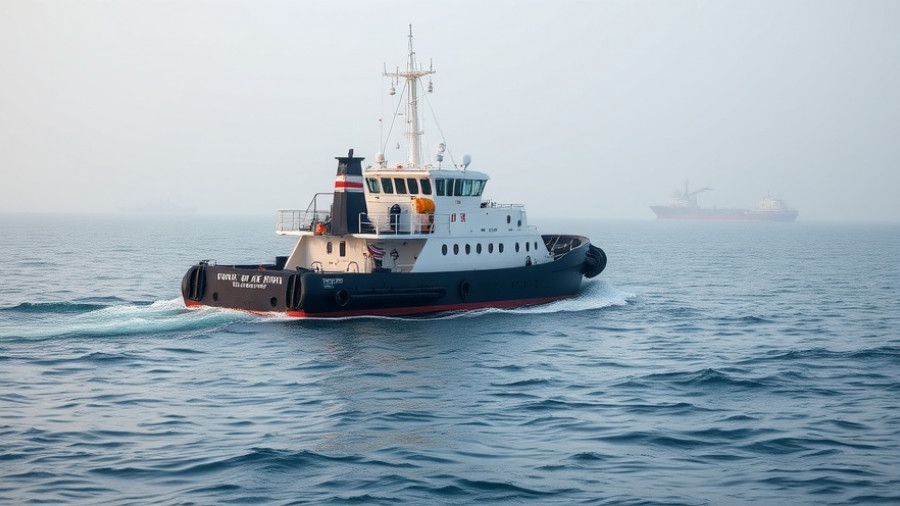
Electric transverse tugboat in calm Indian waters with distant ships.

Collaborating for a Greener Future: Svitzer and Cochin Shipyard

On October 31, 2025, Svitzer, a prominent towage service provider based in Denmark, announced a significant partnership with India’s Cochin Shipyard Limited (CSL) to build electric TRAnsverse tugs. This collaboration, underscored by a Letter of Intent (LoI), highlights both companies' commitment to advancing sustainability in the maritime sector while boosting India’s role as a global maritime manufacturing hub.

Australian Expertise Meets Indian Innovation

The agreement merges Svitzer's extensive global expertise in sustainable towage with Cochin Shipyard's formidable shipbuilding capabilities and India’s diverse engineering talent. The TRAnsverse tugs are designed to be eco-friendly, efficiently maneuverable, and will support Svitzer’s global fleet renewal and expansion targets while meeting increasingly stringent environmental regulations. As Madhu S. Nair, Chairman and Managing Director of CSL, noted: "This collaboration will showcase CSL’s world-class capabilities, deepen local supply chains and talent, and accelerate the availability of green, high-performance tugboats for ports at home and abroad."

Advancing Maritime Electrification

By embracing this electrification journey, Svitzer aims to operationalize elements of India’s Maritime India Vision 2030 and the broader Maritime Amrit Kaal Vision 2047. Kasper Nilaus, CEO of Svitzer, remarked that this partnership represents a decisive step toward delivering safer, cleaner, and more efficient harbor operations. He emphasized that combining Svitzer’s nearly 200 years of experience in towage with India's innovative manufacturing ecosystem positions the initiative for success.

Revolutionizing Towage

The TRAnsverse tug concept is pivotal to this partnership as it is renowned for its exceptional maneuverability and fuel efficiency. These tugs will not only enhance operational performance but also significantly reduce emissions—a priority in today's environmentally conscious world. As the need for greener alternatives in towage solutions intensifies, Svitzer and Cochin Shipyard are stepping up to provide a response high on sustainability.

India as a Global Maritime Hub

India's burgeoning role in the global maritime landscape is underscored by this initiative. With several investments in maritime projects and infrastructure, the nation is steadily transforming into a significant player in shipbuilding and maritime services. This collaborative project could lead to more locally developed, world-class designs contributing to India's green port ambitions and bolstering domestic industries.

Expected Outcomes and Future Implications

While the immediate outcomes of this LoI focus on developing electric tugs, the longer-term implications are much broader. The partnership is likely to create numerous job opportunities within India's shipbuilding and engineering sectors, thereby generating local economic growth. Furthermore, this effort aligns with global pushes for decarbonization in various sectors—allowing the maritime industry to modernize and reduce its environmental footprint.

Conclusion: A Forward-Thinking Approach

As the maritime industry grapples with the dual challenges of operational efficiency and environmental responsibility, collaborations like that of Svitzer and Cochin Shipyard highlight a progressive shift towards sustainable practices. Their initiative not only promises to innovate towage solutions but also champions India's future as a leading maritime manufacturing nation. This deal demonstrates that with collective expertise and commitment, a sustainable maritime future is not just aspirational—it’s within reach.

Trending News

0 Comments

Write A Comment

*
*
Related Posts All Posts
12.15.2025

Jan De Nul Completes Pivotal Cable Installation for TenneT's DolWin Project

Update Jan De Nul Completes Key Cable Installation for Offshore Wind Initiative Another milestone in the renewable energy sphere has been reached as Jan De Nul, the Belgian offshore contractor, finishes the vital cable installation at TenneT’s DolWin kappa platform. This project is not just about laying cables; it symbolizes progress in the transition to greener energy sources in Germany. The completion of these three high voltage alternating current (HVAC) cables will facilitate the movement of nearly 660 MW of renewable electricity, a capacity sufficient to power over 800,000 households in the country. The Heart of the Project: Connecting Offshore Wind Farms The project involved laying three 155 kV HVAC cables, spanning a total of 37 km. These cables create a crucial link between the Nordseecluster 1 and 2 offshore wind farms and the DolWin kappa converter station. This interconnection is a fundamental component of Germany's growing renewable energy infrastructure, allowing for efficient transmission from wind to grid. Operation Details: Advanced Techniques in Submarine Cable Installation Merging technology with expertise, cable-laying vessel Isaac Newton played a pivotal role in transporting the cables from Hellenic Cables’ facility in Greece. The project wasn’t merely about transport; it also included sophisticated installation techniques. For instance, at intersections with existing subsea infrastructure, the team deployed concrete mattresses for additional protection. Meanwhile, cable burial was conducted along proposed routes to safeguard the HVAC lines, which is critical for the long-term stability and functionality of the installation. Environmental Considerations: Protecting Marine Ecosystems As the maritime industry continuously seeks to mitigate ecological impacts, Jan De Nul deployed the multi-purpose vessel Adhémar de Saint-Venant to bury cables and minimize disruption to marine life. In addition, the protective measures included the installation of approximately 25,000 tonnes of rock berms using the rock installation vessel Simon Stevin, ensuring that the cables are secure and that the ecosystem remains protected. Looking Ahead: The Future of Renewable Energy in Germany The DolWin Kappa project is a pivotal part of TenneT’s ambitious HVDC DolWin6 initiative, which aims to connect new and existing offshore wind farms like Gode Wind 3 to the German onshore grid. The full capacity of the connected projects is expected to reach a staggering 900 MW, enough to supply more than 1.1 million homes with clean energy. Anticipated connection and testing activities slated for 2026 are crucial steps toward realizing this vision, along with the expected installation of two offshore substations for the wind farms. A Collaborative Effort Toward Sustainable Energy This project underscores the critical collaboration between Jan De Nul and Hellenic Cables as they work together to innovate, develop and install cutting-edge connections for offshore wind projects. Their combined expertise not only enhances the efficiency of existing infrastructures but also lays the foundation for future endeavors that target expanding renewable energy capacity. In closing, the completion of the cables at DolWin kappa by Jan De Nul is not just a technical achievement; it is a commitment to sustainable energy solutions. As Europe navigates the shift toward green energy, projects like these serve as essential stepping stones toward a cleaner, more sustainable future.

12.13.2025

Potential Mineral Lease Sale Offshore Virginia: A Move Toward Resource Independence

Discover the implications of the potential mineral lease sale offshore Virginia, focusing on critical mineral supply, environmental stewardship, and economic strategy.

12.12.2025

Why We Must Urgently Regulate Livestock Carriers for Safety

Update The Urgent Need for Livestock Carrier Regulation A collective of 36 global animal welfare organizations is taking a decisive stand against outdated regulations governing livestock carriers, highlighting a critical issue that poses severe risks not only to animal safety but also human lives and environmental health. In an urgent letter addressed to the International Maritime Organization (IMO), these advocates are demanding the implementation of binding international regulations to safeguard the welfare of transported animals and the safety of seafarers. Systemic Safety Failures in an Ageing Fleet Current regulations governing the live export industry are alarmingly lax, as evidenced by a fleet that averages an astounding 40 years in age. The recent tragedy involving the MV Spiridon II underlines the predictability of such disasters, as veterinarian Dr. Maria Boada Saña asserts that these incidents highlight systemic safety failures tied to outdated vessels operating without stringent international safety codes. Statistics that Speak Volumes Since 2000, the maritime community has witnessed the tragic loss of at least seven major livestock carriers, which resulted in countless animal fatalities and risked the lives of seafarers. Noteworthy incidents include the Gulf Livestock 1 disaster in 2020, where the loss of human life and animal suffering reached unprecedented levels. These stark realities raise questions: how can we allow a fleet this old and hazardous to continue operating without enhanced regulatory frameworks? Lessons from More Regulated Countries Countries like Australia, New Zealand, India, and the UK have initiated legislative measures banning or phasing out live exports by sea in response to these risks. In contrast, less-regulated nations often evade accountability, creating a dangerous disparity within international maritime operations. This inconsistency allows a dangerous status quo to persist—one where numerous livestock carriers operate without adequate oversight, often discharging untreated animal waste into marine environments. This is a clear violation of the ethical stewardship our oceans demand. Can an International Code Bring Change? Dr. Lynn Simpson, a former live export veterinarian, points out that the less regulated countries' practices undermine the very concept of acceptable mortality rates, permitting them to operate dangerously. To minimize these risks, advocates are urging the adoption of international guidelines akin to Australia's Marine Orders 43, which have already shown improvements in vessel safety. Would implementing such a code significantly mitigate the risks associated with transporting live animals? The Path Forward: Advocacy and Action The time for a serious conversation around livestock transport regulations is now. The need for action is underscored by the recent call from animal welfare organizations for binding international standards affecting vessel design, stability, and animal life support systems. By advocating for robust regulations, we can steer this industry away from its troubling trajectory. Final Thoughts: The Future of Livestock Transport As the global conversation intensifies, it is imperative that stakeholders recognize the necessity of reforming existing policies surrounding livestock carriers. The risks are undeniable and must be addressed to protect both animals and maritime safety. Those who care about animal welfare must lend their voices to this cause. After all, the implications go beyond just the animals involved; they impact myriad facets of our shared environment.

Terms of Service

Privacy Policy

Core Modal Title

Sorry, no results found

You Might Find These Articles Interesting

T
Please Check Your Email
We Will Be Following Up Shortly
*
*
*