
Add Row
Add Element

Add Element
Moss Point Gulf Coast Tech
update

Gulf Coast Tech

update
Add Element
  • Home
  • About
  • Categories
    • Tech News
    • Trending News
    • Tomorrow Tech
    • Disruption
    • Case Study
    • Infographic
    • Insurance
    • Shipbuilding
    • Technology
    • Final Expense
    • Expert Interview
    • Expert Comment
    • Shipyard Employee
  • Mississippio
October 29.2025
3 Minutes Read

Innovative MoA to Transform US-Korea Shipbuilding and Boost Mississippi's Economy

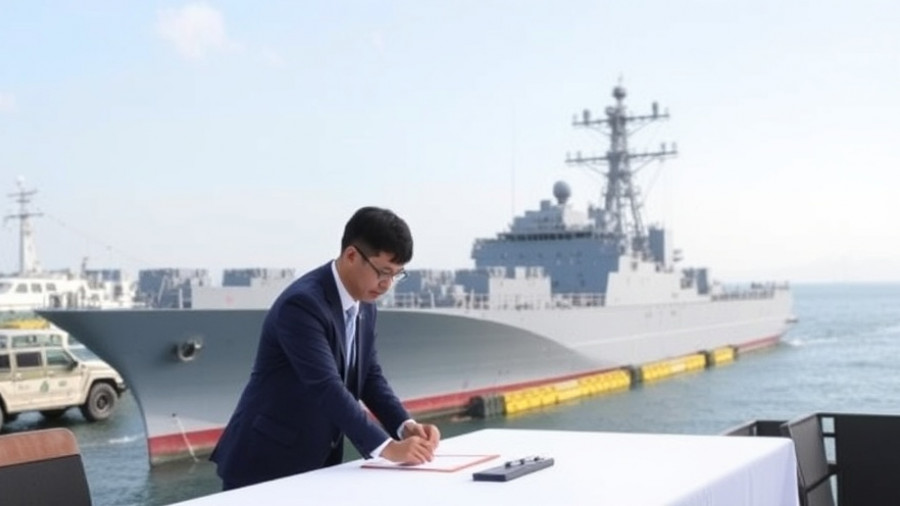
HII and HHI sign MoA to advance US-Korea shipbuilding

Strengthening U.S.-Korea Shipbuilding Ties with a New Agreement

In a remarkable step towards bolstering the shipbuilding infrastructure of both the United States and South Korea, Huntington Ingalls Industries (HII) and HD Hyundai Heavy Industries (HHI) have signed a memorandum of agreement (MoA). The deal, inked during the Asia-Pacific Economic Cooperation (APEC) forum in Gyeongju, South Korea, is poised to enhance the collaborative efforts between the two countries in naval construction.

Why This Agreement Matters for National Security

The MoA initiates a framework to address key areas such as shared investment, technological exchange, and strategic partnerships in shipbuilding. With rising geopolitical tensions and increased military requirements, the U.S. Navy relies on efficient shipbuilding capacities to remain competitive in the Indo-Pacific region. Eric Chewning, HII’s executive vice president for maritime systems, underscored that this collaboration embodies a pivotal shift in military readiness and reliability.

Exploring Innovative Shipbuilding Technologies

One of the standout focus areas of the MoA is the commitment to integrate advanced technologies like artificial intelligence, robotics, and automation into the shipbuilding processes. This innovative approach aims not only to streamline production but also to enhance overall operational efficiency, bringing unparalleled agility to the U.S. naval fleet. As Joo Won-ho of HHI explained, combining Korea's leading-edge technology with U.S. expertise promises to unlock tremendous potential for both sides.

Immediate Impact: Pursuit of the Next-Generation Logistics Ship

The agreement follows their earlier commitment to collaborate on the U.S. Navy’s Next-Generation Logistics Ship (NGLS) design contract. This initiative represents an exciting partnership as it fuses HII's extensive experience in crafting complex vessels with HHI's recognized proficiency in auxiliary ship designs previously showcased with the Royal New Zealand and South Korean navies. This strategic alignment positions both companies favorably in a highly competitive marketplace.

A Vision for the Future of Shipbuilding

HII and HHI's MoA speaks to a broader vision of enhancing the U.S. shipbuilding base through joint investments. With a focus on distributed and modular construction methodologies, both companies aspire to address national security objectives and quicken construction timelines—ensuring that the U.S. shipbuilding industry remains resilient and innovative.

Community Implications for Mississippi

For Mississippi, home to HII’s facilities, this agreement could spell a significant economic boost. Improved shipbuilding capabilities led by collaborations on a global scale can lead to job creation and skills development in the local workforce. As the shipyard ramps up capacity to meet new demands, Mississippi could see enhanced investment opportunities, bolstering its position in the defense manufacturing landscape.

Conclusion: Embracing New Opportunities

As HII and HHI embark on this transformative journey, it not only opens doors for technological advancement but also stands to enrich bilateral ties between the United States and South Korea. Stakeholders in Mississippi are encouraged to engage with these developments, as they represent a unique chance to participate in the evolution of military readiness and commercial shipbuilding. For anyone interested in the future of shipbuilding, staying informed on these advancements is imperative.

Technology

0 Comments

Write A Comment

*
*
Please complete the captcha to submit your comment.
Related Posts All Posts
04.07.2026

Navigating Microsoft's AI Agent Stack: A Risk for Junior Developers?

Update Microsoft's AI Landscape: A Complicated Terrain for Developers As the pace of technological innovation accelerates, few topics have ignited as much debate as the impact of agentic AI on software development. Microsoft's recent assertions regarding the intricacies of their agent stack bring forth valid concerns about the potential hollowing out of the junior developer pipeline, a phenomenon that could have lasting repercussions across the tech industry. A Balancing Act: The Shifting Roles of Developers Prominent figures at Microsoft, Mark Russinovich and Scott Hanselman, have articulated a powerful argument that raises alarms about the evolving job landscape for early-career developers (EiC). They posit that while senior engineers benefit from agentic AI's productivity enhancements, junior developers—who are essential for fostering creativity and developing systems knowledge—are at risk of being sidelined. This trend could ultimately disrupt the vitality of the tech sector's talent pipeline. The Impact of AI on Employment Dynamics According to research from Harvard, the employment rate for 22- to 25-year-olds in AI-exposed jobs, including software development, saw a striking 13% decline post-GPT-4 release. This data underscores the reality of seniority-biased technological changes, where organizations prefer to automate lower-tier roles, creating a disheartening perspective on future job opportunities for aspiring tech talents. Real Developers, Real Problems: Are We Losing Skills? The conduit through which junior developers sharpen their skills—their participation in straightforward implementation tasks and bug fixes—seems to be narrowing alarmingly. With AI increasingly handling such duties, the development of crucial systems knowledge, which seasoned engineers possess and younger programmers desperately need, may stagnate. Tech experts have begun to refer to this worrying trend as "cognitive debt," a condition where reliance on AI stunts cognitive growth in professionals. Preceptorships: Mentorship in the Age of AI In response to these developments, Russinovich and Hanselman propose nurturing a new approach through preceptor programs. By pairing senior engineers with EiC developers, organizations can create opportunities for mentorship that reflect real-life project work, similar to how clinical practitioners are trained in medicine. Such frameworks could help cultivate the critical judgment required to assess and guide AI outputs, ensuring that the next generation of developers is equipped to tackle the challenges of an evolving tech ecosystem. The Future of AI Tools: Where Do We Go from Here? The conversation surrounding the implications of Microsoft's agent stack extends beyond immediate job security concerns. As competition intensifies within the ever-evolving AI agent landscape—emboldened by Microsoft’s new offerings—startups and emerging companies must navigate both risks and opportunities. They can either enhance their foothold by offering specialized, domain-specific solutions that surpass Microsoft’s broad capabilities or align with Microsoft through complementary products. Emphasizing Vertical Expertise Over Horizontal Solutions Instead of competing directly with Microsoft on every front, startups should focus on niche verticals where deep knowledge and tailored solutions trump generalized offerings. By concentrating on areas such as health technology or financial services, companies, like those in oncology or supply chain solutions, can build their unique value proposition, distanced from the expansive Microsoft ecosystem. Conclusion: The Call to Action As we move forward in this age of rapid technological transformation, it's crucial for organizations to recalibrate their hiring strategies. We must advocate for the inclusion of junior developers in significant projects and support innovative training practices like preceptor programs. The future of our tech industry depends on it.

04.06.2026

Feta Cheese Dispute: A Surprising Test for US-EU Relations

Update The Feta Conflict: A Cheesy Trade War The seemingly innocuous topic of feta cheese has sparked a significant dispute between the U.S. and Europe, highlighting the complexities of international trade. The European Union (EU) has a long-standing geographical indication that defines feta specifically as a cheese made from sheep's milk or a mixture of sheep and goat’s milk. In contrast, America’s version of feta has evolved to include various interpretations, often using cow’s milk, raising eyebrows across the Atlantic. As tensions rise, so do questions about the cultural significance of food and what constitutes authenticity in culinary traditions. Cheese as Cultural Heritage This conflict is more than just a question of cheese; it represents national pride and identity. For many European nations, particularly Greece, feta is a symbol of cultural heritage, linked to generations of tradition. In the U.S., however, feta has become a versatile ingredient, found on salads and pizzas alike. Both regions vigorously defend their interpretations, reflecting wider debates around globalization, authenticity, and the preservation of cultural practices. The Economic Stakes The financial implications of this cheese battle are significant. The EU's regulations and tariffs impact not only the import of feta but also affect broader trade relationships. The U.S. has a substantial market for feta cheese, and American producers are pushing back against these restrictions. The ongoing trade struggle reveals how even the most mundane products can become pawns in high-stakes economic games, influencing market trends and international relations. How Food Shapes Relationships Beyond its price tags, this disagreement illustrates food’s power to shape geopolitical landscapes. As countries navigate trade negotiations, culinary disputes can reflect deeper political rifts. Cheese wars could affect not just feta but also other traditional foods—a potential domino effect that could shake the very foundation of international gastronomy. Conclusion: Beyond Feta, a Case Study in Global Dynamics This feta cheese conflict challenges US-European relationships, posing important questions about authenticity, heritage, and the future of international trade. As we watch this unfold, it becomes clear that food is more than just sustenance; it is intertwined with identity and diplomacy. The outcome of this cheeseboard battle could have implications well beyond a slice of feta and could influence trade regulations, cultural exchanges, and culinary traditions. How will the U.S. and the EU navigate this complex terrain? Only time will tell.

04.05.2026

Unlock Daily Success with NYT Pips: Tips and Insights for All Levels

Update Engaging with Today's NYT Pips: Uncovering Innovative InsightsFor many, the New York Times Pips puzzle is not just a game; it’s a daily ritual filled with excitement and satisfaction as they piece together clues and challenges. The April 6 edition strikes an inspiring balance between logic and creativity, promising to ignite both critical thinking and enjoyment among its players. In this ever-evolving landscape of puzzles, each day brings new opportunities for inspiration and learning.Expert Strategies for Navigating PipsToday's puzzles cater to all skill levels, providing layered challenges from Easy to Hard. If you’re familiar with the rhythm of Pips, you'll appreciate the thoughtful design behind today’s set. Taking it level by level, players can utilize visual aids and step-by-step hints that make challenging puzzles approachable. Engaging with simpler clues first can open doors to the harder sets, allowing players to build confidence before tackling the more intricate patterns.Technology's Role in Daily PuzzlesWhile some may see puzzles purely as a form of entertainment, they also serve as mental exercises that reflect broader industry trends. In healthcare and finance, for example, the strategies employed to solve puzzles parallel emerging trends in data analysis and innovative technologies. These insights allow professionals to hone their problem-solving skills in a fun way, fostering creativity that can be leveraged in their business environments.Emotional Connections with PuzzlesFor many players, Pips offers more than just a mental challenge; it cultivates a sense of community and nostalgia as friends and family join in solving puzzles together. This shared experience can lead to meaningful discussions about the strategies used, the frustration of difficult puzzles, and the joy of those eureka moments when a solution finally clicks. In today’s fast-paced world, such moments are cherished. They remind us of the joy found in puzzles and the connections forged through shared challenges.Reflection on Daily RitualsThe simple act of engaging with a daily puzzle not only enhances cognitive abilities but also enriches social interactions. With innovative companies offering apps and platforms that make puzzle-solving more intuitive and interactive, the timeless nature of Pips continues to thrive. As we collectively navigate responsibilities in the realms of healthcare, finance, and technology, let’s not overlook the value of humor, strategy, and social connection that daily puzzles provide.

Terms of Service

Privacy Policy

Core Modal Title

Sorry, no results found

You Might Find These Articles Interesting

T
Please Check Your Email
We Will Be Following Up Shortly
*
*
*