

Add Row
Add Element

Add Element
Moss Point Gulf Coast Tech
update

Gulf Coast Tech

update
Add Element
  • Home
  • About
  • Categories
    • Tech News
    • Trending News
    • Tomorrow Tech
    • Disruption
    • Case Study
    • Infographic
    • Insurance
    • Shipbuilding
    • Technology
    • Final Expense
    • Expert Interview
    • Expert Comment
    • Shipyard Employee
  • Mississippio
July 08.2025
3 Minutes Read

Meet the MFV-R Blue Dolphin: Next-Gen Marine Fire & Rescue Vessel Transforming Emergency Response

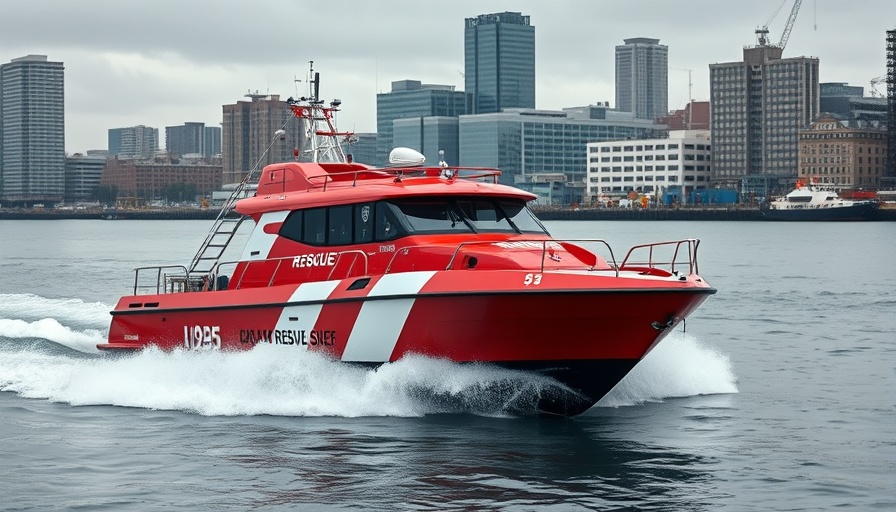
Next-gen marine fire and rescue vessel in urban waterfront.

Introducing the Cutting-Edge MFV-R Blue Dolphin

In a remarkable stride toward enhancing maritime rescue capabilities, BMT and Penguin Shipyard International have unveiled the MFV-R Blue Dolphin, a pioneering marine fire and rescue vessel. Designed specifically for the Singapore Civil Defence Force (SCDF), this next-gen vessel demonstrates significant advancements in operational efficiency and emergency response procedures at sea. The Blue Dolphin, alongside its twin vessel, marks a considerable upgrade for maritime firefighting and rescue functions in one of the most bustling maritime areas worldwide.

Why This Vessel Matters: Mission-Ready Features

At 38 meters long, the Blue Dolphin is not just about size but remarkable design that optimizes performance. The aluminum monohull ensures superior maneuverability and stability, critical in high-stakes situations. The vessel's ability to reach speeds exceeding 30 knots allows it to respond promptly to emergencies, a necessity in a region where every second counts.

The enhanced firefighting system onboard the Blue Dolphin is particularly noteworthy. With three powerful fire monitors and pumps delivering an impressive flow rate of 3,600 cubic meters per hour, it is equipped to handle significant incidents effectively. The addition of 12,000 liters of foam capacity and a self-protection water curtain afford robust firefighting capabilities that far exceed standard requirements.

A Multifaceted Approach to Safety and Response

The Blue Dolphin is equipped with a high-speed rubber hull inflatable boat (RHIB) designed for rapid deployment during rescue missions. This feature reflects an understanding of the complexities involved in marine emergencies, especially in shallow waters where traditional vessels may struggle.

Moreover, in anticipation of potential hazards, the onboard Chemical, Biological, and Radiological (CBR) protection systems show foresight into evolving threats in maritime operations. Sensors capable of detecting toxic agents up to 5 kilometers away enhance the vessel's capabilities in hazardous situations, allowing for real-time mapping of high-risk areas.

Sustainability Meets Performance

In alignment with global sustainability efforts, the vessel incorporates solar panel systems, enabling it to operate on renewable energy, alongside biofuel-compatible engines. This commitment to sustainability not only helps reduce the environmental footprint but aligns with Singapore’s broader goals for environmental consciousness in public service operations.

A Strong Validation for BMT and Penguin

The successful delivery of the Blue Dolphin signifies a robust endorsement of BMT's design prowess. The commissioning ceremony, presided over by Minister Edwin Tong, celebrated the vessel's sophisticated features and its critical role in the SCDF's mission. As Martin Bissuel, head of sales at BMT, noted, this project is a testament to the confidence placed in their design capabilities following previous successes.

Looking Ahead: The Future of Maritime Rescue

The introduction of the MFV-R Blue Dolphin prepares the SCDF for future maritime challenges. With constant developments in technology, it is imperative that emergency services adapt swiftly and efficiently. The integration of advanced systems, including autonomous features like virtual anchoring, reflects an understanding of the demanding landscape of emergency maritime operations.

In the context of rising maritime traffic and associated risks, the evolution of such vessels is crucial. They are not merely tools; they represent a comprehensive strategy to improve safety, save lives, and protect vital maritime resources.

The delivery of the Blue Dolphin positions Singapore as a leader in innovative rescue solutions, reinforcing the importance of timely advancements in firefighting and rescue capacity in congested waters.

Tomorrow Tech

0 Comments

Write A Comment

*
*
Related Posts All Posts
10.31.2025

Discover How Glosten's All-Electric 75-Passenger Ferry Redefines Marine Travel

Update Revolutionizing Marine Travel with Electric Ferries As concerns over climate change and sustainable transport grow, the unveiling of Glosten's new all-electric 75-passenger ferry marks a significant milestone in sustainable marine travel. Based in Seattle, Glosten is a leader in naval architecture and marine engineering, and their latest vessel promises not just to enhance green travel but also to redefine ferry design. Innovative Design and Functionality Featuring a lightweight carbon fiber hull, this ferry achieves remarkable energy efficiency, utilizing smaller batteries while easing the demands on shoreside charging infrastructures. The strategic positioning of battery compartments on the main deck allows operators to tailor battery types to their needs, ensuring flexibility in service and maintenance. This thoughtful design promotes access during inspections while optimizing performance, minimizing costs without compromising on sustainability. The Importance of Sustainability in Marine Travel With the increasing push for environmentally friendly transportation options, electric ferries like Glosten's play a crucial role in reducing emissions in marine operations. A notable reference point is the Gee's Bend ferry on the Alabama River, which successfully converted from diesel to 100% battery-electric propulsion in 2019. This project demonstrated substantial operational cost savings and reduced emissions, paving the way for similar innovations across the industry. Notably, the successful implementation of battery technology for marine transport serves as a model for future ferry designs. Advancements in User Experience Besides environmental concerns, the passenger experience is heavily prioritized in Glosten's design. The interior is crafted to facilitate various service needs while ensuring crew comfort and operational control. This holistic approach is essential as travel habits evolve and passengers demand more from their travel experiences. Future Trends in Ferry Technology Ferry operators looking to invest in sustainability will find compelling reasons to consider all-electric options in the coming years. As technology evolves, electric ferries will likely become more commonplace, reflecting shifts not only in operator expectations but also in passenger preferences. Additionally, the dual azimuthing thrusters provide intuitive controls that enhance maneuverability, promising smoother travel experiences. Conclusion: Embracing the Electric Future With innovations like Glosten's all-electric ferry, the future of marine travel looks increasingly electric and sustainable. As more operators and passengers demand eco-friendly travel options, the marine industry must embrace this shift towards sustainable technologies. Such advancements are not just beneficial to the environment; they are crucial for ensuring the ferry service remains relevant in a rapidly evolving transportation landscape.

10.30.2025

New Era of Shipping: ABS and KRISO Forge Alliance for SMR Technology

Update New Era of Shipping: ABS and KRISO Forge Alliance for SMR Technology In a significant step towards sustainable maritime solutions, the American Bureau of Shipping (ABS) and the Korea Research Institute of Ships & Ocean Engineering (KRISO) have signed a memorandum of understanding (MOU) aimed at advancing the utilization of small modular reactors (SMRs) in marine and offshore applications. This collaboration comes at a time when the maritime industry is reconsidering nuclear energy as a viable and strategic propulsion source. Understanding the Marine Propulsion Transformation The rise of SMRs heralds a new era in maritime propulsion. ABS and KRISO's partnership is centered on joint research projects that will explore the design of SMR-powered ships and floating power generation platforms. Christopher J. Wiernicki, chairman and CEO of ABS, emphasizes the potential of nuclear energy to provide unmatched energy density and reliability. This collaboration not only sets the stage for innovative designs but also addresses important regulatory guidelines necessary for safe and effective implementation. The Role of Nuclear Energy in Maritime Decarbonization As global shipping faces increased scrutiny over its carbon footprint, nuclear energy stands out for its potential to reduce emissions drastically. According to a report by Lloyd’s Register, nuclear power could revolutionize maritime operations by eliminating reliance on fossil fuels, thereby extending vessel lifecycles and simplifying refueling logistics. With the push towards zero-emission technologies, ABS’s proactive engagement in nuclear power projects emerges as a crucial factor in the industry's decarbonization efforts. Why Small Modular Reactors Are Gaining Traction The advantages of SMRs lie in their design and modularity. Typically less complex and smaller than traditional reactors, SMRs can be produced in factories and transported to sites for assembly. This compact size simplifies safety considerations and regulatory compliance, making them ideal candidates for maritime settings—a key point echoed by ABB's collaborations in developing similar reactor technologies. Challenges and Future Trends in Nuclear Maritime Technology While the prospects are promising, several challenges remain for the widespread adoption of nuclear power in shipping. Community readiness and public perception of nuclear energy significantly influence its integration. Recent initiatives, such as the International Maritime Organization's recommendations to amend safety codes for nuclear merchant ships, seek to address these issues, paving the way for broader acceptance and investment in nuclear technologies. What Lies Ahead: Predictions for Nuclear Propulsion As ABS and KRISO forge ahead with their joint efforts, the landscape of maritime energy is set for transformation. By prioritizing nuclear power, the maritime industry could see the evolution of environmentally friendly vessels with significantly reduced operational costs over time. Engaging with technological advancements, regulatory improvements, and strategic partnerships will be pivotal for achieving this future. In summary, as the maritime industry continues to explore innovative energy solutions, the collaboration between ABS and KRISO signals an exciting chapter in the decarbonization narrative. With a committed effort toward nuclear technology, stakeholders can anticipate a safer, more efficient, and sustainable shipping future.

10.29.2025

Everllence’s First S90 Methanol Engine Retrofit Opens New Opportunities in Shipping

Update The Future of Maritime Fuel: A Breakthrough in Methanol Technology In a significant advancement for the shipping industry, Everllence has successfully completed the world’s first conversion of a B&W S90 two-stroke engine to operate on dual-fuel methanol. This pioneering retrofit was conducted on Cosco Shipping Lines’ impressive 20,000 TEU container vessel, the Cosco Shipping Libra, marking a notable milestone in efforts towards decarbonization and sustainable shipping practices. How the Retrofit Works The retrofit transitioned the vessel's 11S90ME-C engine to an 11S90ME-LGIM configuration, utilizing Liquid Gas Injection Methanol. Such conversions are crucial as they enable vessels to adapt to changing fuel landscapes without the need for entirely new engines. This adaptability is vital for shipowners who are navigating environmental regulations and striving for greater fuel efficiency. The Role of Testing and Innovation To validate the performance of the S90 engine under methanol fuel conditions, Everllence established a dedicated testbed engine in Japan. Commissioned in early 2025, this facility is a testament to the company's commitment to ensuring that their retrofitted engines meet rigorous operational standards, proving both the reliability and efficiency of methanol as a viable marine fuel. Implications for the Shipping Industry This retrofit is not just a technical achievement; it represents a new era in marine operations. With over 300 S90-class vessels worldwide, the potential for further conversions is substantial. This opens up new opportunities for shipping companies looking to reduce their carbon footprint while remaining competitive in a rapidly evolving market. Challenges and Collaborative Efforts However, the journey towards decarbonization is complex and requires collaborative efforts from all sectors within the industry. As highlighted by Michael Petersen, Senior Vice President at Everllence, achieving effective decarbonization will depend on united action across various stakeholders. Addressing regulatory challenges and establishing a robust infrastructure for alternative fuels like methanol are essential steps forward. Looking Ahead: The Future of Marine Fuels One can anticipate that this success will lead to greater acceptance of methanol as a mainstream marine fuel. Methanol is already gaining traction across the globe as an alternative to traditional marine fuels, supported by its lower emissions profile. Industry leaders foresee a transition where ships equipped with dual-fuel systems can play a pivotal role in reducing maritime emissions significantly. Broader Industry Trends This innovative conversion aligns with broader trends towards increasing sustainability in maritime operations. Everllence's successful retrofit is part of a commitment to addressing environmental concerns and meeting international regulations, such as the IMO's ambitious goal of reducing shipping emissions by at least 50% by 2050. As these standards tighten, fleets that adapt rapidly to alternative fuels like methanol will be better positioned for success. Conclusion: Embracing Change in Marine Technology The completion of the first S90 methanol engine retrofit signifies a pivotal shift in marine technology and fuel adaptation. It demonstrates not only technical capability but also the potential for sustainable practices to reshape the maritime industry for years to come. As more vessels transition to greener fuel alternatives, shipowners, operators, and manufacturers will need to collaborate closely, embracing innovations that drive efficiency and compliance. The path toward sustainable shipping is open, and this retrofit is a crucial step in that journey.

Terms of Service

Privacy Policy

Core Modal Title

Sorry, no results found

You Might Find These Articles Interesting

T
Please Check Your Email
We Will Be Following Up Shortly
*
*
*