
Add Row
Add Element

Add Element
Moss Point Gulf Coast Tech
update

Gulf Coast Tech

update
Add Element
  • Home
  • About
  • Categories
    • Tech News
    • Trending News
    • Tomorrow Tech
    • Disruption
    • Case Study
    • Infographic
    • Insurance
    • Shipbuilding
    • Technology
    • Final Expense
    • Expert Interview
    • Expert Comment
    • Shipyard Employee
  • Mississippio
October 28.2025
2 Minutes Read

Norway's Customs Enhances Maritime Security with New Patrol Boats

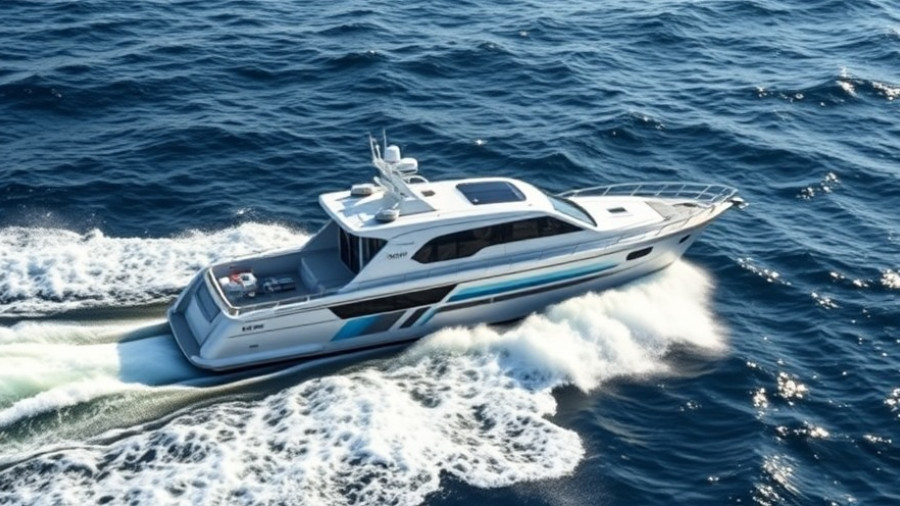
Norway patrol boat speeding through waves in the sea.

Strengthening Norwegian Maritime Security: Key Developments

In a significant move to enhance maritime law enforcement, the Norwegian Customs Service, known as Tolletaten, has partnered with Viking Life-Saving Equipment for the procurement of high-performance patrol and fast response boats. This initiative highlights Norway's commitment to strengthening its maritime security capabilities, ensuring that it can effectively conduct law enforcement and inspection operations in its waters.

Introducing State-of-the-Art Craft

The contract, valued at approximately NOK 43 million (around USD 4.3 million), involves the delivery of four advanced vessels, comprising one Marathon S-900 and three Munin S-1400 patrol boats. The Marathon S-900 will utilize twin 350 HP Mercury engines, while the Munin S-1400 will be equipped with triple 500 HP Mercury engines, offering exceptional speed and operational capabilities essential for rapid response missions.

Design and Capabilities: A Closer Look

Viking's boats are not just an addition to the fleet; they are purpose-built for demanding maritime operations. Designed with advanced hull technology, these vessels ensure quick acceleration and superior maneuverability. They are equipped with shock-mitigation systems and flexible deck layouts, keeping crew safety and operational endurance at the forefront. This sophisticated design represents a significant advancement in the capabilities available to the Norwegian Customs Service.

A Commitment to Quality and Safety

The boats will be constructed at Viking’s production facilities in Arendal, Norway, invoking the country's rich design heritage coupled with rigorous world-class safety standards. Eirik Møllergaard, sales manager at Viking Life-Saving Equipment, praised the procurement process as collaborative and effective, emphasizing the importance of clear dialogue with Tolletaten throughout the negotiation. He stated, “Succeeding on this tender is a recognition we value highly, and we look forward to delivering vessels that will support Tolletaten’s important work in Norwegian waters.”

The Future of Marine Operations in Norway

With deliveries set for 2026 and 2027, this new fleet promises to enhance the Norwegian Customs Service's ability to patrol its extensive maritime borders. The input from vessel users during the procurement process underscores a forward-thinking approach as Norway continues to adapt its enforcement capabilities to meet modern challenges in maritime operations.

Conclusion: Beyond the Boats

The impact of these new vessels goes beyond mere operational upgrades. They symbolize a larger trend toward enhanced maritime security not just in Norway, but across the globe, where nations are increasingly recognizing the importance of securing their waters. As the global maritime landscape evolves, investments in such advanced capabilities are essential for all nations.

As we look towards the future, it will be interesting to see how these enhancements will shape maritime safety strategies and the overall effectiveness of the Norwegian Customs Service. Fostering stronger maritime security is crucial as we navigate more complex challenges on the seas.

Tomorrow Tech

0 Comments

Write A Comment

*
*
Related Posts All Posts
12.13.2025

The U.S. Oil Sanctions Against Venezuela: Implications for Global Trade and Security

Update The U.S. Tightens Grip on Venezuelan Oil: A New Wave of Sanctions In a decisive move against the Venezuelan oil sector, the U.S. Treasury's Office of Foreign Assets Control (OFAC) has added six shipping companies and six vessels to its sanctions list. This action reflects growing tensions between the U.S. and the Venezuelan government under Nicolás Maduro, as Washington aims to restrict the flow of oil that funds the country's beleaguered regime. Moreover, the recent seizure of the tanker "Skipper" marked a significant escalation, as it was the first such operation since sanctions were imposed back in 2019. Selling Oil to the Highest Bidder: The Shadow Fleet Problem The entities targeted by the new sanctions are accused of facilitating Venezuelan oil shipments, often utilizing deceptive practices to obfuscate their operations. Among the vessels implicated, the "White Crane", "Kiara M", and "H. Constance" have been identified for loading oil directly from Venezuelan ports under questionable circumstances. These activities have not only provoked international scrutiny but also reignited discussions about the complex web of global oil markets and their connections to illicit transactions. U.S. Military Strategy: Seizing Control of the Waters Following the seizure of the "Skipper", U.S. forces are reportedly preparing to intercept more tankers believed to be transporting oil that could be linked to sanctions violations. This marks a critical shift in U.S. enforcement strategy from solely restricting financial transactions to taking direct military action—a tactic that has met with mixed responses globally. While U.S. officials argue that these measures are crucial for national security, critics view them as potential violations of international law, raising ethical concerns over sovereignty and piracy. Impact on Venezuelan Exports: What’s at Stake? The U.S. actions have led to a reported sharp decline in Venezuelan oil exports. Following the seizure, shipments were suspended, with tankers estimated to be in excess of 11 million barrels of oil now marooned in Venezuelan waters, according to maritime data sources. This has provoked fears among oil traders about the viability of doing business in the area and the potential for further U.S. intervention. The ramifications for the Venezuelan economy could be severe, with oil exports being the main revenue source for the Maduro government. What Lies Ahead: Future Predictions and International Reactions As the situation develops, experts warn that the ongoing U.S. sanctions and military strategies could lead to heightened tensions not only between the U.S. and Venezuela but also involving international economic partners. Venezuela has condemned these actions as piracy, threatening to escalate diplomatic efforts and seek support from allies. The future trajectory of Venezuelan oil exports remains uncertain; however, the potential for a military build-up could generate conflict, drawing further criticism from human rights advocates and international law experts. Conclusion: An Evolving Crisis The U.S. commitment to exerting pressure on Venezuela's oil sector illustrates the complexity of geopolitics in the region. As Washington seeks to suffocate Maduro's financial lifelines, the implications for global oil markets and international diplomatic relations remain significant. Understanding these dynamics is crucial for those interested in how global politics shape economic realities.

12.12.2025

Helm Operations Reaches 10,000 Vessel Milestone: A Game Changer in Maritime Software

Update Helm Operations Celebrates a Major Milestone in Maritime Software In an impressive show of growth and innovation, Helm Operations, headquartered in Victoria, B.C., recently reached a significant milestone: over 10,000 vessels globally now use its flagship product, Helm CONNECT. This achievement marks a substantial leap in the company's mission to provide a reliable operational foundation for a diverse range of maritime industries, including towing, offshore support, passenger services, and more. A Trustworthy Solution for Diverse Fleet Operations The trust placed in Helm's software by an increasing number of operators across different segments is evident. James Wadsworth, the CEO of Helm Operations, highlights that reaching this landmark signifies more than just a number; it reflects the confidence operators have in their system to deliver consistent and reliable service across varied fleets. “From high-frequency passenger operations to complex offshore support, customers are choosing Helm because it delivers reliability, consistency, and clarity across their fleets,” Wadsworth stated. The Driving Factors Behind Helm's Expansion Helm's growth trajectory can be attributed primarily to a rising demand among operators to modernize their fleet management processes. The need for improved safety, compliance, and efficient management of resources has propelled many organizations, including large entities like Washington State Ferries, to adopt Helm CONNECT for mission-critical operations. As these operators seek solutions that can scale effectively while performing under pressure, Helm is poised to meet these challenges with technology-driven tools. Innovations Shaping the Future of Fleet Management As Helm Operations looks to the future, its focus remains on enhancing capabilities for fleet operators. There are plans to integrate predictive insights and intelligent automation features that cater to the evolving needs of maritime operations. These innovations not only promise to streamline fleet management but also to reduce downtime through proactive maintenance and efficiently managed compliance processes. Global Reach of Helm CONNECT – Ensuring Efficiency at Sea Currently, Helm CONNECT operates in more than 35 countries, showcasing its versatility across different operational landscapes. The software's broad application in asset management, safety programs, crew dispatch, and regulatory compliance emphasizes its role as an indispensable tool for maritime companies. Helm's continued partnerships and growing integration capabilities signify its commitment to being the leading operational software in the maritime industry. Exploring the Broader Impact of Digitalization in Maritime The increasing reliance on technology to optimize operational efficiency is not just a trend; it’s a necessity in the maritime sector. As other companies observe Helm’s success, they too might gravitate towards similar digital solutions that facilitate smooth efficiency and robust management of resources. By leveraging platforms like Helm CONNECT, operators can expect not only to stay afloat but thrive in a competitive and evolving landscape. Join the Movement – Transforming Maritime Operations If you’re part of a maritime operation that hasn’t yet considered the benefits of consolidating tasks through a centralized system, now is the time to explore what Helm CONNECT has to offer. Whether you are involved in logistics, safety, or compliance, leveraging such technology could prove transformative for your fleet management processes.

12.11.2025

Sabine Surveyors Transitions Leadership to Embrace Innovation and Growth

Update Sabine Surveyors Embarks on a New Direction Amid Transition As the maritime industry evolves, key players are making significant organizational changes to navigate new waters. Houston-based Sabine Surveyors Ltd. has made headlines by announcing a leadership overhaul in conjunction with its transition from Gulf Copper & Manufacturing Corp. to the newly formed Sabine Marine Group, effective December 1. According to company representatives, this transition signifies not just a rebranding but a holistic shift aimed at reinforcing their commitment to innovation and customer service within marine operations. Leadership Changes That Signal Growth The latest modifications in leadership reflect a strategic move to bolster the company’s operations. Captain David Pereira has been appointed CEO of Sabine Marine Group, while Robert Keister advances to the role of president of Sabine Surveyors Ltd. Both appointments have been spotlighted as pivotal in guiding the organization through its next chapter. “This transition represents more than a name change—it’s a commitment to innovation, operational excellence, and customer-focused service,” shared Pereira during the announcement. This outlook not only underlines their dedication to existing operations but also emphasizes a readiness to explore new opportunities within the maritime industry that demand integrity and expertise. A Broader Perspective: Trends in the Marine Services Industry This shift isn't isolated to Sabine—the larger marine services industry is witnessing a wave of transitions, adapting to evolving market demands and technological advancements. For instance, Gulf Copper Government Services has rebranded as Sabine Ship Repair Inc., signaling a complete recalibration of goals and capabilities. With increased competition and regulatory scrutiny, companies are compelled to innovate or risk obsolescence. Future Openness to New Opportunities As the maritime landscape changes, organizations like Sabine need to remain agile. With a renewed leadership structure, Pereira and Keister are positioned to leverage their experience, enhancing Sabine’s competitive edge. While operational excellence remains a primary focus, fostering a culture of innovation could also lead to opportunities that were previously uncharted. The Importance of Strong Leadership in Transition Strong leadership is vital during transitions; it lays the groundwork for stability and innovation. The appointments of Pereira and Keister emphasize a synergistic approach where fresh ideas meet seasoned execution. This blend of perspectives may enhance the organization's ability to navigate challenges while remaining customer-focused. Insights for Industry Stakeholders For stakeholders in the marine industry, understanding how organizations adapt to change can inform strategic choices. Observing how Sabine embraces this transformation could provide valuable lessons in resilience and responsiveness. As the maritime landscape continues to shift, cultivating relationships and fostering a culture of adaptability will be crucial for sustaining growth. Conclusion: Embracing Change for a Brighter Future In closing, Sabine Surveyors is not merely rebranding; they are embarking on a transformative journey that aims to reinforce and extend their market position. Now is the time for other companies in the maritime sector to consider how they too can adapt and innovate in response to their operational challenges. Change may hold the key to future success, and those who harness it stand to gain the most.

Terms of Service

Privacy Policy

Core Modal Title

Sorry, no results found

You Might Find These Articles Interesting

T
Please Check Your Email
We Will Be Following Up Shortly
*
*
*