Add Row
Add Element

Add Element
Moss Point Gulf Coast Tech
update

Gulf Coast Tech

update
Add Element
  • Home
  • About
  • Categories
    • Tech News
    • Trending News
    • Tomorrow Tech
    • Disruption
    • Case Study
    • Infographic
    • Insurance
    • Shipbuilding
    • Technology
    • Final Expense
    • Expert Interview
    • Expert Comment
    • Shipyard Employee
  • Mississippio
July 19.2025
2 Minutes Read

Oakland's Free Water Shuttle Expansion: A Model for Urban Transit Innovation

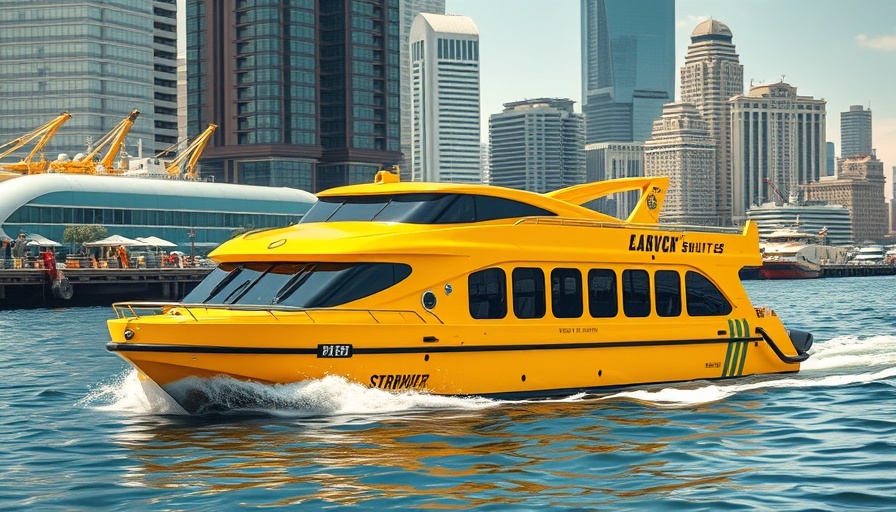
Oakland Free Water Shuttle Expansion across city port

Free Water Shuttle Expands Access and Connectivity

The Port of Oakland has recently expanded the Oakland Alameda Water Shuttle, a free pilot service that enhances public transit options between Oakland's bustling Jack London Square and Alameda's Bohol Circle Immigrant Park. Launched in July 2024, the shuttle has garnered significant enthusiasm, with operations now extending service days, adding Tuesdays and increasing weekend hours, thus increasing total weekly trips by an impressive 35%.

A Successful Pilot Program with Community Impact

Funded in part by the Port and initiated by the City of Alameda, this program reflects a growing trend towards water-based public transportation solutions. Operating from Tuesday to Thursday from 7:20 a.m. to 8:03 p.m., and extending weekend service until 10:16 p.m., the shuttle is designed to accommodate 31 passengers and 14 bicycles, maintaining full wheelchair accessibility. The success of this service is underscored by the milestone of over 100,000 rides logged within its first year, highlighting its essential role in promoting sustainable urban mobility.

Potential for Future Growth and Integration

As a precursor to further developments in public transit, ongoing collaborations among regional transportation agencies aim to integrate the shuttle service into the greater Bay Area public transit network. With commuters increasingly seeking alternatives to vehicular traffic, such services could significantly reduce congestion and improve air quality. Citing the program's recent accolade—the 2025 Transportation Planning Award of Excellence from the American Planning Association—city officials believe this growth could set a template for similar programs across California.

Enhancing Local Economy and Tourism

The Port of Oakland's expansion of water shuttles not only facilitates efficient transit but also fosters local economic growth. Jack London Square, known for its array of restaurants, independent retailers, and vibrant outdoor markets, stands to benefit as more visitors embrace the water shuttle. By providing easy access to diverse attractions, the shuttle is anticipated to become a vital artery for local tourism, which is essential for sustaining businesses post-pandemic.

Community Involvement and Feedback

Local residents and business owners have voiced their support for the initiative, appreciating its role in enhancing the community’s connectivity. Feedback has been overwhelmingly positive, with users praising the convenience, and safety features of the platform. Such community endorsement is crucial for any initiative aiming for longevity and success. Even as operational hours expand, the engagement of riders has prompted discussions surrounding additional routes and future enhancements to the service.

Conclusion: Shaping Future Transit Solutions

As cities across the globe look towards sustainable transit options, Oakland's expanded shuttle service is a promising model. Demonstrating a commitment to community needs, environmental awareness, and accessibility, this initiative illustrates the transformative impact such services can have in urban areas. Interested residents and stakeholders should stay tuned for updates on future service integrations and show support for their local transit solutions.

Trending News

0 Comments

Write A Comment

*
*
Related Posts All Posts
03.05.2026

Why Cobots Are Transforming Welding in Shipbuilding and Repair

Update How Cobots Are Revolutionizing the Ship Repair Industry Collaborative robots, or cobots, are dramatically changing the landscape of the ship repair industry. Traditionally, repairing aging engine blocks in tight spaces was a daunting, labor-intensive task, often taking weeks to complete. As Nirav Patel, Nuclear Navy Segment Director at Fairbanks Morse Defense notes, repairing components of 30-35 year-old engines frequently meant human welders had to operate multi-thousand-degree welding arcs in cramped conditions. However, advances in cobot technology are transforming this heavy lifting into a task that now takes a fraction of the time. What Sets Cobots Apart from Traditional Robots? Cobots represent a significant shift from traditional industrial robots. Unlike their high-speed counterparts that operate independently and require extensive safety measures, cobots are designed to work alongside humans, offering a safer and more collaborative work environment. Australian OEM Orbimax explains that cobots’ slower operating speeds and enhanced safety features allow operators to work closely with them, facilitating easier integration into existing workflows. Enhanced Productivity in the Shipyard With the persistent labor shortage in welding, the shipbuilding industry is turning to cobots as a practical solution. The American Welding Society predicts a shortfall of over 320,000 welders by 2029. Given this pressing need, adopting cobot technology is not just practical but essential for maintaining operational efficiency. For instance, in ship repair, cobots have already reduced repair time on single engine blocks from three weeks down to just one week, suggesting increased productivity and output across the yard. Innovative Applications of Cobot Technology Beyond just ship repair, the variety of tasks that cobots can perform in shipbuilding is expanding rapidly. Companies like Xinneng Shipbuilding are testing robotic welding systems to boost quality and efficiency in ship block production, while Fincantieri is shaping the future with humanoid welding robots built to work alongside human workers in complex tasks. This partnership is aimed at specific naval welding assignments, showcasing how cobots are being integrated into various operational frameworks. The Future of Welding with Cobots: A Leap into Autonomous Operations The role of cobots is not limited to surface-level enhancement; initiatives like the MARIOW project in Germany are pushing the envelope even further. This project, featuring a robotic system capable of conducting underwater welding tasks autonomously, represents a significant advancement in robot independence. The cobot employs AI and computer vision technology, allowing it to identify where and how to weld with precision, paving the way for new applications in deep-sea environments. Welding Cobots Across Industries: A Broadening Scope The potential for cobots is not confined to shipbuilding. They are now emerging across various sectors where high-quality welding is critical. Manufacturing industries from automotive to infrastructure are witnessing a shift towards cobot welding, driven by the need for flexibility and quality amidst a backdrop of skilled worker shortages. Their portable, easy-to-use design makes them attractive to manufacturers of all levels. Supporting a New Era of Investment in Cobot Technology Investing in cobot technologies offers manufacturers an opportunity to improve operational efficiency substantially. With lower upfront costs and quick return on investment (ROI), cobots help minimize labor strains while enhancing output and quality assurance in welding tasks. Investment can range from $50,000 to over $100,000, depending on the complexity and requirements of the setup, but with many firms experiencing a ROI within 6 to 18 months, the financial viability is clear. Conclusion: Navigating the Future of Welding As the landscape of shipbuilding and repair continues to evolve, cobots are becoming indispensable. Their ability to work alongside humans, address labor shortages, and enhance productivity is invaluable for the industry’s future. With further investments and innovative applications emerging, the integration of cobot technology could redefine operational norms, fostering a collaborative and efficient environment for shipbuilders.

03.04.2026

Exploring the Importance of Supa Swath CTVs for Offshore Renewables

Update Strategic Marine Sets Sail with Innovative Supa Swath CTVs In a significant advancement for offshore operations, Strategic Marine has recently delivered its first two Supa Swath Crew Transfer Vessels (CTVs) to Mainprize Offshore. This handover marks the beginning of an exciting new chapter under a multi-vessel contract signed in June 2024, aimed at bolstering the fleet dedicated to offshore renewables operations across Europe. First Steps Towards Expansion in Renewable Energy The delivery of these vessels is not just a milestone for Strategic Marine; it represents the foundational step in a program that includes plans for six Supa Swath vessels, with an option for an additional six. Designed by Walker Marine Design, these next-generation CTVs offer improved stability and operational efficiency, a necessity as the European offshore wind market experiences unprecedented growth. Industry-Leading Design for Challenging Environments The cutting-edge design emphasizes seakeeping performance and fuel efficiency, best suited for the often tumultuous waters offshore. With advanced propulsion systems and modern navigation technologies, these vessels are equipped to meet the demands of increasingly busy offshore environments. Notably, this design ethos follows the earlier deployment of vessels MO10 and MO11, which set a precedent in operational standards. Beyond Technical Specifications: The Human Element Bob Mainprize, Managing Director of Mainprize Offshore, highlighted the significance of these deliveries, stating, “The delivery of the first two Supa Swath vessels under this program is an important step in our fleet expansion.” His words underlie a deeper connection between design and operational success: high-quality construction enhances worker safety and efficiency in these demanding roles. Transforming Operations With Advanced Technology Each vessel is designed to reach speeds exceeding 30 knots, with the capability to operate comfortably in seas that may previously have presented challenges. With a bollard pull of 25 tons, the Supa Swath CTVs are engineered not only for human comfort but also for the operational needs of today’s renewable energy projects. Each vessel is set to transport up to 24 personnel, offering a safe transit to offshore energy sites. The Economic Implication of Sustainable Shipping The expansion of Mainprize Offshore’s fleet is indicative of broader trends within the shipping industry focused on sustainability and efficiency. As the company positions itself to meet soaring operations and maintenance demands in the renewable energy sector, the implications for economic growth and job creation in this sector are significant. These vessels are more than just modes of transportation; they’re paving the way for the future of environmentally responsible shipping. Future Insights: A Blueprint for Success As we look to the future, the collaboration between Strategic Marine and Mainprize Offshore exemplifies a successful model for the maritime industry. This partnership not only highlights engineering excellence but also demonstrates a commitment to sustainability, efficiency, and superior service in the world of offshore energy. The supply chain implications of such advancements could help reduce operational costs across the board, ultimately benefiting stakeholders and clients alike. In conclusion, as the demand for renewable energy rises, so too does the responsibility of the maritime industry to embrace innovation. The two newly delivered Supa Swath CTVs stand as a testament to what can be achieved with strategic foresight and collaborative design, setting a new standard for vessels operating in the turbulent waters of the offshore wind sector.

03.03.2026

Navigating the Ship Recycling Market Disruption: Strategies for Success

Update Stormy Seas: The True Cost of Ship Recycling Market Disruption As geopolitical tensions continue to escalate, particularly in the chaotic landscape of the Middle East, the ship recycling industry faces unprecedented challenges. Following a spike in oil prices and declining demand, various markets are stalling, leaving stakeholders questioning what the future holds. Market Response: A Landscape in Flux The turbulence in the Middle East has not only rattled oil prices, pushing them from approximately USD 63/barrel to near USD 71.90/barrel but has also caused cascading effects on the ship recycling market. The Baltic Exchange reported a modest uptick across various indices, but this is a small comfort in a tumultuous environment. The Cape, Panamax, and Supra indices showed slight gains; however, they remain subdued in light of oil fluctuations and the looming uncertainties in ship recycling demand. According to GMS, the cash buyer, ship recycling activity, particularly in the Indian subcontinent, has slowed significantly. Factors ranging from political unrest to raw material pricing have stifled operations. With the wariness of buyers heightened, sales have dwindled significantly, adding further pressure on an already strained market. The Rippling Effects of Geopolitical Turmoil Recent analyses highlight that not since the days of COVID-19 have we seen such a significant disruption affecting ship recycling so directly. Political upheavals, especially the impact of sanctions on Iran and ongoing geopolitical conflict, have created a phantasmagoric market scenario. Strained diplomatic relations and fluctuating commodity prices lead to a market that is anything but predictable. The repercussions can also be observed in countries like Bangladesh and Pakistan, where local market sentiments remain cautious due to various complicating factors, such as seasonal slowdowns and environmental disasters. Floods in Punjab have dampened buyer activity in Pakistan, while in Bangladesh, delays in compliance with the Hong Kong Convention are causing some yards to fall behind. Price Dynamics and Local Sentiments Current pricing trends in the Indian subcontinent remain discouraging, with all major ship recycling destinations witnessing declines in ship values. Spurred by tempered demand, prices across the board have fallen, with dry bulk indications regularly bidding below USD 400/LDT. This stark trend reflects a sea change in buyer preferences, as they navigate through uncertain waters. In contrast, Turkish markets have welcomed an influx of European RoRos, providing temporary relief to a market that has been largely stagnant. Observers note that while Turkey's ship recycling scene benefits from this development, the broader landscape remains cautious as the Lira’s persistent weakness clouds market confidence. Future Outlook: Caution Ahead With external pressures mounting, the future of ship recycling is marked by uncertainty. Market experts have offered conflicting predictions about what lies ahead. While some suggest potential rebounds due to upcoming demand from China’s steel industry, others counter that the current climate calls for continued vigilance. Best Oasis reports a prevailing atmosphere in which seasonal slowdowns, regulatory delays, and macroeconomic worries are heightened. Therein lies the difficulty: can the ship recycling market sustain itself in such a volatile environment? What This Means for Stakeholders For players in the shipping and recycling industries, adaptability will be key. Understanding local market sentiments, navigating global political dynamics, and forecasting commodity pricing shifts will help stakeholders pivot in the face of these market disruptors. Staying informed on geopolitical developments and pricing trends is essential to making sound investment decisions. As we move forward in 2026, the challenge will be transforming current uncertainties into opportunities while remaining grounded in factual data and market conditions. Awareness of the broader implications for the ship recycling market can provide critical insights necessary for smart decision-making. In a world governed by unpredictability, the ability to adapt and anticipate shifts may well be the lifeboat that keeps stakeholders afloat in the tumultuous waters of ship recycling.

Terms of Service

Privacy Policy

Core Modal Title

Sorry, no results found

You Might Find These Articles Interesting

T
Please Check Your Email
We Will Be Following Up Shortly
*
*
*