

Add Row
Add Element

Add Element
Moss Point Gulf Coast Tech
update

Gulf Coast Tech

update
Add Element
  • Home
  • About
  • Categories
    • Tech News
    • Trending News
    • Tomorrow Tech
    • Disruption
    • Case Study
    • Infographic
    • Insurance
    • Shipbuilding
    • Technology
    • Final Expense
    • Expert Interview
    • Expert Comment
    • Shipyard Employee
  • Mississippio
September 03.2025
3 Minutes Read

Poland's Submarine Modernization: Babcock, Fincantieri, and Saab Forge New Ties

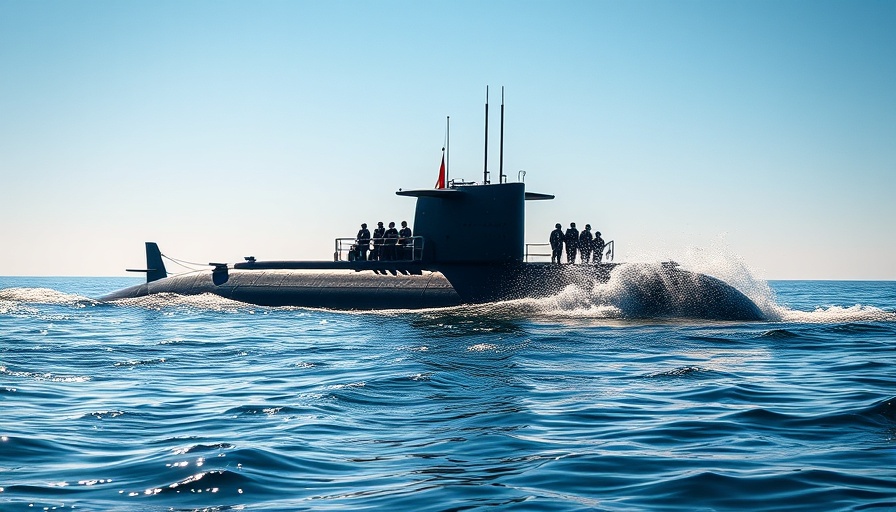
Submarine navigating sea, Poland submarine modernization focus.

Poland's Urgent Need for Modern Submarines

The Polish Navy found itself at a critical juncture, relying on the outdated Kilo-class ORP Orzel for its maritime defense. With the geopolitical climate in Europe steadily evolving, the need for modern submarines has become imperative. As Poland's Ministry of National Defence accelerates its procurement process, key players such as Babcock, Fincantieri, and Saab have stepped forward, signaling their commitment to enhancing Poland's naval capabilities under the ambitious Orka program.

Coalition of Defense Partners Targeting Poland

At this year’s MSPO defense industry show in Kielce, Poland, the collaborative agreements signed between PGZ (Polska Grupa Zbrojeniowa), Babcock, Fincantieri, and Saab indicate a robust shift towards strengthening defense ties. These partnerships are not just about landing a lucrative contract; they represent strategic alliances that could redefine Poland’s defense employment landscape. As Pierroberto Folgiero, the CEO of Fincantieri, emphasized, Poland's naval modernization plans are essential, and his company’s extensive experience in submarine construction positions them as a top contender for the Orka program.

Collaboration in Action: The Example of Miecznik

These companies are not new players in the Polish defense sector. Babcock's involvement in the Miecznik program, aimed at developing new frigates, showcases an already established relationship with PGZ. This project has illustrated how international expertise can fuse with local knowledge to create cutting-edge maritime assets, paving the way for the Orka submarine initiative. David Lockwood, CEO of Babcock, noted that ongoing projects like Miecznik enhance their commitment and collaboration with the Polish Armed Forces, a crucial element for future endeavors.

Political Pressures and Defense Policies

However, while industrial commitments are being made, domestic political pressure is mounting. The Polish government recognizes that advancing the Orka program is not merely an operational decision but a political imperative. Discussions led by President Karol Nawrocki highlight a public demand for modernization of the Polish Navy that has been simmering for decades. The sentiment resonates with sailors calling for locally-built submarines that would serve both defense needs and national pride.

Competitive Landscape: Global Players Enter the Arena

The race for the Orka program is fierce, with eleven entities vying for attention. With various countries turning their gaze toward Poland, international competition could drive innovation and technology transfer that is beneficial to Poland’s defense industry. In this context, the partnerships formed by Babcock, Fincantieri, and Saab could potentially dominate the narrative, setting standards and expectations for quality and capability.

Future Outlook: What’s Next for Poland’s Defense Industry?

The strategic collaboration tied to the Orka program may yield long-term benefits that extend beyond these contracts. As Poland continues to modernize its defense capabilities, these partnerships could lead to an increase in domestic production of advanced naval platforms, cementing Poland’s position as a player on Europe’s defense landscape. Furthermore, they may also prompt other nations to reconsider their own defense partnerships and procurement strategies, sparking wider industry innovations.

Closing Thoughts: Importance of Staying Informed

For those interested in the evolving landscape of international defense collaborations and technological advancements, keeping track of Poland’s submarine acquisition is key. It reflects broader trends in defense spending, technological cooperation, and military strategy in Europe. As nations reassess their security needs, Poland’s decisions will likely influence regional military dynamics.

Tech News

0 Comments

Write A Comment

*
*
Related Posts All Posts
01.24.2026

How Turkey and Qatar Are Redefining Defense Collaboration at DIMDEX 2026

Update A New Era of Defense Collaboration: Turkey and Qatar's Strategic Partnership As global defense landscapes evolve, notable partnerships are emerging. One such partnership is between Turkey and Qatar, which deepened their defense ties significantly during the Doha International Maritime Defense Exhibition and Conference (DIMDEX) 2026. This not only highlights regional cooperation but also reflects a growing trend towards localized defense manufacturing. Forging New Agreements: A $1 Billion Deal The most striking announcement from DIMDEX 2026 was the $1 billion agreement between Turkish shipbuilding consortium TAIS and Qatari Barzan Holdings, focused on two Istif-class frigates. Interestingly, this agreement was made on behalf of the Indonesian Navy, showing the international aspect of the deal. This deal comes after a similar pact was made with Indonesia’s Ministry of Defense at the IDEF defense exhibition in Istanbul in July 2025. Innovating Unmanned Systems: A Collaborative Approach Another significant aspect of the exhibition was the emphasis on unmanned systems. The Turkish company STM signed a memorandum of understanding with Barzan Holdings, indicating plans for joint production and co-development of unmanned aerial systems (UAS). This agreement underscores the potential for Qatar to enhance its indigenous capabilities, particularly in tactical drone technology, while promoting local production and technology integration. Multi-Faceted Cooperation Agreements Turkey’s Defense Industries Presidency outlined that a total of five cooperation agreements were established at DIMDEX. These pacts span various crucial domains, including ammunition production, systems engineering, and naval platforms. Importantly, they signal a shift from traditional buyer-seller relationships towards deeper collaborative ventures and sustainable industrial partnerships. Strategic Implications for Defense Modernization As Turkish Defense Industries Secretary Haluk Görgün pointed out, these agreements consolidate their strategic partnership. Events like DIMDEX serve as vital platforms for defense collaboration, allowing Turkish firms to showcase advanced technologies, thereby reinforcing Turkey’s stature as a prominent player in Gulf defense modernization. This strategic defense vision is not only beneficial for Turkey but positions Qatar as a rising hub for defense production in the region. The Future of Turkish-Qatari Defense Relations With this burgeoning collaboration, the future implications for both nations are substantial. Increased localization of defense production in Qatar ensures not only enhanced security but also fosters economic opportunities within the region. Additionally, as these nations look to collaborate on third-market projects, mutual benefits are expected to extend beyond their borders, reaching global defense markets. Concluding Thoughts: Why These Ties Matter Such defense partnerships are critical, illustrating how nations can leverage their strengths to forge resilient security frameworks, particularly in a context of shifting geopolitical dynamics. As Turkey and Qatar continue to explore further joint ventures, the implications for military innovation, economic prosperity, and regional stability become increasingly significant. The collaborations witnessed at DIMDEX 2026 are just the beginning of an evolving narrative in defense ties that could transform the Middle East and beyond.

01.23.2026

Fleet Solid Support Programme's Key Milestone: Work Begins at Navantia’s Cádiz Shipyard

Update Advancements in the Fleet Solid Support ProgrammeThe Fleet Solid Support Programme (FSS) has made significant strides with the commencement of work at Navantia’s shipyard in Cádiz, Spain. This milestone paves the way for constructing three next-generation support ships designed to enhance the naval logistics of the Royal Fleet Auxiliary (RFA), which plays a crucial role in supporting the Royal Navy's global operations. The first ship, originally slated to be built in Belfast, UK, has shifted to Cádiz due to readiness issues at the Harland & Wolff facility. This change underscores the ongoing investment in shipbuilding capabilities at Navantia’s Spanish yard.The Importance of the Critical Design ReviewA pivotal step in the shipbuilding process was the successful completion of the Critical Design Review (CDR) in November 2025. This comprehensive review ensured that the ship design met all necessary safety, structural integrity, and operational requirements before moving to production. With the CDR behind them, the teams involved—comprising the UK Ministry of Defence, BMT, and Navantia—can now confidently begin cutting steel and constructing the vessels.Environmental and Technological EnhancementsModern challenges require modern solutions, and the FSS vessels are designed with sustainability at their core. They will incorporate advanced technologies aimed at reducing emissions and improving efficiency, aligning with the Royal Navy's objectives to achieve net-zero carbon emissions by 2050. This investment in eco-friendly technology not only enhances operational efficiency but also reflects a commitment to sustainable naval practices.Building for the Future: Workforce DevelopmentThe transition from design to production is not just about constructing ships; it's also about preparing the next generation of shipbuilders. Navantia UK’s commitment to workforce development is evident as they continue to recruit apprentices, with plans to create 500 additional roles by 2030. By fostering a skilled workforce, the company is not only contributing to its success but also ensuring the long-term sustainability of the UK shipbuilding industry.Future Outlook: What Lies Ahead for the FSS ProgrammeLooking ahead, the FSS programme remains on schedule to deliver all three ships by 2032. The investment in both the technological advancements in shipbuilding and the workforce promises a bright future for UK naval capabilities. The collaboration between British and Spanish teams marks a significant step towards achieving a robust and sovereign shipbuilding industry, reinforcing the UK’s maritime security.

01.22.2026

USS Zumwalt's Sea Trials Mark Pivotal Step in Naval Warfare Evolution

Update USS Zumwalt: A New Era in Naval Warfare After years of anticipation, the USS Zumwalt (DDG 1000) has cleared builder's sea trials following extensive modernization at HII’s Ingalls Shipbuilding in Pascagoula, Mississippi. This ship represents a groundbreaking step for the U.S. Navy as it becomes the first surface combatant equipped with hypersonic capabilities, heralding a new era of advanced naval warfare technology. Milestones in Modernization The journey of the USS Zumwalt has been anything but ordinary. Originally delivered to the Navy in April 2020, the ship underwent major upgrades starting in August 2023. The modernization efforts included integrating the Conventional Prompt Strike (CPS) weapon system and replacing its previous armaments with advanced missile tubes. These upgrades are not just about enhancing firepower; they also set a precedent for future Zumwalt-class destroyers by incorporating cutting-edge technologies that improve overall efficacy in sea combat. Why Hypersonic Capabilities Matter The addition of hypersonic weaponry to the USS Zumwalt is significant because it allows for faster strike capabilities compared to traditional weapons systems. This advancement enhances deterrence and the Navy's operational versatility, enabling quicker responses to global threats. Brian Blanchette, president of Ingalls Shipbuilding, emphasizes the importance of this milestone, noting that the ship's capabilities will redefine naval combat strategies. The Future of Zumwalt-Class Destroyers As the USS Zumwalt embarks on its operational readiness phase, other ships in the class, such as USS Lyndon B. Johnson (DDG 1002) and USS Michael Monsoor (DDG 1001), are also being equipped with the CPS system. This collective modernization aims to bolster the Navy's capabilities in deterrence, power projection, and command-and-control missions. These ships' unique designs, including their wave-piercing hull and electric propulsion systems, offer stealth advantages that traditional vessels simply cannot match. Operational Readiness and Training Following successful sea trials, the focus will shift towards operational training. Crews will undergo rigorous preparations to ensure they are proficient with the advanced systems and weaponry aboard the Zumwalt. This process is crucial, as the ship’s technological sophistication requires top-notch training to maximize effectiveness during missions. Local Impact and Job Creation For the Pascagoula community, the modernization of the USS Zumwalt has economic implications that go beyond defense. HII’s shipbuilding efforts create jobs, support local businesses, and foster technological advancements that benefit the wider industry. The collaboration between the U.S. Navy and regional shipyards demonstrates the importance of investing in local talent and expertise to meet the nation’s defense needs in a changing global landscape. Looking Ahead: The Implications of Modern Naval Technology As we move deeper into the 21st century, the advancements represented by the USS Zumwalt signal a shift in naval warfare. The integration of advanced technology in ships like the Zumwalt is vital for maintaining maritime dominance. The growth of hypersonic weaponry and other cutting-edge technologies will continue to influence global naval strategies and the future of defense. The successful completion of builder's sea trials for the USS Zumwalt is not just a milestone for the Navy, but also a beacon of innovation and progress within the realm of naval combat. With each upgrade and transformational change, the U.S. Navy takes one step closer to embracing a new era of defense capabilities.

Terms of Service

Privacy Policy

Core Modal Title

Sorry, no results found

You Might Find These Articles Interesting

T
Please Check Your Email
We Will Be Following Up Shortly
*
*
*