
Add Row
Add Element

Add Element
Moss Point Gulf Coast Tech
update

Gulf Coast Tech

update
Add Element
  • Home
  • About
  • Categories
    • Tech News
    • Trending News
    • Tomorrow Tech
    • Disruption
    • Case Study
    • Infographic
    • Insurance
    • Shipbuilding
    • Technology
    • Final Expense
    • Expert Interview
    • Expert Comment
    • Shipyard Employee
  • Mississippio
August 27.2025
3 Minutes Read

Port Houston's Innovative Electric Tour Vessel Redefines Eco-Friendly Tourism

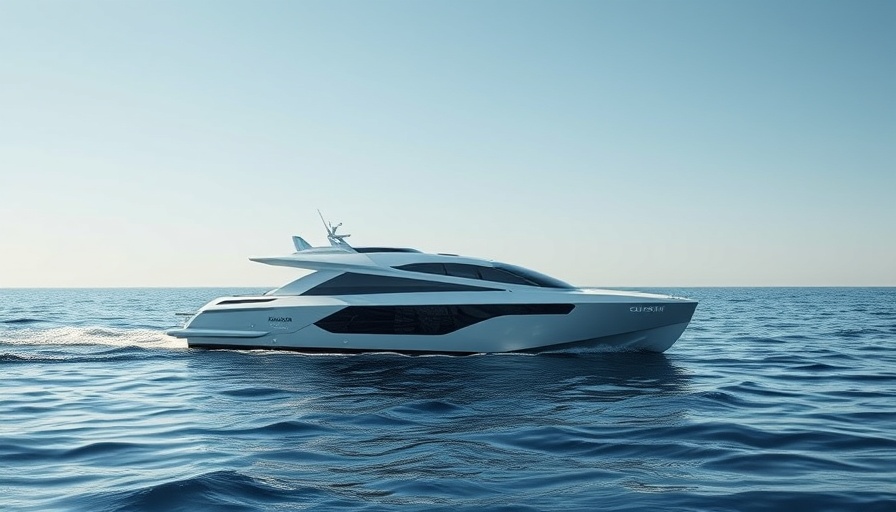
Sleek electric tour vessel on open ocean under clear sky

Port Houston Embraces Innovation with New Electric Tour Vessel

Port Houston is taking significant strides towards sustainability with the order of a new, state-of-the-art hybrid electric tour vessel designed by Incat Crowther. This initiative marks a pivotal shift for the port, aligning with broader environmental goals while enhancing the experience for the many tourists who embark on the Houston Ship Channel tours.

Replacing a Historical Icon

The forthcoming vessel will replace the M/V Sam Houston, which has been operational for nearly 70 years since the inception of the tour service in 1958. The decision to transition to a modern electric vessel is driven by both the desire to provide a more efficient experience and the need to minimize environmental impact. Charlie Jenkins, CEO of Port Houston, highlighted that over two million people have enjoyed the tours, emphasizing the importance of making it a memorable experience with reduced carbon footprints.

Design and Features to Enhance Passenger Experience

Set to comfortably accommodate 150 passengers, the new vessel will feature two spacious decks, which are designed with comfort and accessibility in mind. The main deck includes seating for 68 individuals, integrating dedicated wheelchair spaces alongside modern amenities like air conditioning, restrooms, and kiosk services. The upper deck is tailored for sightseeing, allowing 81 guests to enjoy panoramic views of the bustling Houston Ship Channel under the shelter of a canopy. This thoughtful design aims to ensure passenger flow and safety while maximizing the enjoyment of the scenic tour.

Harnessing Electric Propulsion Technology

This hybrid electric vessel is equipped with an array of advanced technology. It incorporates a battery capacity of 768 kWh and features dual electric motors generating 265 kW each. Moreover, it will primarily operate in an all-electric mode during the two-hour tours, demonstrating the potential for modern propulsion systems to run quietly and efficiently. Incorporating backup generators will ensure that the vessel maintains operational flexibility and range, a critical aspect for any tour vessel navigating varying conditions.

Perspectives on Sustainability and Industry Trends

The partnership between Incat Crowther and Breaux Brothers, a Louisiana-based shipbuilder, signifies a commitment to American-made innovation. This collaboration serves not only to boost local economies but also reflects a growing industry trend toward sustainable transportation solutions. Companies across the maritime sector are increasingly investing in technologies that align with environmental goals, as evident in this vessel's low-emission design, which aims to mitigate the ecological impact of tourism.

Looking Towards the Future

Construction on the new vessel is anticipated to commence in the latter half of 2025, with expectations to enter service by late 2026. As Port Houston leads the way in balancing tourism with sustainability, other ports and maritime operators may look to this model as a blueprint for their own initiatives. The tourism industry is often at the forefront of technological adoption, and Port Houston's example could inspire similar shifts worldwide.

Conclusion: A Step Towards Responsible Tourism

This upcoming electric tour vessel is more than just a boat; it represents a commitment to responsible tourism that prioritizes both the visitor experience and environmental health. As this project unfolds, it is crucial for stakeholders and communities alike to engage in discussions around sustainability in tourism. The shift towards eco-friendly practices is not just a trend; it's a necessity for the future of our planet.

Tomorrow Tech

0 Comments

Write A Comment

*
*
Related Posts All Posts
01.10.2026

U.S. Department of Labor Invests $13.8M in Shipbuilding Workforce Development

Update Investing in America's Maritime Future The U.S. Department of Labor has taken a significant step toward revitalizing the nation's shipbuilding workforce by awarding nearly $14 million in funding. This investment will primarily support two educational institutions: Delaware County Community College, which will receive $8 million, and the Massachusetts Maritime Academy, awarded $5.8 million. Both institutions are tasked with developing hands-on training programs that will prepare the next generation of American shipbuilders in collaboration with U.S. shipyards and international partners. Key Goals of the Funding Initiative Labor Secretary Lori Chavez-DeRemer emphasized the importance of this funding in restoring America's maritime dominance, stating that employing skilled American workers is critical. The initiative aligns with initiatives to expand registered apprenticeship opportunities nationwide, aiming to train a workforce capable of meeting contemporary shipbuilding demands, including modern techniques such as modular construction and specialized icebreaker design. Building a Skilled Workforce for Tomorrow In addition to training programs, this funding also aims to develop specialized curricula that have international recognition, improving apprenticeship opportunities throughout the U.S. This aligns with President Trump's Executive Orders, which prioritize rebuilding American manufacturing and preparing workers for high-paying skilled jobs. The Role of Maritime Education Institutions Delaware County Community College has established itself as a Maritime Center of Excellence, reflecting its commitment to workforce development. Its programs will focus on new technologies and innovations that meet the evolving needs of the shipbuilding industry. The Massachusetts Maritime Academy, on the other hand, brings a long-standing history since its founding in 1891 and specializes in preparing cadets for vital roles in shipping and defense sectors. International Collaboration in Shipbuilding This initiative also supports the growing cooperation between the U.S., Canada, and Finland in the Arctic region through efforts like the Icebreaker Collaboration Pact, enhancing maritime security and capacities. As the U.S. grapples with a significant gap in shipbuilding compared to international competitors, this funding not only strengthens the workforce but also reinforces America’s strategic capabilities in critical regions. The Future of U.S. Shipbuilding With the global shipbuilding landscape featuring heavyweights such as China producing over half of the world’s commercial vessels, the U.S. currently accounts for less than one percent. This funding marks a crucial effort to increase domestic production and bring more industry competencies back to American shores. In doing so, it targets not just job creation, but also bolstering national security through a robust maritime infrastructure. Conclusion: Why This Matters As we look toward the future, initiatives such as these will play a pivotal role in reshaping the shipbuilding landscape in the U.S. They not only provide critical skills and training for current and aspiring workers but also contribute to a more resilient maritime industry that can defend and support U.S. interests both domestically and internationally.

01.09.2026

Secretary Phelan Highlights Ingalls' Vital Role in the U.S. Navy's Golden Fleet

Update Secretary of the Navy Emphasizes Ingalls' Role in Maritime Security On January 7, 2026, Secretary of the Navy John Phelan visited the Ingalls Shipbuilding facility in Pascagoula, Mississippi, to discuss strategic advancements in U.S. naval capabilities. Accompanied by Chief of Naval Operations Adm. Daryl Caudle and Commandant of the Marine Corps Gen. Eric Smith, the officials toured the shipyard, focusing on its contributions to the U.S. Navy’s vision for a 'Golden Fleet' of advanced combat vessels. Phelan expressed gratitude for the shipbuilders' dedication, emphasizing that their skilled labor not only underpins national security but also reflects the innovation required for future naval operations. Invest in Maritime Dominance: The Golden Fleet Initiative The Golden Fleet initiative advocates for a comprehensive modernization of the Navy's surface combatants. As part of this evolution, Ingalls Shipbuilding is tasked with designing and constructing crucial assets such as the next-generation small surface combatant and a new class of frigates. This transition aligns with Phelan's directive for a wartime footing in ship procurement, emphasizing rapid production and acquisition to meet heightened operational demands. It highlights an urgent need for a robust shipbuilding industrial base capable of delivering innovative combat solutions. Modern Facilities and Investment for Future Readiness During his visit, Secretary Phelan praised HII’s commitment to enhancing manufacturing capabilities at Ingalls. He stated, "The investment and technological advancements at this facility are key to reinvigorating our shipbuilding base, enabling better delivery on both current and future naval requirements." The company has reportedly spent over $1 billion on infrastructure improvements, ensuring readiness to support current programs while spearheading developments for the Golden Fleet. The Human Element: Shipbuilders Behind the Technology Adm. Caudle highlighted the essential role of shipyard workers, noting, "The decisive combat power our Navy needs doesn’t stop at sea; it starts with the welders, engineers, and tradespeople here who face daily challenges to build America’s Navy.” Their hard work and dedication are critical components in achieving maritime superiority. The engagement of these professionals reflects HII's effort to improve retention and proficiency, which directly influences performance outcomes in ship production. Future Implications of the Ingalls Visit The recent visit by high-ranking Naval leaders underlines the U.S. Navy's commitment to advancing its capabilities in a rapidly evolving global landscape. As military demands increase and technological advancements shape new warfare paradigms, infrastructure and workforce development at facilities like Ingalls will play pivotal roles in ensuring that the Navy remains prepared for future conflicts. The emphasis on producing reliable naval assets reflects a concerted effort not just to meet current demands but also to anticipate future operational environments. Conclusion: Engaging the Community in Shipbuilding As Secretary Phelan, Adm. Caudle, and Gen. Smith demonstrated through their visit, the work being done at Ingalls is more than merely about building ships; it’s about securing the future of American maritime strength. These discussions motivate local communities to recognize the strategic importance of shipbuilding and inspire future generations to join this vital sector. Helping maintain America’s naval supremacy begins right here in Pascagoula, where dedicated workers bring the Golden Fleet vision to life.

01.08.2026

Understanding the Arctic Security Cutter Program: A Game Changer for Coast Guard

Update The Significance of the Arctic Security Cutter ProgramThe U.S. Coast Guard's Arctic Security Cutter (ASC) program symbolizes an important evolution in maritime security strategies, addressing the unique challenges posed by Arctic conditions. With the recent partnership between Seaspan Shipyards, Bollinger Shipyards, and Rauma Marine Constructions, this initiative aims to bolster national security in one of the planet's most remote and strategically significant regions. The ASC program responds to the increasing importance of Arctic waters, which are becoming more navigable due to climate change, thereby enhancing the need for robust icebreaker capabilities.Speedy Construction with Proven DesignsSeaspan's Multi-Purpose Icebreaker (MPI) design is central to the ASC program's success, enabling a rapid production schedule for up to six new cutter vessels. The engineering prowess behind the MPI design, developed in collaboration with Aker Arctic Technology of Finland, ensures these icebreakers can operate effectively in extreme conditions, thus supporting a variety of missions undertaken by the Coast Guard. The expected timelines for construction are ambitious—Bollinger anticipates the first U.S.-built cutter to be operational by 2029, while Rauma prepares to deliver Finnish-built icebreakers by 2028.Collaboration Across BordersThe cooperation between Seaspan, Bollinger, and RMC illustrates a broader trend in defense contracting—joined efforts across international boundaries to achieve shared objectives. Seaspan's CEO, John McCarthy, emphasized the potential for improved interoperability between Canadian and U.S. Coast Guards, which could pave the way for future collaborations and joint operations. Such integration aligns with the trilateral ICE Pact framework, emphasizing the necessity for enhanced security cooperation amidst evolving geopolitical landscapes.Historical Context of the National Shipbuilding StrategyThe ASC program is rooted in Canada's National Shipbuilding Strategy (NSS), aimed at revitalizing the country's shipbuilding industry while enhancing the capacity to respond to national and international maritime needs. Seaspan's successful delivery of four ice-capable vessels under this strategy showcases a model for future projects. As the largest portfolio holder of icebreaking vessels globally, Seaspan leverages this wealth of experience to expedite the ASC program without compromising quality.Future Predictions: A New Arctic EraAs the Arctic region continues to change, experts predict an escalation in maritime activity, from shipping routes to natural resource exploitation. The investment in new icebreakers under the ASC program is not just about immediate operational needs; it is a strategic foresight into a future where Arctic security and environmental stewardship must coexist. The capabilities of these new vessels will have far-reaching implications for national defense, allowing for swift responses to emergencies and enhanced enforcement of laws in previously inaccessible waters.Why This Matters to YouFor those interested in the marine industry, defense, and environmental monitoring, the ASC program stands as a case study of how innovative design, strategic partnerships, and national interests intersect. Understanding the complexities of such international collaborations helps demystify the forces shaping our maritime future, particularly in the Arctic.

Terms of Service

Privacy Policy

Core Modal Title

Sorry, no results found

You Might Find These Articles Interesting

T
Please Check Your Email
We Will Be Following Up Shortly
*
*
*