
Add Row
Add Element

Add Element
Moss Point Gulf Coast Tech
update

Gulf Coast Tech

update
Add Element
  • Home
  • About
  • Categories
    • Tech News
    • Trending News
    • Tomorrow Tech
    • Disruption
    • Case Study
    • Infographic
    • Insurance
    • Shipbuilding
    • Technology
    • Final Expense
    • Expert Interview
    • Expert Comment
    • Shipyard Employee
  • Mississippio
August 11.2025
2 Minutes Read

Royal Canadian Navy's Final Arctic Offshore Patrol Ship: A New Era of Maritime Security

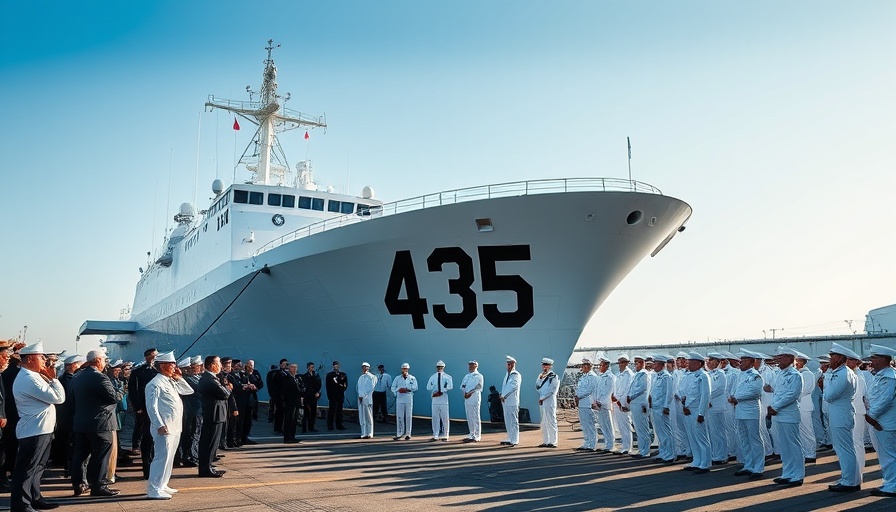
Royal Canadian Navy Arctic Offshore Patrol Ship docked with officers.

Canada's Maritime Strategy Gains Momentum with New Patrol Ship

The Royal Canadian Navy has officially christened its sixth and final Arctic Offshore Patrol Ship (AOPS), marking a significant milestone in the country's maritime strategy. This ship, reflective of Canada’s commitment to sovereignty in the Arctic, is equipped with state-of-the-art technology designed for operations in harsh environments.

The Importance of Arctic Security

With climate change opening up new shipping routes and increasing human activity in the Arctic region, the need for robust security measures has never been more critical. The AOPS are uniquely designed to navigate the icy waters of Canada’s northern territories. They will not only serve Canadian interests but also contribute significantly to international maritime security and cooperation.

A Glimpse into the Future of Shipbuilding

The commissioning of the AOPS underscores a larger trend in naval shipbuilding, as countries around the world invest in modern fleets to address emerging global challenges. Advancements in technology have allowed for the creation of vessels that are not only efficient but also environmentally friendly.

Community Impact: Engaging Local Workforce

One of the most commendable aspects of the AOPS program is its focus on community engagement and local workforce development. Shipbuilding initiatives like these bolster local economies, creating jobs and fostering skills that can benefit communities for generations.

Local Perspectives and Reactions

Community leaders and veterans have expressed their enthusiasm about the AOPS program, highlighting how it will enhance local pride and operational capacity in Canada’s northern regions. As the Royal Canadian Navy continues to expand its capabilities, citizens are eager to see tangible benefits in their daily lives.

Conclusion: A New Chapter for Canada's Navy

The introduction of the final Arctic Offshore Patrol Ship is not just a notable event for the Royal Canadian Navy; it marks a new chapter in Canada’s maritime defense strategy. As the world shifts, Canada must remain vigilant and proactive, ensuring that it can respond effectively to challenges in the Arctic and beyond.

By investing in modern naval capabilities, Canada is not only securing its northern borders but also paving the way for future advancements in maritime defense.

Tech News

0 Comments

Write A Comment

*
*
Related Posts All Posts
12.29.2025

What Do Two New Frigates for the Philippine Navy Mean for Regional Security?

Update HD Hyundai Heavy to Build Two New Frigates for the Philippine Navy On December 29, 2025, HD Hyundai Heavy Industries (HHI) signed a crucial contract with the Philippine Department of National Defense (DND), marking a significant step in the modernization of the Philippine Navy. The agreement involves the construction of two new 3,200-ton frigates, part of the Philippine Navy Frigate Second Acquisition Program, with delivery anticipated by 2029. Strengthening the Philippine Navy’s Capabilities The recent contract adds to HHI’s growing portfolio with the Philippine Navy, which already includes two previous frigates and two corvettes delivered since 2016. The two new frigates are expected to further solidify the Philippines' maritime defense capabilities as outlined in the Horizon 3 modernization plan. According to officials, these frigates will be based on HHI’s HDF-3200 design and are equipped to address the increasing maritime security challenges in the region. They come armed with advanced combat systems, including a vertical launching system for missiles, close-in weaponry, and an advanced radar system, promising enhanced operational effectiveness in the Philippine waters. A Long-Standing Defense Partnership This new acquisition is underpinned by the Implementation Agreement signed in 2009, creating a robust framework for procurement between South Korea and the Philippines. Following this pathway, negotiations continue to yield agreements facilitating the Philippines' naval expansion, thereby enhancing defense ties between the two nations. The local industry receives a boost from these successful defense endeavors, as they create job opportunities and foster technological transfers. Since 2016, HHI’s collaboration with the Philippine Navy has resulted in the construction of a diversified fleet, signaling a focused shift toward achieving a more credible and capable maritime force. Future Implications The delivery of these new frigates will not just enhance the Philippine Navy's operational reach but will also play a pivotal role in regional stability amidst evolving maritime security dynamics. With geopolitical tensions rising in the South China Sea, the Philippine Navy's modernization is a strategic move to uphold national sovereignty and protect vital sea routes. Commitment to Modernization The Philippine Navy remains committed to modernizing its fleet, as evidenced by the ongoing construction of six Offshore Patrol Vessels, including the BRP Rajah Sulayman, which is scheduled for delivery in January 2026. This commitment emphasizes a forward-looking approach, continually adapting to the needs of modern naval warfare and regional defense requirements. Call to Action As developments unfold, defense enthusiasts and stakeholders alike should keep an eye on further enhancements within the Philippine Navy. Understanding these initiatives not only showcases the progress in maritime defense capabilities but also invites discussions on the strategic implications for regional security.

12.27.2025

How Japan's F-2 Fighters with Anti-Ship Missiles Alter Pacific Defense Strategy

Update Japan's Response: An Escalation in Military Preparedness In December 2025, Japan has ramped up its military readiness in an unprecedented manner amid increasing tensions with China. The Japan Air Self-Defense Force (JASDF) observed its F-2 fighter jets equipped with a total of 64 advanced anti-ship missiles during training at Tsuiki Air Base. This decisive action signals Japan's readiness to deter potential threats from the People's Liberation Army Navy (PLAN) and reflects a significant shift in its defense posture. The Background of Rising Tensions The increased presence of Chinese naval vessels and aircraft near Japan, particularly the operations of the Chinese aircraft carrier Liaoning, has alarmed Japanese authorities. Following a series of provocative encounters, including a radar illumination of JASDF F-15 fighter jets by PLAN’s J-15 jets, Japan’s Ministry of Defense has deemed these activities as a serious escalation of hostilities in the region. Such developments have prompted Japan to revise its defensive strategy, making a notable focus on its naval capabilities. Strategic Enhancements: The Role of F-2 Fighters The F-2 fighter jets, known for their agility and combat effectiveness, have been retrofitted to carry four ASM-2 air-to-ship missiles, enhancing their offensive capability. These missiles have a range that exceeds 140 km and are equipped with advanced targeting technology, positioning Japan to counter maritime threats effectively. This follows a broader defense strategy where Japan’s air and naval forces have been rapidly modernized, exemplified by the upcoming integration of the F-35B jets on its Izumo-class destroyers. Funding and Planning to Strengthen Defense Japan's Fiscal Year 2026 defense budget includes an allocation of approximately ¥16 billion ($102 million) aimed at bolstering its defense infrastructure across the Pacific. A significant component of this strategy includes the establishment of a new Pacific Defense Concept Office, which will strategize and oversee Japan's military readiness against evolving threats. Such institutional changes are reflective of Japan’s proactive stance amid the changing security dynamics of East Asia. Future Outlook and Implications With the PLAN's operational capabilities expected to expand with the anticipated addition of the third aircraft carrier, Japan's recent military enhancements point towards a determined effort to fill perceived defense gaps. This escalation suggests not only a commitment to national security but also a signal to international partners regarding Japan's intent to play a more significant role in regional stability. Conclusion: The Need for Awareness and Adaptation For Japan, the ongoing military developments require careful monitoring and strategic adaptation. The stakes are high as regional security challenges evolve, necessitating a strong yet collaborative approach in determining the best defensive measures. As citizens, understanding these complexities can foster support for informed decision-making in governance and international relations. The ramifications of military enhancements extend beyond national borders, impacting global security. As advocates for peace, engaging in discussions surrounding these advancements is essential.

12.26.2025

China's Container Ship Missile Battery: What It Means for Global Security

Update China's Container Ship Missile Transformations: A New MenaceThe sighting of a container ship modified as a missile battery off China's coast raises urgent concerns about global maritime security. Disguised as a regular cargo vessel, this ship symbolizes a substantial shift in military strategy, showcasing the potential for conventional civilian infrastructure to be weaponized in conflict scenarios. This particular design aligns with the growing trend of leveraging containerized launch systems, which enable easy camouflage and rapid deployment in maritime operations.The Containerized Sea Defense Combat System: Reimagining Naval WarfareChina’s Containerized Sea Defense Combat System (CSDCS) takes stealth to new heights, employing commercially indistinguishable shipping containers to house missile launchers. Propelled by technological advancements and strategic necessity, this platform supports multiple missile types, including the sophisticated YJ-12E and YJ-18E anti-ship missiles, and operates effectively with a leaner crew. The concealment of military assets among civilian shipping not only complicates naval engagements but also invites potential preemptive strikes, mirroring historical tactics from the infamous Pearl Harbor attack.Rethinking Naval Engagement Rules and Conflict PreparationsInternational maritime laws traditionally maintain strict engagement protocols against civilian vessels, creating additional tension as countries grapple with this evolving threat landscape. According to military analysts, the presence of containerized missile systems poses a dilemma for the U.S. Navy, which finds itself handcuffed by regulations that prevent engagement without provocation. This intricacy highlights the necessity for improved detection capabilities and inspection processes at ports, as the U.S. faces increased risks from container-based weaponry concealed within routine trade.Container Missiles as the Future of Warfare: The Strategical ShiftThe adaptability of containerized missile launchers presents a dual-edged sword: while they bolster a navy's strike capabilities dramatically, they also evoke fears of initiating conflict from misidentifying a cargo ship as a hostile unit. Recent developments by both China and the U.S. indicate an arms race towards containerized warfare, with implications that could redefine naval tactics and engagements worldwide. This is reminiscent of World War Q-ships that masqueraded as merchant vessels; the modern version raises apprehensions not just militarily but also regarding global trade stability.Why This Matters: Global Impact and Local ReactionsAs nations grapple with these pressing military innovations, understanding the global repercussions is crucial. Containerized missiles necessitate strategic amendments not only within military policies but also in international diplomacy. The fear of being caught unprepared could ignite an arms race in containerized warfare infrastructure, prompting countries to invest more heavily in maritime security protocols.Conclusion: The Call for Vigilance in Maritime SecurityThe emergence of container ships as formidable missile platforms is indeed alarming. As military technology continues to evolve, so must our strategies and policies regarding maritime security. To mitigate risks, nations must urgently address the challenges posed by such innovations, adjusting detection methods and expanding oversight on potentially dangerous vessels in their waters. The stakes are higher than ever, and our response will not only influence military strategy but also the foundational principles of international trade and diplomacy.

Terms of Service

Privacy Policy

Core Modal Title

Sorry, no results found

You Might Find These Articles Interesting

T
Please Check Your Email
We Will Be Following Up Shortly
*
*
*