

Add Row
Add Element

Add Element
Moss Point Gulf Coast Tech
update

Gulf Coast Tech

update
Add Element
  • Home
  • About
  • Categories
    • Tech News
    • Trending News
    • Tomorrow Tech
    • Disruption
    • Case Study
    • Infographic
    • Insurance
    • Shipbuilding
    • Technology
    • Final Expense
    • Expert Interview
    • Expert Comment
    • Shipyard Employee
  • Mississippio
June 08.2025
3 Minutes Read

U.S. Navy Enhances Military Readiness with Wartime Repair Training in the Philippines

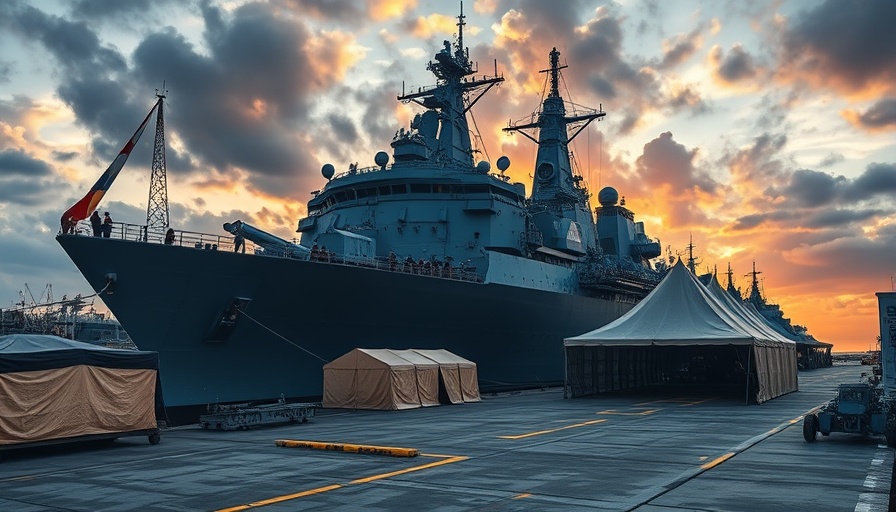
U.S. Navy warship docked for wartime repair drills at sunset.

Emergency Preparedness: U.S. Navy Practices Vital Wartime Repairs

In an impressive display of military readiness, a U.S. Navy destroyer has recently conducted wartime repair exercises in the Philippines. This critical initiative serves not only to enhance the capabilities of the navy but also underscores the importance of operational preparedness amid rising tensions in the region. By simulating real-world scenarios, the U.S. creates a blueprint for rapid response and efficiency, essential in any potential conflict environment.

The Importance of Wartime Repair Drills

The naval exercises focused on equipping sailors with the skills necessary for executing quick repairs on malfunctioning equipment during wartime. Warships play pivotal roles in various operations, and their effectiveness significantly relies on their operational state. Training personnel in emergency repairs ensures that they are ready to respond under pressure, minimizing downtime and maximizing mission success.

Why the Philippines?

The Philippines has become a hotspot for American military operations, not only due to its strategic location but also its longstanding alliance with the U.S. This partnership allows the navy to conduct joint training exercises, enhancing interoperability and accelerating response times to regional threats.

Current Geopolitical Climate: A Growing Concern

In recent years, increased tensions in the South China Sea have prompted the U.S. to bolster its military presence in Asia. The need for decisive action is evident as multiple nations vie for dominance in this crucial maritime area. The wartime repair exercises demonstrate America's commitment to maintaining peace and stability, while also signaling that it is prepared to defend its interests should the need arise.

Future Predictions: What Lies Ahead?

As nations continue to navigate complex global dynamics, we can expect the U.S. Navy to intensify its military exercises in the region. With advances in technology and warfare strategy, the approach to wartime readiness is ever-evolving. Future repairs may incorporate automated systems and innovative materials, revolutionizing the speed and efficiency of ship repairs.

Building Community Support for Military Initiatives

It's essential for local communities to understand and support these military initiatives, recognizing the broader implications for national security and local economies. The presence of U.S. forces often brings enhancements in infrastructure and opportunities in employment for local citizens, fostering a symbiotic relationship between the military and community.

The Bigger Picture: Implications for Global Peace

The training and exercises conducted by the U.S. Navy are not merely military drills; they are strategic measures aimed at ensuring global peace. By maintaining readiness and demonstrating capability, the U.S. Navy plays a crucial role in deterring potential conflicts and fostering diplomatic resolutions. The motivated participation of American service members serves as a reminder of their commitment to safeguarding international waters and promoting democratic values.

In conclusion, the recent wartime repair exercises in the Philippines cast light on the meticulous preparations undertaken by the U.S. Navy. As geopolitical tensions rise, these initiatives are vital in maintaining a strong military presence and ensuring that the U.S. is equipped for any situation that may arise. Community engagement in supporting these efforts will undoubtedly shape the future landscape of national security.

Tech News

0 Comments

Write A Comment

*
*
Related Posts All Posts
12.12.2025

How the ROMULUS USV Technology Will Revolutionize Naval Operations

Update Unveiling the Future: ROMULUS USVs Set to Change Naval Operations HII (Huntington Ingalls Industries) has made significant strides in its mission to revolutionize naval warfare with the announcement that the prototype for its latest unmanned surface vessel (USV), ROMULUS, has reached a pivotal 30% completion. This marks a crucial stage in the development of technology that promises to enhance maritime autonomy and operational efficiency. A Strategic Collaborative Effort In a visit to Breaux Brothers Enterprises in Loreauville, Louisiana, HII executives reviewed the ship's progress alongside partners like Incat Crowther. HII’s president of Mission Technologies, Andy Green, noted how the speed of development reflects not only the urgency of evolving military needs but also the strength of the partnerships driving the project. “Our industry team is delivering a platform that brings scale, autonomy, and real operational advantages to the fleet,” stated Green. The Technological Backbone: Odyssey Autonomous Control System One of the standout features of the ROMULUS USV is its integration of the Odyssey Autonomous Control System. This technology has been effectively utilized across more than 35 USV platforms and over 750 REMUS underwater vehicles globally. The Odyssey system enables sustained open-ocean operations, modular payload integration, and facilitates cooperation between manned and unmanned assets, which is vital in modern naval operations. Meeting Diverse Naval Requirements ROMULUS is tailored to fulfill both current and emerging requirements for the U.S. Navy and allied forces. The diverse capabilities of the USVs include tasks such as intelligence, surveillance, reconnaissance, addressing mine threats, and supporting unmanned underwater and aerial vehicles. This flexible mission profile underscores the increasing reliance on unmanned systems within defense strategies worldwide. Future Ready: High-Endurance, Flexible Operations Designed for high endurance, ROMULUS can traverse great distances at speeds exceeding 25 knots and has a range of 2,500 nautical miles. This capability allows for extensive operational flexibility, positioning it as an asset not just for localized missions but for global engagement within various maritime scenarios. Unlocking New Possibilities in Naval Warfare As developments continue, the combination of AI technology and modular designs in the ROMULUS family signifies a new era in naval warfare. With scheduled sea trials in Q4 2026, the ROMULUS is poised to alter tactical approaches and operational paradigms, opening doors to innovative tactics in the face of evolving threats. Connecting Technology with Need The increasing complexity of modern conflicts necessitates the integration of advanced technologies in military operations. By embracing unmanned systems like ROMULUS, the U.S. Navy and its allies can enhance operational capabilities while improving safety and efficiency. This adaptability is vital when considering a fast-paced, high-stakes global environment rife with uncertainty. In conclusion, the journey of the ROMULUS USV from concept to prototype is a testament to HII’s commitment to advancing maritime technology. As we anticipate the results of the forthcoming sea trials, one thing is certain: the future of naval operations is not just unmanned, it's revolutionized.

12.11.2025

Polish Navy's Ratownik Vessel Set to Revolutionize Submarine Rescue Capability

Update Unveiling a New Era in Underwater Rescue for the Polish Navy The Polish Navy is set to embark on a transformative journey as it enhances its underwater capabilities through a significant partnership with JFD Global. With the imminent delivery of the Ratownik, a cutting-edge salvage and rescue vessel, Poland is preparing itself not only for immediate submarine rescue operations but also for the strategic protection of vital underwater infrastructure in the Baltic Sea. Strategic Significance of the Ratownik Vessel At approximately 96 meters long and capable of displacing around 6,500 tons, the Ratownik will become one of the largest vessels in the Polish Navy’s fleet by its expected completion in late 2029. This impressive ship will not only facilitate deep saturation diving operations but will also be a pivotal asset in safeguarding Poland’s critical underwater energy and data infrastructure against various potential threats, in both territorial and international waters. The synergy of JFD Global's submarine rescue expertise and PGZ Stocznia Wojenna's shipbuilding capabilities ensures that the Ratownik will meet NATO standards for submarine rescue systems. The Integration of Advanced Diving Technology As part of this exciting development, JFD Global will incorporate a modern hyperbaric and saturation diving system aboard the Ratownik. This system will enable rapid deployment for submarine rescue missions while maintaining a constant state of readiness, which is crucial for maritime operations characterized by urgency and unpredictability. The integration of the NATO Submarine Rescue System further enhances the Ratownik's operational performance, solidifying its role as a frontline responder in any underwater emergency. Future-Proofing Poland's Underwater Capabilities This strategic partnership not only reflects Poland's commitment to enhancing its military capabilities but also represents a necessary step in the evolving landscape of naval warfare, which increasingly involves underwater threats. As noted by Rob Hales, Head of Defence at JFD Global, this collaboration signifies a robust investment in Poland's future underwater force, laying the groundwork for a new chapter in national security priorities. Creating Lifesaving Opportunities Poland's acquisition of the Ratownik could potentially save countless lives in emergency situations involving submarines. As President Marcin Ryngwelski of PGZ Stocznia Wojenna remarked, the vessel will serve as a critical asset for both rescue operations and invaluable protection of crucial underwater infrastructure. This focus on safety and effectiveness speaks volumes about the emphasis placed on human life during military operations, illustrating a compassionate approach to national defense. An Inspiring Vision for the Future The Ratownik project is emblematic of a broader trend where nations are recognizing the importance of investing in advanced military technologies that prioritize safety, readiness, and efficiency. Together, Poland and JFD Global show how partnerships in the defense sector can yield transformative results, ushering in a safer and more secure maritime future. As we look ahead, the provision of submarine rescue capabilities will undoubtedly play a crucial role in the safeguarding of lives, contributing to the welfare of all involved in naval operations. Conclusion For anyone interested in military advancements or seeking to understand the evolving strategies of modern navies, the Ratownik’s unfolding story provides valuable insights into the significance of deep saturation diving and rescue capabilities. In a world where underwater threats are becoming increasingly relevant, staying informed about developments like these will empower communities to advocate for policies that prioritize safety and innovation in military practices. Potential future recruits and industry stakeholders alike should keep a watchful eye on how the capabilities of the Polish Navy will unfold through this groundbreaking project.

12.10.2025

HMS Formidable's Keel Laid: A Tradition Meets Innovation in Naval Shipbuilding

Update The Beginning of HMS Formidable: A Naval Tradition Revived On December 9, 2025, an important naval tradition was honored as the keel of HMS Formidable, the third Type 31 frigate, was laid at the Babcock shipyard in Rosyth. This ceremony, attended by shipwrights, their families, and key figures from the Royal Navy, marks not only a significant moment in shipbuilding but also a step forward in modernizing the UK's naval fleet. A Fusion of Tradition and Technology The keel laying isn't just a ceremonial milestone; it symbolizes the birth of a ship—a moment steeped in centuries-old naval tradition. Young apprentice Joolz Hunter, at just 17 years old, had the honor of placing a commemorative coin beneath the keel. This coin, featuring the ship's crest and the Babcock logo, is believed to bring good fortune to the ship and its crew—a ritual that echoes similar practices dating back centuries. Steady Progress Amidst Challenges The ongoing construction of HMS Formidable highlights a steady production pace at the Rosyth shipyard, with the promise of five new Inspiration-class frigates designed to bolster the Royal Navy's aging fleet. With recent decommissioning of older ships like HMS Lancaster, the Royal Navy's active frigate numbers have dwindled, making the successful rollout of these new vessels crucial for national defense. Economic Impact and Community Connection This shipbuilding initiative does more than modernize the fleet; it also acts as a catalyst for local employment and skills development. Babcock's commitment to hiring over 300 apprentices underscores a positive impact on the community, with many young people like Joolz gaining invaluable skills and experience through direct involvement in this significant project. Local MP Luke Pollard highlighted this 'defense dividend,' demonstrating how investment in military infrastructure can provide sustainable careers and economic growth for Scotland. Future of the Royal Navy: What Lies Ahead? As HMS Formidable's keel is laid, the future of the UK Navy is looking to balance heritage with innovation. This model will not only serve the Royal Navy but contribute to global maritime security. The Type 31 frigate class will conduct a variety of operations including disaster relief, counter-smuggling efforts, and maritime security patrols, showcasing a flexible approach to modern naval warfare. Conclusion: Embracing Change for National Security The unveiling of HMS Formidable is a significant leap toward enhancing the capabilities of the Royal Navy while honoring centuries of shipbuilding tradition. By investing in state-of-the-art technology and empowering the next generation through apprenticeships, the UK is not only preparing to meet contemporary challenges but ensuring a sustainable future in naval defense. As communities across Scotland rally behind these developments, the importance of combined efforts between industry and defense becomes crystal clear. Want to learn more about the latest developments in navy technology and shipbuilding? Stay updated with us for insights that matter to you!

Terms of Service

Privacy Policy

Core Modal Title

Sorry, no results found

You Might Find These Articles Interesting

T
Please Check Your Email
We Will Be Following Up Shortly
*
*
*