

Add Row
Add Element

Add Element
Moss Point Gulf Coast Tech
update

Gulf Coast Tech

update
Add Element
  • Home
  • About
  • Categories
    • Tech News
    • Trending News
    • Tomorrow Tech
    • Disruption
    • Case Study
    • Infographic
    • Insurance
    • Shipbuilding
    • Technology
    • Final Expense
    • Expert Interview
    • Expert Comment
    • Shipyard Employee
  • Mississippio
July 31.2025
2 Minutes Read

Viking Mira Launch: A Transformative Step in Cruise Ship Evolution

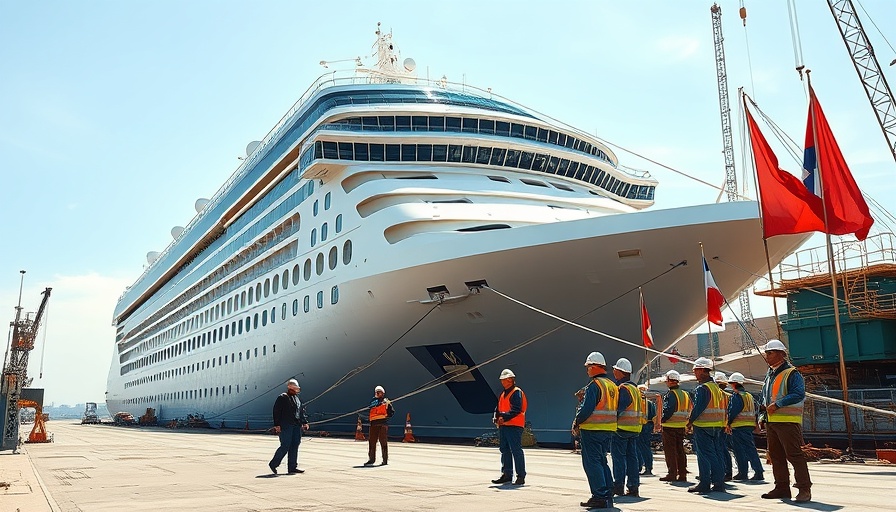
Viking Mira cruise ship in dock being prepared for launch on a sunny day.

Viking Mira Launches: A New Era in Cruise Travel

On July 31, 2025, Fincantieri's Ancona shipyard marked a significant milestone by launching the Viking Mira, the latest addition to Viking's growing fleet of small ocean ships. Expected to debut in spring 2026, the Viking Mira promises to enhance travelers' experiences in the Mediterranean and Northern Europe.

What Makes Viking Mira Stand Out?

The Viking Mira boasts an impressive gross tonnage of approximately 54,300 tons and features 499 staterooms, accommodating up to 998 passengers. This design aligns with Viking's commitment to creating small and elegant vessels that cater to curious travelers. Viking's chairman, Torstein Hagen, expressed pride in this achievement, highlighting the ship as a continuation of the company’s philosophy of offering comfortable exploration around the globe.

The Shipbuilding Revolution: Viking & Fincantieri

Fincantieri has built a robust relationship with Viking, successfully delivering a total of 28 ships in various stages of production. The Ancona shipyard has become a vital manufacturing hub for Fincantieri, demonstrating exceptional capabilities. With a production facility spanning 360,000 square meters, the yard is equipped with advanced technologies, including robotics and artificial intelligence, ensuring top-notch efficiency and quality in ship construction.

Environmental Innovations in Shipbuilding

Understanding the importance of sustainability, Viking ships, including Viking Mira, are designed to meet the latest international regulations surrounding navigation and safety. They are equipped with high-efficiency engines and advanced exhaust gas treatment systems, which aim to minimize environmental impact. Such innovations resonate positively in today’s eco-conscious travel market, making Viking ships a preferred choice among responsible travelers.

The Human Element of Shipbuilding

The success of the Ancona shipyard is not solely attributed to its technological advancements; it is also due to its diverse workforce. Approximately 3,700 workers, representing various nationalities and backgrounds, come together with a shared industrial goal. Their dedication and expertise are crucial to honing the craftsmanship that goes into each vessel. In line with Fincantieri's Operations Excellence program, continuous training and commitment to workplace improvement are prioritized, which further inspires teamwork and innovation.

The Future of Ocean Travel

Viking Mira is set to redefine ocean travel, with a focus on traveler comfort and environmentally friendly operations. As the world adapts to new travel trends and preferences, Viking seems poised to lead with its unique offerings designed for a discerning clientele. As they prepare for the ship's debut in 2026, anticipation builds for what promises to be an exciting chapter in cruise experiences—one that not only captivates the imagination but also respects our planet.

Tomorrow Tech

0 Comments

Write A Comment

*
*
Related Posts All Posts
02.20.2026

The Future of Ferry Travel: SWITCH's 150-Passenger Zero-Emission Ferry Project

Update Shifting Tides: The Future of Zero-Emission Ferries As climate change puts increasing pressure on urban transport systems, SWITCH Maritime is leading the charge with its ambitious project—a 150-passenger zero-emission ferry powered by hydrogen fuel cells. Currently under development by Incat Crowther, this vessel is set to revolutionize ferry transport in New York City. With a focus on sustainability and operational efficiency, the vessel’s design promises to integrate seamlessly into existing urban infrastructure. Innovative Design Meets Practicality The new ferry, referred to as Sea Change II, boasts impressive technical specs. Measuring approximately 93 feet in length and designed to carry 150 passengers at a speed of 25 knots, the vessel will use advanced hydrogen fuel cell technology. This setup not only ensures zero emissions but also eliminates the need for expensive shoreside charging infrastructure. The hydrogen storage system allows the ferry to operate with a full day’s range, catering to high-frequency commuter routes that New Yorkers rely on. The Role of Government Support in Clean Technology This project is supported by a $2 million grant from the New York State Energy Research and Development Authority (NYSERDA), showcasing a collaborative effort between public and private sectors. As we move towards cleaner transportation, government backing can be crucial for accelerating the adoption of innovative technologies. NYSERDA’s involvement signifies the importance of clean hydrogen as a viable energy source capable of transforming urban mobility. Redefining Passenger Experience In addition to eco-friendliness, the Sea Change II will prioritize passenger comfort with spacious seating, ample luggage storage, and facilities that will enhance the overall experience. Large windows will allow passengers to take in New York’s stunning waterfront views while traveling sustainably. This focus illustrates how environmental responsibility does not compromise the quality of service but instead elevates it. Future Outlook: Why This Matters The evolution of the Sea Change II is not just about providing a new mode of transport—it signals a broader shift in the maritime industry towards hydrogen fuel technology. As stated by SWITCH Maritime’s CEO, Elias Van Sickle, the goal is to create 'commercially viable vessels that future-proof ferry fleets.' If New York can successfully integrate this technology, it could pave the way for similar initiatives nationwide and globally. Common Misconceptions About Hydrogen Fuel Despite the potential, hydrogen fuel faces skepticism due to its production and storage challenges. However, as Dan Mace from Incat Crowther notes, the design of the Sea Change II highlights a feasible option for mass transit operators. Properly harnessed, hydrogen fuel could serve as a game-changer for both decarbonization and the enhancement of existing transport systems without the need for extensive overhauls. Conclusion: A Call for Action As the launch of SWITCH Maritime's zero-emission ferry project draws closer, it’s a pivotal moment for urban transport opposed to traditional fossil fuels. By supporting initiatives like this, we can steer our communities towards sustainable futures. Local authorities, businesses, and the public should remain proactive, ensuring that such innovations are championed for broader adoption.

02.19.2026

CMA CGM Turns to India for Eco-Friendly LNG Shipbuilding to Transform Global Trade

Update Groundbreaking Move in Maritime Sustainability The maritime industry is steadily transitioning toward more eco-friendly practices, and CMA CGM is leading the charge with its recent contract with Cochin Shipyard Limited (CSL). By commissioning six LNG-fueled containerships, the French shipping giant is not only enhancing its fleet but also setting a precedent in the shipbuilding industry in India. This order makes CMA CGM the first major foreign carrier to work with an Indian shipyard to deliver LNG vessels, showcasing a commitment to sustainable shipping. Strengthening India-CMA CGM Relations During a recent visit to India, CMA CGM Chairman and CEO Rodolphe Saadé signed the final contract, which is a follow-up to a letter of intent initiated last October. Saadé expressed optimism about deepening the strategic partnership that has united CMA CGM and India for nearly forty years. This collaboration is not just about building ships; it is about enhancing container manufacturing and ship recycling, which are critical components of India’s Maritime Vision 2047. As trade routes expand, particularly the burgeoning India-Middle East-Europe Economic Corridor, CMA CGM is positioning itself as a vital link in global commerce. A Commitment to Local Employment and Expertise One of the most notable aspects of this deal is CMA CGM's commitment to employing local talent. With the recruitment of 1,000 Indian seafarers already completed and plans to increase this number to 1,500 by 2026, the company is investing in the local workforce. This not only supports the economy but also paves the way for adept training and expertise in sustainable shipping practices in India. Technological Advancements on the Horizon Beyond shipbuilding, CMA CGM is carving out a technological niche in the region with the establishment of an R&D hub in partnership with Capgemini. This center will focus on artificial intelligence and digital solutions to optimize maritime operations and enhance customer experience. As the world gravitates towards digitalization, having a robust innovation base in India marks a significant strategic advantage for CMA CGM, positioning the country as a center for next-generation shipping technologies. Looking Ahead: The Future of Sustainable Shipping The six LNG vessels from Cochin Shipyard are expected to be delivered between 2029 and 2031, marking a significant step in CMA CGM's fleet renewal and energy transition strategy. With these vessels designed to be compatible with lower-carbon fuels, they align with CMA CGM's ambitious goal of achieving net-zero carbon emissions by 2050. This commitment to sustainability is vital not only for the shipping industry but for global efforts to combat climate change. International Implications of India's Maritime Growth As India aims to establish itself as a major maritime nation, deals like this bolster its position on a global scale. The cooperation between CMA CGM and Cochin Shipyard supports India's maritime ambitions under national initiatives like Maritime India Vision 2030. With increasing foreign investment and a stronger technological base, India's maritime sector is poised for growth, leading to enhanced international competitiveness. The partnership exemplifies how strategic alliances can drive innovation while supporting local economies, enhancing global connectivity, and addressing pressing environmental concerns. As CMA CGM continues to expand its footprint in India, the combination of shipbuilding expertise, technological innovation, and a commitment to sustainability could redefine the future of maritime operations.

02.18.2026

Boksa Marine Design's Leadership Transition: What to Expect in 2023

Update The New Era of Boksa Marine Design: A Significant TransitionBoksa Marine Design (BMD) is embarking on an exciting new chapter as it transitions into a new leadership structure while opening an additional office in Arkansas. The move reflects the company’s commitment to innovation and its dedication to meeting the evolving needs of its clients in the maritime industry.Leadership Restructure at BMDRecently transformed into an employee partnership, BMD's leadership now includes five key engineers and naval architects as minority stockholders, a strategic decision made by President Nick Boksa. This transition aims to foster a culture of collaboration and shared success, particularly as the company approaches its 20th anniversary. “I have a great deal of confidence in our team of professionals that have been behind all the great work we have been providing for years,” Boksa stated, underscoring the value he places on his team now guiding the firm into the future.Enhancing Local and Regional OpportunitiesWith the new office in Arkansas, BMD aims to better integrate its engineering resources within the inland river market. The Arkansas location is expected to enhance the company’s response time for clients seeking specialized services like design for tugs, barges, and towboats, crucial for operators on the Arkansas and Mississippi rivers. This strategic expansion not only caters to local markets but also reinforces BMD's presence in an expanding segment of the marine industry.The Role of Employee OwnershipThis leadership transition is more than a mere change in title or office location; it reflects a significant shift toward employee ownership, which experts agree can lead to improved job satisfaction and performance. Employee-owners such as Josh Trupia and Jeff Kuenning bring diverse backgrounds and expertise to the firm, grounded in both practical marine engineering experience and a commitment to innovative design.Future of Marine Design and EngineeringAs the maritime industry continues to evolve, BMD's vision appears to align well with upcoming trends. The integration of advanced technologies in shipbuilding and an emphasis on sustainability will be critical. According to various industry insights, the demand for specialized vessels like hybrid and electric boats is on the rise. BMD's capabilities in composite design and production engineering position it well to leverage these trends, ensuring clients receive cutting-edge solutions that comply with the latest regulatory standards.Lessons from Boksa’s TransitionThis leadership change is a case study in strategic succession planning within a specialized industry. By transitioning to an employee-owned model and expanding geographically, BMD not only secures its future but also enhances its capacity to innovate. Other companies could take cues from BMD's approach to ownership and operational restructuring.Final ThoughtsBoksa Marine Design is not just reshaping its leadership; it is redefining its mission and potential within the maritime sector. The company's strategic moves are indicative of a broader understanding of the importance of local engagement and employee responsibilities, qualities essential for thriving in today’s fast-paced environment. As the firm enters this new era, close observers will be keen to see how these changes inspire future innovations while maintaining BMD’s established reputation for excellence in marine design.Stay informed on the latest developments in marine design and engineering by following industry news and updates. The impact of this shift at Boksa Marine Design could resonate throughout the sector as other firms evaluate their own strategies in light of these changes.

Terms of Service

Privacy Policy

Core Modal Title

Sorry, no results found

You Might Find These Articles Interesting

T
Please Check Your Email
We Will Be Following Up Shortly
*
*
*