

Add Row
Add Element

Add Element
Moss Point Gulf Coast Tech
update

Gulf Coast Tech

update
Add Element
  • Home
  • About
  • Categories
    • Tech News
    • Trending News
    • Tomorrow Tech
    • Disruption
    • Case Study
    • Infographic
    • Insurance
    • Shipbuilding
    • Technology
    • Final Expense
    • Expert Interview
    • Expert Comment
    • Shipyard Employee
  • Mississippio
July 29.2025
2 Minutes Read

What Havelsan and CEMRE's MoU for Hybrid USVs Means for Marine Innovation

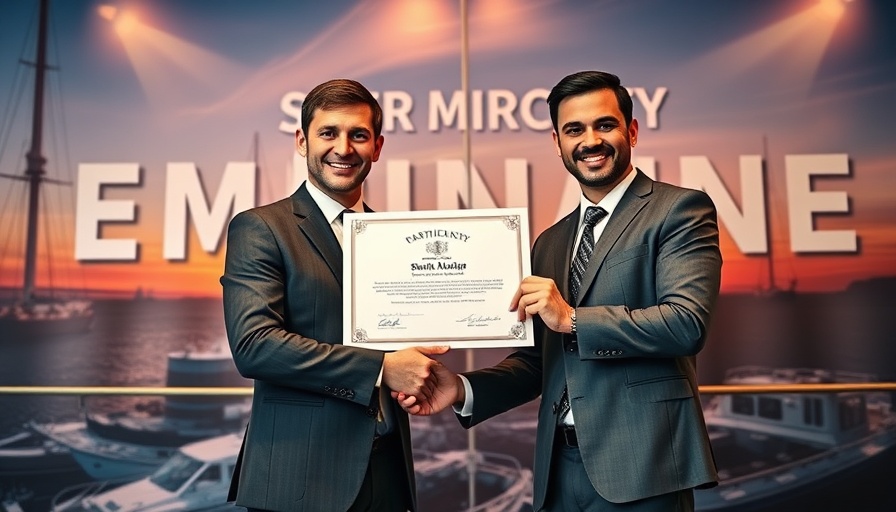
Havelsan CEMRE hybrid USVs partnership ceremony.

New Horizons: Havelsan and CEMRE's Strategic Partnership

In an exciting development for the maritime industry, technology company Havelsan has forged a strategic partnership with Türkiye's CEMRE shipyard to advance the design and production of hybrid and submersible autonomous uncrewed surface vehicles (USVs). This collaboration, marked by the signing of a memorandum of understanding (MoU), signifies a leap forward in military maritime technology, particularly in the realm of uncrewed naval solutions.

The ÇAKA H-USV: Leading the Charge

The primary focus of their partnership will be the accelerated development of the ÇAKA H-USV, which aims to integrate Havelsan’s cutting-edge autonomous technologies and network capabilities. This USV is designed for stealth operations, offering both surface and sub-surface functionality, making it suitable for a range of missions including surveillance and reconnaissance, while ensuring low detectability.

Significance of the MoU in Military and Civilian Sectors

This partnership marks a notable venture for CEMRE shipyard, as it shifts towards uncrewed military maritime platforms. With CEMRE's existing expertise in environmentally friendly naval solutions—such as zero-emission and methanol-powered vessels—the combination of their engineering prowess with Havelsan’s technological innovations could redefine the capabilities of modern naval fleets.

Impact on the Defense Industry in Türkiye

According to statements made by executives from both companies, this merger not only enhances Havelsan’s strengths in autonomous systems but also contributes substantially to Türkiye's defense industry capabilities. As the partnership unfolds, it is further expected to yield a suite of USVs tailored for various military applications, reflecting compliance with the stringent requirements for military shipbuilding—a certification CEMRE just obtained in June.

Future Insights: What Lies Ahead?

The successful development of the ÇAKA H-USV could set precedents for further models and adaptations. Stakeholders in the defense and maritime sectors will be keenly monitoring developments from this collaboration. As Havelsan progresses towards finalized production, discussions around additional applications and expansions into international markets are anticipated.

Strategic Positioning in Global Markets

Havelsan's recent success, exporting first-rate e-maritime solutions to Romania, exemplifies how Turkish companies are making significant inroads into the global defense marketplace. With the growing demand for uncrewed platforms internationally, this partnership positions Türkiye as a competitive player in the high-tech naval industry.

Conclusion: Navigating the Future Together

This partnership between Havelsan and CEMRE represents more than just a technical alliance; it's a strategic maneuver in the evolving landscape of maritime defense. By combining their respective expertise, both companies are paving the way for innovative solutions that could enhance naval security not only in Türkiye but globally.

For those interested in the future of naval technology and how such partnerships can transform military capabilities, staying informed about the developments following this MoU will provide critical insights into the next generation of military and autonomous systems.

Technology

0 Comments

Write A Comment

*
*
Related Posts All Posts
02.14.2026

How Lockheed Martin and Fujitsu's SPY-7 Radar Order Transforms Japan's Defense Future

Update Lockheed Martin and Fujitsu Partner for Enhanced Defense Capabilities In a significant move that underscores Japan's evolving defense strategy, Lockheed Martin and Fujitsu have finalized an agreement for an essential component in the country's advanced SPY-7 radar system, specifically designed for the Aegis System Equipped Vessel (ASEV). This partnership marks a strategic step not just for the companies involved, but also for Japan's self-sufficiency in defense capabilities. Understanding the SPY-7 Radar System The SPY-7 is a state-of-the-art radar system capable of detecting, tracking, and engaging multiple threats simultaneously—a vital capability in today's fast-evolving defense environment. Leveraging solid-state technology, the SPY-7 is designed for ballistic missile defense as well as air and missile defense missions, ensuring that it remains operationally effective in both conventional and asymmetric warfare scenarios. Fujitsu’s Role in Japan’s Defense Sector Fujitsu will supply the Subarray Suite Power Supply Line Replaceable Unit (PS LRU) for the SPY-7 radar, providing a much-needed boost to the domestic production of defense technologies. This partnership is not just about technology transfer; it signifies a shift towards a more self-reliant defense manufacturing ecosystem in Japan. Kenichiro Miyazaki, Senior Vice President at Fujitsu, emphasized the importance of this collaboration in strengthening Japan's national defense through enhancing local production capabilities. A Vision for the Future Lockheed Martin’s Vice President and General Manager, Chandra Marshall, acknowledged that this collaboration reflects a long-term commitment to establishing a Japan-based supply chain. Such moves are essential as Japan aims to modernize its military capabilities to meet the complex security landscape in the Indo-Pacific region. The new ASEV vessels, set to be equipped with the SPY-7 radar, are anticipated to play pivotal roles in both regional stability and Japan’s broader defense strategy. Implications for the Indo-Pacific Security Landscape As nations in the region enhance their military capabilities, the collaboration between Lockheed Martin and Fujitsu is even more critical. The growing tensions in areas such as the South China Sea and North Korea underline the need for advanced defense systems. The SPY-7, with its enhanced capabilities, positions Japan as a significant player in regional defense, supporting both its national security and collective security initiatives with allies. Historical Context: The Evolution of Japan’s Defense Policy Japan’s defense posture has undergone a considerable transformation since the end of World War II. Initially centered on pacifism, recent geopolitical developments have compelled Japan to take on a more proactive stance in security matters. The signing of this contract coincides with Japan's commitment to enhance its defense budget and modernize its military equipment, reflecting a broader national strategy aimed at regional deterrence. Concluding Remarks: Strengthening Collaborative Defense Manufacturing The formalization of this contract between Lockheed Martin and Fujitsu is more than a business arrangement; it represents a broader shift in Japan’s defense landscape towards collaborative, domestic manufacturing of advanced military technologies. As production begins for critical components like the PS LRU, it promises to bolster Japan’s national capabilities in an increasingly challenging security environment. The collaborative relationship between domestic and international firms will ultimately determine how well Japan can navigate future security challenges.

02.14.2026

Emerging Technologies in 2026: What You Need to Know About Tech Innovations

Update Understanding the Future: Emerging Technologies in 2026 As we enter 2026, understanding the evolving landscape of technology is more critical than ever. Global businesses are leveraging disruptive technology that profoundly impacts every industry—from insurance innovation to advanced shipbuilding techniques. The next few years promise to redefine our connection with technology as speeds double and data flows become seamless. Disruptive Technologies Shaping Tomorrow's Industries Take a moment to consider InsurTech innovations. The insurance industry, long plagued by traditional processes, is turning to technology to implement digital insurance solutions that enhance customer experience and streamline operations. Companies are rapidly adopting tech industry case studies that showcase successful tech projects leading to large-scale transformations. What Does 2026 Hold for the Technology Sector? Several trends are expected to dominate, including advancements in maritime technology. The significance of shipbuilding innovations cannot be overstated, especially as countries ramp up investments in the Navy and naval architecture tech. We may soon see visual tech data helping naval architects design more efficient vessels while ensuring compliance with regulatory standards. The Role of Technology in Driving Social Change Importantly, we must consider how technology intersects with societal issues. The latest tech updates are not solely about efficiency; they're about crafting solutions that address real-world problems—including climate change, public health crises, and economic disparity. Asking whether we are using these tools responsibly and effectively is crucial. Future Insights: What Investors Should Know For those looking to invest in the future of technology, paying attention to technology disruptors is key. From companies focused on renewable energy to those working on cutting-edge AI applications, these innovations signal growth opportunities. Networking with tech leaders can provide invaluable insights into upcoming products and market shifts. Final Thoughts: Engaging with Tech Trends The world of technology is rapidly evolving, and the pace of tech trends for 2025 showcases the potential for significant change in various industries. As we have discussed the impacts of innovations in tech and the benefits they can bring, it's vital to stay informed. Engaging with ongoing tech analysis and visual tech data will keep you ahead of the curve. Being well-versed in emerging technologies prepares you for the transformations that 2026 will usher in—don't let uncertainty stifle your engagement with what's next!

02.14.2026

Urgent Rise in Cannabis Hyperemesis Syndrome Cases: What Professionals Need to Know

Update Understanding Cannabis Hyperemesis Syndrome: An Alarming Trend Virginia is witnessing a significant rise in cannabis hyperemesis syndrome (CHS) cases, with emergency department visits surging nearly 29% over the past five years. Data from the Virginia Hospital and Healthcare Association highlights that within the period from 2020 to 2024, emergency department visits specifically linked to CHS rose from 4,027 in 2020 to 5,175 in 2024, totaling 24,960 visits associated with this debilitating condition. The Rise of Cannabis-Related Health Issues Alongside CHS, other cannabis-related diagnoses including abuse and dependence have also peaked. Between 2020 and 2024, over 172,778 adult emergency department visits related to cannabis abuse were recorded, with a striking high of 37,690 in 2022. This upward trend raises critical questions about the healthcare implications tied to increasing cannabis use in states like Virginia, where legalization has changed social norms. CHS triggers extreme nausea, abdominal pain, and vomiting episodes among heavy cannabis users, often establishing themselves after a decade or more of habitual use. As healthcare professionals strive to pinpoint causes, Cedars Sinai indicates that CHS may relate to the brain's response to prolonged marijuana use, signaling a potential adaptation or resistance to its effects. “Scromiting”: The Disturbing Symptoms of CHS Patients suffering from CHS often experience a phenomenon colloquially known as "scromiting," a combination of severe vomiting and uncontrollable screaming brought on by intense abdominal pain. Dr. Sam Wang, a pediatric emergency medicine specialist, notes that many find relief through the simple act of taking hot showers or baths, a practice repeatedly highlighted in various healthcare discussions. With the absence of a definitive cure, the most effective treatment remains total cessation of cannabis use. However, emergency interventions often involve intravenous fluids and medications to control nausea and pain, indicating an urgent need for informed discussions around cannabis use in communities. Addressing the Educational Gaps in Cannabis Use The increase in CHS is not merely an isolated health issue; it reflects broader trends linked to cannabis legalization and consumer education. As healthcare professionals and policymakers navigate this evolving landscape, the importance of data-driven education becomes paramount. Understanding cannabis’ effects would empower users and potentially curb rising health crises. Emerging analytical frameworks around cannabis health issues indicate a need for proactive measures. Studies suggest that behavioral interventions and increased public awareness are imperative for addressing the informative gaps in cannabis usage, thereby fostering healthier consumption practices. In closing, increasing CHS cases in Virginia underscore an escalating public health concern that merits attention and action. By conveying these insights and promoting informed discussions, we can drive meaningful change in our communities and practices surrounding cannabis. Take action today: Engage with local health initiatives that aim to educate about cannabis use, its risks, and emerging health trends.

Terms of Service

Privacy Policy

Core Modal Title

Sorry, no results found

You Might Find These Articles Interesting

T
Please Check Your Email
We Will Be Following Up Shortly
*
*
*