
Add Row
Add Element

Add Element
Moss Point Gulf Coast Tech
update

Gulf Coast Tech

update
Add Element
  • Home
  • About
  • Categories
    • Tech News
    • Trending News
    • Tomorrow Tech
    • Disruption
    • Case Study
    • Infographic
    • Insurance
    • Shipbuilding
    • Technology
    • Final Expense
    • Expert Interview
    • Expert Comment
    • Shipyard Employee
  • Mississippio
June 20.2025
2 Minutes Read

Why France's 40mm Ammunition Orders Signal a Shift in Military Readiness

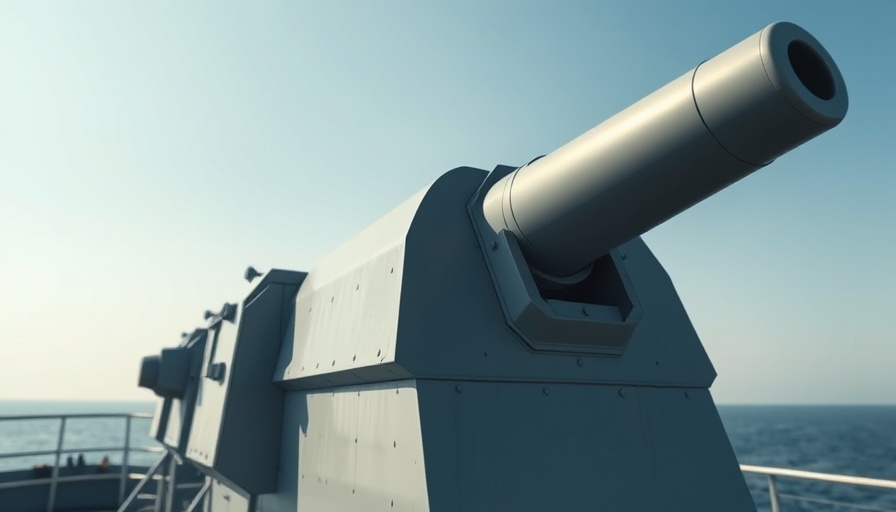
Modern naval turret, France 40mm ammunition orders context.

France's Strategic Ammunition Orders: A Modern Naval Defense Initiative

In a decisive move to bolster its military capabilities, France has placed an order for 40mm ammunition rounds intended for both its Navy and Army. This procurement not only signifies a shift towards enhanced defense readiness but also addresses the evolving challenges faced by modern armed forces. As defense technologies advance, countries like France are recognizing the importance of maintaining a well-equipped military capable of responding to new threats.

Why 40mm Ammunition Matters

The choice of 40mm ammo is significant. This caliber is renowned for its versatility across various platforms, making it a staple in modern military arsenals. Used in automatic grenade launchers and various artillery systems, 40mm rounds can deliver explosive projectiles at a range of tactical applications. Adding these munitions to France's arsenal enhances not just the firepower but the overall effectiveness of military operations.

The Future of France's Military Landscape

With ongoing geopolitical tensions in Europe and beyond, France's decision to expand its ammunition stocks reflects a broader strategy focused on military readiness. Analysts suggest that this action is a preparation for potential conflicts while also sending a message of strength to allies and adversaries alike. As defense budgets are scrutinized globally, France seems committed to maintaining a robust military deterrent.

Community Impact and Public Perception

The public's perception of military spending varies widely, often influenced by regional security concerns and historical contexts. In France, an increased focus on military expenditure, particularly post-pandemic, might spark debates on resource allocation versus social welfare. This discussion is critical as the country navigates the delicate balance between national security and the well-being of its citizens.

International Comparison: How Does France Stand?

Comparing France's military procurement to other NATO allies reveals notable trends. Countries like Germany and the UK are simultaneously ramping up their defense expenditures amid similar concerns regarding security in Europe. This collective action may hint at a future where European nations work more closely together to address shared threats, ultimately shaping a unified defense strategy.

Looking Ahead: What Does This Mean for Global Security?

As nations refine their military strategies, investments in arms like 40mm ammunition can lead to significant shifts in power dynamics globally. The reinforcement of military capabilities might deter potential aggressors, but it could also escalate tensions by prompting neighboring countries to increase their defense strategies. How these arms acquisitions will influence global security remains a critical conversation in defense circles.

Ultimately, France's decision on ammunition procurement is more than just a logistical maneuver; it’s a reflection of the pressing need to adapt and respond to both current and future security challenges. As the world watches, the implications of these actions will reverberate far beyond the borders of France, impacting global geopolitical trends.

Tech News

0 Comments

Write A Comment

*
*
Related Posts All Posts
12.31.2025

WASS's Historic Contract to Supply Torpedoes to Strengthen Indian Navy’s Capability

Update Introduction to a Strategic PartnershipIn an era where maritime security is evolving alongside technological advancements, WASS Submarine Systems, a subsidiary of Fincantieri, has made headlines by securing a significant contract with the Indian Navy. This partnership will see the provision of Black Shark Advanced (BSA) heavyweight torpedoes, designed for deployment on the six Scorpène-class submarines already in operation within the Indian fleet.A Major Investment in Naval DefenseValued at over 200 million euros, this contract not only marks a monumental achievement for WASS—celebrating its 150th anniversary—but also amplifies India's commitment to bolstering its naval defenses. The deliveries of these high-tech torpedoes are slated to occur between 2028 and 2030, with a robust production process being conducted at WASS’s esteemed facility in Livorno, Italy, a recognized hub for innovative underwater systems.Enhanced Operational CapabilitiesThe Black Shark Advanced torpedo stands out for its state-of-the-art technological attributes and operational flexibility, having already proven itself across several international navies, including Italy. Its reputation for reliability and reduced lifecycle costs further solidifies its status as a go-to solution for modern naval warfare. This contract not only extends the capabilities of the Indian Navy but also elevates WASS’s profile as a global player in the underwater defense sector.Beyond Torpedoes: Comprehensive SupportAnother critical aspect of this agreement is the inclusion of an extensive support package. Beyond the supply of torpedoes, WASS will also provide launch systems specifically designed for the Scorpène submarines, maintenance equipment, and necessary spare parts. This integrated support ensures the Indian Navy has not only the weapons needed for defense but also the means to maintain operational readiness effectively.Fostering Bilateral Relations and Future GrowthPierroberto Folgiero, Fincantieri's CEO, emphasized that this contract is a significant strategic move into India, which he described as an essential market for future international growth. By establishing strong ties with the Indian Navy, Fincantieri is not only enhancing its presence in a promising naval hub but also building enduring industrial relationships that could lead to further cooperative opportunities in the future. This aligns with India's aspirations to modernize its defense infrastructure and achieve greater self-reliance in technology.The Bigger Picture: Implications for Global Maritime SecurityThis agreement transcends just a business transaction; it reflects broader trends in global maritime security. As nations strive to enhance their naval capabilities, international partnerships like that of WASS and the Indian Navy exemplify a commitment to creating a robust defense landscape amid emerging geopolitical challenges. The collaboration signifies a robust alliance that seeks to address shared security objectives while fostering technological advancement.Conclusion: Looking AheadWith the strategic advancements brought about by this contract, the future appears promising for both WASS and the Indian Navy. As global maritime security needs grow and evolve, investments in advanced defense technologies will be crucial. The Black Shark Advanced torpedoes are not merely a procurement for the Indian Navy; they signify a leap towards an empowered maritime defense strategy, reinforcing a collaborative spirit in a region increasingly vital to global stability.

12.30.2025

Japan's Record Defense Budget: A Strategic Move Amid Rising Tensions

Update Japan’s Record Defense Spending: A Response to Rising TensionsThe recent approval of Japan's record defense budget, exceeding 9 trillion yen (about $58 billion), is a significant reflection of the country's response to escalating regional tensions, particularly regarding China. This budget marks a 9.4% increase from the previous year and is part of Japan's strategic plan to bolster its military capabilities. Prime Minister Sanae Takaichi emphasized the need for enhanced defense measures, declaring the current security environment as the most complex Japan has faced in decades.Historical Context: Japan's Shift in Defense PolicyHistorically, Japan has adhered to a pacifist constitution post-World War II, allowing its Self-Defense Forces only to operate in limited capacities aimed solely at self-defense. However, the growing assertiveness of China, particularly concerning territorial disputes in the East China Sea and Taiwan, has prompted Japan to reconsider its stance. The adoption of a new national security strategy in 2022 identified China as the primary strategic threat, leading to a readiness for a more offensive military posture under its defense alliance with the U.S.Investing in Advanced Military TechnologyThe 2026 budget allocates significant resources for enhancing Japan's military technology, including more than 970 billion yen for standoff missile capabilities. This investment includes the domestically developed Type-12 surface-to-ship missiles, capable of striking targets up to 1,000 kilometers away. The emphasis on unmanned systems signifies Japan's recognition of its aging population and the necessity for efficient defense measures.Concerns Over China's Growing InfluenceRelations between Japan and China have further deteriorated due to various military developments. Recently, Japan lodged protests against China following incidents where Chinese aircraft engaged in threatening maneuvers near Japanese airspace. Additionally, the sighting of two Chinese aircraft carriers operating together near Japanese territory marked a notable escalation in military assertiveness from Beijing, heightening fears regarding territorial integrity in the region.The Broader Implications of the Increased Military BudgetJapan's defensive buildup is not just about immediate threats; it also reflects a strategic pivot toward more proactive engagement in regional security. A crucial aspect of this budget proposal is the anticipated revision of Japan's security and defense policies by December 2026, aimed at further strengthening the military framework. Collaborative defense projects with allies, including the joint development of next-generation fighter jets with the U.K. and Italy, signify Japan's commitment to not just bolster its defenses but also to enhance its position within the global defense landscape.Local Reactions and Global ImpactThe reaction from the local populace and international observers has been mixed. While many support the necessity of bolstering defenses, others express concern that this shift may provoke further tensions in an already volatile region. Observers note that improving military capabilities must be balanced against the potential repercussions of escalating an arms race in East Asia.Conclusion: Japan's Path ForwardThe significant increase in Japan’s defense budget for 2026 represents a pivotal moment for the nation's military strategy amidst heightened regional tensions. With parliamentary approval still pending, the focus remains on transforming Japan into a capable military power while maintaining its identity as a peace-loving nation. Observers will be closely watching how Japan balances its military objectives with the need for diplomatic relations in a complex geopolitical environment.

12.29.2025

What Do Two New Frigates for the Philippine Navy Mean for Regional Security?

Update HD Hyundai Heavy to Build Two New Frigates for the Philippine Navy On December 29, 2025, HD Hyundai Heavy Industries (HHI) signed a crucial contract with the Philippine Department of National Defense (DND), marking a significant step in the modernization of the Philippine Navy. The agreement involves the construction of two new 3,200-ton frigates, part of the Philippine Navy Frigate Second Acquisition Program, with delivery anticipated by 2029. Strengthening the Philippine Navy’s Capabilities The recent contract adds to HHI’s growing portfolio with the Philippine Navy, which already includes two previous frigates and two corvettes delivered since 2016. The two new frigates are expected to further solidify the Philippines' maritime defense capabilities as outlined in the Horizon 3 modernization plan. According to officials, these frigates will be based on HHI’s HDF-3200 design and are equipped to address the increasing maritime security challenges in the region. They come armed with advanced combat systems, including a vertical launching system for missiles, close-in weaponry, and an advanced radar system, promising enhanced operational effectiveness in the Philippine waters. A Long-Standing Defense Partnership This new acquisition is underpinned by the Implementation Agreement signed in 2009, creating a robust framework for procurement between South Korea and the Philippines. Following this pathway, negotiations continue to yield agreements facilitating the Philippines' naval expansion, thereby enhancing defense ties between the two nations. The local industry receives a boost from these successful defense endeavors, as they create job opportunities and foster technological transfers. Since 2016, HHI’s collaboration with the Philippine Navy has resulted in the construction of a diversified fleet, signaling a focused shift toward achieving a more credible and capable maritime force. Future Implications The delivery of these new frigates will not just enhance the Philippine Navy's operational reach but will also play a pivotal role in regional stability amidst evolving maritime security dynamics. With geopolitical tensions rising in the South China Sea, the Philippine Navy's modernization is a strategic move to uphold national sovereignty and protect vital sea routes. Commitment to Modernization The Philippine Navy remains committed to modernizing its fleet, as evidenced by the ongoing construction of six Offshore Patrol Vessels, including the BRP Rajah Sulayman, which is scheduled for delivery in January 2026. This commitment emphasizes a forward-looking approach, continually adapting to the needs of modern naval warfare and regional defense requirements. Call to Action As developments unfold, defense enthusiasts and stakeholders alike should keep an eye on further enhancements within the Philippine Navy. Understanding these initiatives not only showcases the progress in maritime defense capabilities but also invites discussions on the strategic implications for regional security.

Terms of Service

Privacy Policy

Core Modal Title

Sorry, no results found

You Might Find These Articles Interesting

T
Please Check Your Email
We Will Be Following Up Shortly
*
*
*