
Add Row
Add Element

Add Element
Moss Point Gulf Coast Tech
update

Gulf Coast Tech

update
Add Element
  • Home
  • About
  • Categories
    • Tech News
    • Trending News
    • Tomorrow Tech
    • Disruption
    • Case Study
    • Infographic
    • Insurance
    • Shipbuilding
    • Technology
    • Final Expense
    • Expert Interview
    • Expert Comment
    • Shipyard Employee
  • Mississippio
August 05.2025
2 Minutes Read

Windward Offshore's First CSOV Contracts Open New Horizons in Renewable Energy

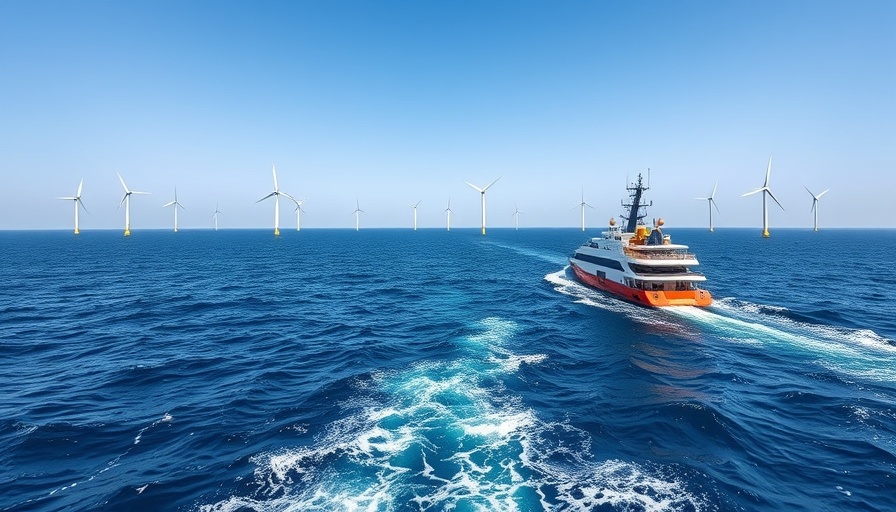
Modern offshore vessels near wind turbines, showcasing Windward Offshore CSOV contracts.

Windward Offshore Sets Sail for Success in Offshore Wind Contracts

Windward Offshore, based in Hamburg, has made significant strides in the offshore wind sector by securing its first charter contracts for two cutting-edge Commissioning Service Operation Vessels (CSOVs)—the Windward Athens and Windward Paris. This strategic move not only emphasizes the company's commitment to supporting offshore wind operations but also highlights the increasing demand for sustainable energy solutions.

Building a Partnership for Sustainable Growth

The contracts, finalized last month with North Star, indicate a collaborative venture aimed at enhancing the operational capabilities of offshore wind farms managed by RWE in the UK and Germany. The Windward Athens is set to launch operations in winter 2025 at RWE's offshore wind farms located north of Helgoland, while the Windward Paris will commence in summer 2026 at the Triton Knoll Offshore Wind Farm.

Innovative Technology: The Future of Offshore Operations

These vessels represent a new generation of CSOVs, boasting advanced features such as ultra-low-emission technologies and battery hybrid systems designed to minimize environmental impact. They are equipped with an Ampelmann W-Type walk-to-work gangway and a 7-tonne motion-compensated crane, ensuring safe and efficient logistics under challenging conditions.

Dr. Benjamin Vordemfelde, managing director of Windward Offshore, stated, "These first charter agreements for Windward are a fantastic proof that the industry honors Windward’s forward-thinking service approach and our commitment to supporting the growing offshore wind sector through strong partnerships.” This statement reflects an industry trend towards innovative, environmentally-friendly solutions in offshore energy operations.

Collaborative Ventures: A Win for All Parties

The collaboration between Windward and North Star serves as a pivotal example of cross-industry cooperation, essential for the continuity of offshore operations. North Star CEO Gitte Gard Talmo remarked that this interim solution highlights the shared focus on safe and efficient offshore operations until their dedicated vessels become available by the end of 2026. Such alliances are vital as the world transitions towards renewable energy and requires integrated operational support.

Looking Forward: Implications of CSOV Technology

As the energy landscape shifts towards sustainability, the commissioning of these CSOVs symbolizes a significant move towards adopting greener technologies in the maritime and offshore wind sectors. With growing investments in renewable energy, understanding the role of innovative vessels becomes crucial for stakeholders invested in the future of energy production and distribution.

Conclusion: The Importance of Adaptation in Offshore Energy

The contracts won by Windward Offshore not only signify a success for the company but also indicate a larger trend in the maritime industry's adaptation to the demands of offshore wind energy. By investing in new technologies and strategic partnerships, companies can ensure they remain at the forefront of this evolving sector.

Tomorrow Tech

0 Comments

Write A Comment

*
*
Please complete the captcha to submit your comment.
Related Posts All Posts
04.14.2026

Exploring the New Spanish Navy Diver Support Vessel Prosperina (A22)

Update Spain’s Navy Strengthens Underwater Capabilities with Prosperina In a strategic move to enhance its underwater operational capabilities, the Spanish Navy has officially launched the new diver support vessel, Prosperina (A22). Built by the reputable Freire Shipyard, this vessel represents a significant upgrade from its predecessor, Proserpina, and is designed with modern technology to support diverse diving operations. A Pioneering Partnership The launch ceremony, attended by Admiral General Antonio Piñeiro Sánchez and the shipyard's general managers Marcos and Guillermo Freire, emphasized the partnership between the Spanish Navy and Freire Shipyard. This collaboration marks a pivotal moment, showcasing the strengths of Spanish shipbuilding within a landscape increasingly defined by advanced maritime threats. “Today we witness the achievement of a collective effort, a shared vision, and the trust built between the Navy and the Spanish shipbuilding industry,” remarked Admiral Piñeiro. This statement encapsulates the spirit of innovation and commitment to maritime security that drives this new vessel's development. Eco-Friendly and Efficient Design The Prosperina spans 32.90 meters in length and is equipped with eco-friendly technologies aimed at optimizing fuel consumption and minimizing emissions. With a functional range of 500 nautical miles, it is engineered for efficient operation while providing crucial logistical support and training for divers at the Spanish Navy’s Diving School. The vessel's ability to carry up to 15 crew members also ensures versatility in mission assignments, crucial for various underwater operations, from training to emergency responses. Advanced Technologies for Underwater Operations Equipped with state-of-the-art equipment, Prosperina features a dynamic positioning system (DP2) and a three-anchor mooring system to ensure stability at depths up to 90 meters. Its operational capability is significantly enhanced by a side-scan sonar system (SBL) and both a remotely operated vehicle (ROV) capable of diving to 900 meters and an autonomous underwater vehicle (AUV) that operates at 300 meters. These advanced technologies not only support emergency search and recovery operations but also facilitate detailed inspections of vital underwater infrastructure, such as cables and pipelines. Significance of the Launch for Spain’s Military Diving School The Prosperina plays a crucial role in supporting the training at the Military Diving School, a key element for enhancing the proficiency of specialists in facing complex maritime security challenges. As Admiral Piñeiro pointed out, “Protecting essential infrastructures underwater requires preparation, resources, and highly qualified professionals.” This vessel not only fortifies the Navy's capabilities but also symbolizes the dedication of the Spanish shipbuilding sector to meet the demands of modern maritime operations. Looking Forward: A Stronger Naval Future The introduction of the Prosperina underscores a broader trend within the Spanish Navy to modernize its auxiliary fleet. With growing underwater threats and challenges, investment in cutting-edge technology and skilled personnel will be crucial in maintaining the Navy's operational readiness. Freire Shipyard has established a legacy in building innovative vessels since its founding in 1895, and this new partnership with the Navy signifies both a commitment to excellence and a proactive approach to future maritime security needs.

04.13.2026

Gunderson Marine's Dual Vessel Launch: A Turning Point for Shipbuilding

Update Gunderson's Historic Dual Vessel Launch Set to Make WavesGunderson Marine & Iron, the Portland-based shipbuilder known for its innovative maritime solutions, is poised to mark a significant milestone in the shipbuilding industry with its first-ever dual vessel launch. This long-anticipated event, scheduled for April, reflects not only the company’s growth in capacity and commitment to modern maritime technology, but also highlights the ongoing revival of U.S. vessel construction amidst a landscape of increasing demand.A New Era for GundersonThe dual vessel launch, which includes advanced barges designed for enhanced operational efficiencies, represents an evolution in the company’s production capabilities. Gunderson has a storied history of shipbuilding and has been evolving its technology to cater to contemporary shipping needs, particularly in the inland waterways sector. With the U.S. focusing more on boosting its domestic shipbuilding capabilities, Gunderson’s investment in these state-of-the-art vessels underscores a broader trend aimed at revitalizing the maritime industry.Workforce Development: The Skill Gap ChallengeIn conjunction with their new launches, Gunderson has also announced plans to establish a training center aimed at addressing the skill gap within the maritime workforce. With a pressing need for skilled tradespeople in the shipbuilding sector, the new facility will provide training in welding, fabrication, and safety practices. This initiative aligns with industry efforts to foster a robust pipeline of skilled labor, vital for sustaining the growth of shipyards across the country.A Look Back: History of Innovation at GundersonFounded over a century ago, Gunderson has been at the forefront of creating vessels for a variety of purposes, from inland transportation to advanced maritime solutions. The company has seen substantial changes, particularly during the last few decades, when the demand for eco-friendly and efficient vessels became paramount. The upcoming dual vessel launch signifies a return not only to their manufacturing roots but also a commitment to advancing maritime technology that meets contemporary environmental standards.What's Next: Future Predictions and OpportunitiesThe maritime industry is undergoing transformative changes driven by technological advancements and evolving market demands. Gunderson’s dual vessel launch is expected to create significant buzz in the industry, potentially leading to further contracts and collaborations with logistics companies craving for enhanced shipping solutions. As industries like renewable energy and the LNG sector continue to grow, the need for robust and efficient maritime transport solutions will likely increase, positioning Gunderson to capitalize on emerging opportunities.

04.12.2026

Surge of Tankers to U.S. Gulf as CENTCOM Moves to Secure Hormuz

Update U.S. Military Takes Action in the Strait of Hormuz The Strait of Hormuz, a vital passage for global oil shipments, has seen renewed military activity as U.S. Central Command (CENTCOM) initiates operations to clear sea mines ominously placed by Iran's Islamic Revolutionary Guards Corps. This strategic move is critical to ensuring the free flow of commerce through a corridor that accommodates about one-fifth of the world's oil supply daily. On April 11, the USS Frank E. Peterson and USS Michael Murphy advanced into the strait, marking the beginning of a mission aimed at creating a secure passage for tanker traffic. Tanker Traffic Surge: A Response to Geopolitical Tensions The deployment of U.S. naval forces comes at a time when crude oil tankers are surging toward the U.S. Gulf Coast. According to Windward AI, a maritime data analytics company, the number of tankers en route has sharply increased amidst ongoing instability in the Middle East. There has been a reported 46% rise in arrivals via the Northern Corridor and a staggering 132% increase through the Southern Corridor. This surge emphasizes how conflicts can reshape trade flows and merchandise delivery patterns globally. Historical Context and Critical Importance of the Strait The Strait of Hormuz has long been a focal point of geopolitical strife and economic interest. Historically, this narrow but crucial waterway has been susceptible to disruptions caused by regional tensions. Oil prices frequently fluctuate in direct response to developments in this area; notably, Brent crude oil prices soared to $118 per barrel leading to increased fuel prices at home. Such economic reactions underline the global reliance on this passage and the implications for energy security worldwide. Impact on Global Supply Chains: What It Means for You The heightened tanker activity and the potential for a reopened strait are more than just strategic military maneuvers. They represent a shift in global supply chains now threatened by conflicts. As tankers navigate challenges presented by geopolitical instability, the cost of crude oil—and consequently gasoline—remains in flux. Consumers already feeling the pinch at the pump may need to be aware that such circumstances can escalate prices further, depending on how the situation unfolds. Future Predictions on Oil Supply and Economic Trends Looking ahead, analysts predict that the influx of tankers into U.S. waters may alleviate some immediate pressures, but the long-term outlook remains uncertain. The delicate ceasefire and ongoing negotiations between the U.S. and Iran keep all involved parties on heightened alert. Any deviations from the current agreements could potentially lead to renewed tensions, thereby influencing global oil prices and availability. Consumers may find themselves keeping a close eye on the news as developments unfold, particularly during peak driving seasons in the U.S. Take Action: Stay Informed and Prepared In tumultuous times, knowledge is power. Understanding the intricacies of fuel supply dynamics and geopolitical negotiations can help consumers make informed decisions at the pump. Keeping abreast of news developments surrounding the Strait of Hormuz can prepare individuals for potentially fluctuating prices. To see how these events affect your local and national economy, consider engaging with credible news sources and participating in community discussions about energy reliance and safety practices.

Terms of Service

Privacy Policy

Core Modal Title

Sorry, no results found

You Might Find These Articles Interesting

T
Please Check Your Email
We Will Be Following Up Shortly
*
*
*