Add Row
Add Element

Add Element
Moss Point Gulf Coast Tech
update

Gulf Coast Tech

update
Add Element
  • Home
  • About
  • Categories
    • Tech News
    • Trending News
    • Tomorrow Tech
    • Disruption
    • Case Study
    • Infographic
    • Insurance
    • Shipbuilding
    • Technology
    • Final Expense
    • Expert Interview
    • Expert Comment
    • Shipyard Employee
  • Mississippio
July 17.2025
2 Minutes Read

Discover How Nilgiri-Class Frigates Elevate Indian Naval Power by 2026

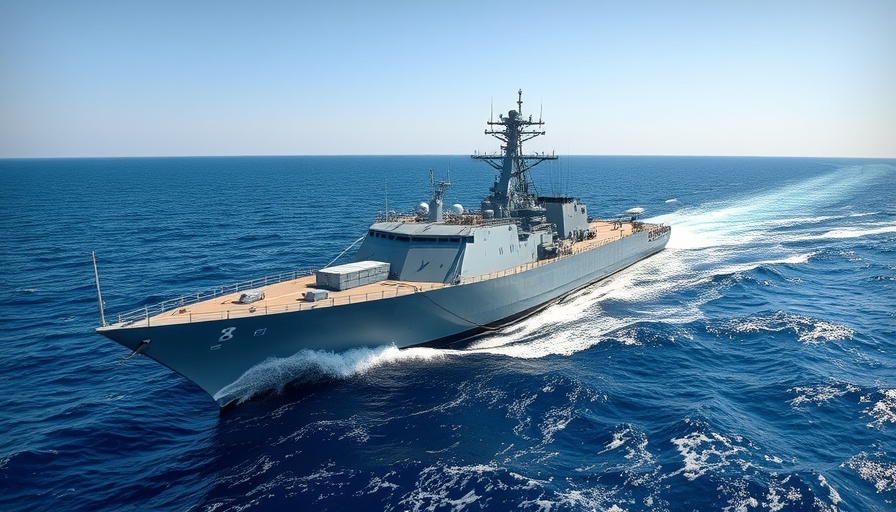
Modern Indian Navy Nilgiri-class frigate cutting through blue ocean.

The Future of Indian Naval Power

As the world focuses on maritime strengths, the Indian Navy is set to significantly bolster its naval power with the induction of the six remaining Nilgiri-class frigates by 2026. Built by the state-owned shipbuilder Garden Reach Shipbuilders and Engineers (GRSE), these vessels stand as testaments to India's growing indigenization in defense manufacturing and its strategic objectives in enhancing security across maritime territories.

Why the Nilgiri-Class is a Game Changer

The Nilgiri-class frigates are notable not just for their modern design but also for their capabilities—they incorporate stealth features, advanced combat systems, and the ability to conduct a wide variety of missions, from anti-piracy operations to fleet defense. Each ship in this class is designed to operate in various conditions effectively, showcasing versatility that is crucial in today’s geopolitical environment.

Economic Impacts of Indigenous Shipbuilding

Investing in the indigenous production of military vessels also has significant economic implications. By employing local engineers and workers, this project supports job creation in the shipbuilding industry, fostering skills enhancement and technology transfer. Moreover, utilizing home-grown resources minimizes dependency on foreign entities, thereby presenting a more self-sufficient approach to defense.

Global Context: India's Naval Aspirations

India’s ambitions are not isolated; they mirror a broader trend among nations to enhance their maritime capabilities. Countries around the globe, including those in the Indo-Pacific region, are investing in modern naval fleets as a deterrent against emerging threats. India’s commitment to strengthening its navy aligns with its strategic interests, signaling to both allies and adversaries its readiness to protect its maritime sovereignty.

Community and National Pride

The induction of these frigates brings not just tactical advantages but also national pride. As these ships sail into service, they symbolize India's progress in defense technology and its dedication to protecting its interests at sea. This enhanced capability is a matter of great interest to citizens, as it resonates with a broader narrative of self-reliance and strength.

Looking Ahead: Implications of Naval Strength

As India approaches the completion of its Nilgiri-class frigates, professionals in defense and maritime industries are eager to see how these vessels will influence regional security dynamics. Will this naval expansion reshape alliances? Will it deter aggression in contested waters? These are questions that will unfold as the ships are inducted and missions are assigned. The exhibition of naval power can be both a fence against transgressions and a foundation for diplomacy.

Conclusion: An Invitation to Engage

The future of naval operations in India reflects a profound evolution in defense strategy and capabilities. For those interested in maritime security trends and the role of indigenous shipbuilding, it is essential to stay abreast of developments as the Indian Navy transitions to more advanced vessels. As we watch these changes unfold, let us engage in discussions that appreciate the significance of maritime power in our global context.

Tech News

0 Comments

Write A Comment

*
*
Related Posts All Posts
03.04.2026

Why the Netherlands Chose F21 MK2 Torpedoes for Future Submarines

Update Netherlands Chooses F21 MK2 Torpedoes: A Strategic Shift The Netherlands Ministry of Defense (MoD) has embarked on a significant update to its naval capabilities by selecting the French-made F21 MK2 heavyweight torpedoes for its future Orka-class submarines. This decision marks a pivotal shift from the previously intended use of the American MK48 torpedoes, which have served the Dutch Royal Navy aboard the aging Walrus-class submarines. This change illustrates a growing recognition of the evolving threats in maritime warfare and the need for advanced weaponry to secure national interests. Understanding the Need for Upgraded Defense Systems In recent years, military experts have highlighted the necessity for advanced technology in naval warfare, specifically against automated and unmanned systems. The rapid development of these technologies means that traditional armaments like the MK48 may become increasingly insufficient in countering sophisticated threats. By opting for the F21 MK2, the Dutch MoD is responding proactively to potential challenges posed by adversaries leveraging high-tech weaponry. Enhanced Operational Capabilities with F21 MK2 The F21 MK2 torpedo, developed by France's Naval Group, is designed for high-precision strikes and can effectively target both manned and unmanned vessels. Its integration into the Orka-class submarines will provide the Dutch fleet with enhanced operational capabilities in multi-layered combat environments. The MoD's focus on achieving superior tactical proficiency reflects a commitment to maintaining a robust defense posture in NATO’s evolving landscape. Strengthening Alliances Through Military Integration This decision also fosters closer military ties between the Netherlands and France. As NATO allies, both countries can leverage shared tactical insights and combat experiences that enhance the effectiveness of their forces. The alignment of weapon systems—such as the F21 MK2—ensures that they can operate seamlessly together in joint missions, thus strengthening their combined strategic footprint. Future Prospects: Delivery and Implications The first Orka-class submarine featuring the F21 MK2 torpedo is set to be delivered by 2033. As the production phase progresses, there will likely be ongoing discussions within the defense community regarding the implications of this choice. The evolving nature of maritime threats could lead to further advancements in naval systems, influencing other countries' defense strategies as well. Conclusion: Embracing Change for a Secure Future As the geopolitical landscape shifts and threats become more complex, the Dutch Ministry of Defense’s decision to select the F21 MK2 torpedoes over the MK48 showcases a forward-thinking approach to national security. This strategic move not only modernizes the Dutch fleet but also reinforces its commitment to adaptability in the face of emerging challenges. With the first submarines rolling out in 2033, the future of the Dutch Navy looks promising, equipped with technology designed to confront today's threats head-on. For those interested in the evolving world of naval defense technologies, this development signals a critical pivot towards enhancing maritime security and operational readiness. Stay informed about further updates on military advancements and international defense partnerships.

03.04.2026

France Deploys Charles de Gaulle to Stabilize Mediterranean Amid War

Update France Takes a Bold Stance in the Mediterranean As tensions escalate in the Middle East, France has stepped forward with decisive military action, sending the Charles de Gaulle aircraft carrier to the Mediterranean. President Emmanuel Macron made this announcement in a televised address on March 3, reiterating France's commitment to ensuring maritime security and protecting its economic interests amid the ongoing turmoil. The situation has been exacerbated by the closure of the Strait of Hormuz, a critical chokepoint for global oil transport. Macron emphasized the urgency of the situation by noting the threat to both the Suez Canal and the Red Sea. The Strategic Importance of the Charles de Gaulle The deployment of the Charles de Gaulle, France's nuclear-powered aircraft carrier, is more than just a show of force. It represents a significant commitment to safeguarding vital shipping lanes that are essential to the global economy. The strike group's assets are vital for air superiority and intelligence, contributing to the defense of military missions within the region previously slated for NATO. The carrier is accompanied by an escort of frigates, including the Andrea Doria and L’Amiral Ronarc’h, enhancing its operational effectiveness. Economic Interests and Geopolitical Consequences Macron's assertion that France has economic interests to protect carries substantial weight. Oil and gas prices have surged as a result of the conflict involving the U.S., Israel, and Iran, resulting in ripple effects across international trade. France is pooling military resources and is focused on securing these critical maritime routes. This coalition-building effort highlights France's historical role as a stabilizing power in the region. Past Actions and Future Expectations The French government has a history of addressing similar crises. Macron referenced previous successful operations to secure maritime traffic, notably in the Red Sea. An essential question remains: will this proactive stance yield the desired stability in the coming weeks? The deployment of additional Rafale jets and air-defense systems indicates France's commitment to not only its allies in the region but also to its national interests. The Role of International Partnerships France's actions found resonance with its regional allies, including Qatar, Kuwait, and the UAE, reinforcing longstanding defense agreements. Macron condemned unlawful military actions taken by the U.S. and Israel, reminding the audience that France must contribute positively to international peace and security. The situation in this already volatile region will require cooperative strategies to prevent further escalation. Local Impacts and National Security Measures Macron also announced a reinforcement of security for French citizens in the Middle East and planned evacuations for those wishing to leave amid the increasing threats. The instability has raised concerns not only among military leaders but also within the French public who await the developments with anxiety. As the Charles de Gaulle heads towards the Mediterranean, France seeks to maintain a balanced approach that prioritizes national security while fostering international stability. This event serves as a reminder of the geopolitical complexities that govern current global affairs. A question remains: how effective will these measures be in de-escalating one of the century's most intense conflicts?

03.03.2026

US Strikes Target Iranian Naval Forces: A Turning Point in Maritime Security

Update US Military Strikes Decimate Iranian Naval Power In a significant escalation of military operations, the United States has launched strikes against Iran, resulting in the destruction of its key naval assets. The latest developments come as part of the ongoing Operation Epic Fury, which has rapidly reshaped the dynamics of maritime security in the Gulf region. This operation marks a critical moment for both the U.S. and Iran, as the balance of power on the water has shifted dramatically. Details of the Major Naval Losses Among the vessels targeted were the Shahid Bagheri and the IRIS Makran, which were crucial to Iran's naval strategy. The Shahid Bagheri, a state-of-the-art drone and helicopter carrier only recently commissioned, was designed to enhance Iran’s capabilities in projecting power across the waters. Having been converted from a commercial vessel, this ship represented Iran's ambitions on the naval front. Similarly, the IRIS Makran, transformed from an oil tanker into a military support vessel, was known for providing operational backers for a variety of naval missions. Implications for Maritime Security The operational capacity of Iran's naval forces has been significantly diminished. CENTCOM (U.S. Central Command) confirmed the destruction of both vessels and stated that the Iranian navy, faced with operational challenges, could now hardly threaten international shipping routes in the Gulf of Oman—known for its importance to global trade and oil transport. Reaction from Officials: A New Era of Naval Warfare? In statements following the strikes, President Trump emphasized the United States’ commitment to ensure maritime safety and freedom from Iranian harassment. He reflected on previous conflicts where Iran has demonstrated aggressive behavior towards international vessels. The eradication of nine Iranian ships, as he noted, sends a clear message regarding U.S. resolve to dismantle Iran’s military posture in the region. Global Reactions: The Impact of the U.S.-Iran Conflict The swift military response has drawn global attention and stirred reactions from various countries concerned about increased tensions in the Middle East. Analysts predict that this could open a new chapter in naval warfare, where technology, air power, and international alliances play critical roles in maritime operations. Countries with interests in the Gulf may need to rethink their own naval strategies in light of the U.S. showcasing its military might. Future Considerations for Regional Stability As U.S. forces target Iran's military infrastructure, the future of the Strait of Hormuz—a vital passage for oil transport—remains uncertain. Iran's Revolutionary Guards have previously threatened to close the strait in retaliation, complicating matters further. The potential for escalated conflict could impact global oil supplies and international relations across the board. A Potential Shift in Naval Warfare This moment in naval history is particularly crucial. With advanced missile technology and military strategies being deployed, other nations may reevaluate their military postures. Increased focus on missile defense systems, surveillance, and rapid-response naval capabilities could define the next generation of maritime security. In summary, the destruction of Iran's naval assets not only reveals the immediate impact on Iranian military capability but also poses critical questions regarding future maritime strategies and regional stability. As the world watches these developments unfold, the U.S. sends a strong signal about the importance of securing international waters against aggression.

Terms of Service

Privacy Policy

Core Modal Title

Sorry, no results found

You Might Find These Articles Interesting

T
Please Check Your Email
We Will Be Following Up Shortly
*
*
*