
Add Row
Add Element

Add Element
Moss Point Gulf Coast Tech
update

Gulf Coast Tech

update
Add Element
  • Home
  • About
  • Categories
    • Tech News
    • Trending News
    • Tomorrow Tech
    • Disruption
    • Case Study
    • Infographic
    • Insurance
    • Shipbuilding
    • Technology
    • Final Expense
    • Expert Interview
    • Expert Comment
    • Shipyard Employee
  • Mississippio
June 24.2025
2 Minutes Read

Gerald R. Ford Carrier Strike Group Departs: What It Means for Our Navy

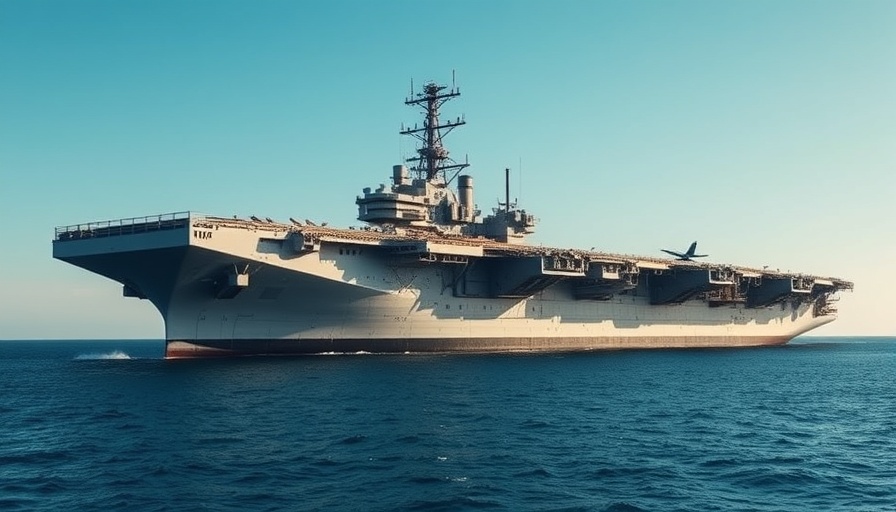
Gerald R. Ford Carrier Strike Group Deployment on calm sea.

A Symbol of Strength: The Gerald R. Ford Carrier Strike Group

On June 24, 2025, the Gerald R. Ford Carrier Strike Group launched into open seas, marking a pivotal moment in naval power and readiness. This deployment is not just another operational move; it signifies the ever-evolving landscape of national security and the role of the United States Navy in safeguarding global peace.

The Importance of Carrier Strike Groups

Carrier strike groups are vital assets in the Navy's arsenal, combining multiple ships and aircraft to project power worldwide. The Gerald R. Ford, with its cutting-edge technology and capabilities, is at the forefront of this strategy. Deployments like this remind us of the commitment to not only defend our nation but to deter any prospective threats with a show of strength.

Community and Camaraderie: Behind the Scenes

Every deployment of a strike group affects far more than just the sailors on board. Families, communities, and support networks rally behind these service members, often holding events designed to boost morale and maintain connections. For instance, local schools often send care packages and messages of support, reminding our sailors that they carry not just their country’s colors but the love of their hometowns with them.

Future Implications: What Lies Ahead?

This deployment opens doors for numerous future missions and objectives. Experts suggest that we will see an increased role of technology in naval operations, with more emphasis on intelligence and drone capabilities. As the geopolitical landscape continues to change, our Navy’s adaptability will be tested like never before.

Staying Informed: Why It Matters

For those who may not be familiar with naval operations, understanding the significance of such deployments is crucial. It prompts discussions on foreign policy, military budgets, and the overall strategy of engaging with international allies. By tracking movements like the Gerald R. Ford's, individuals can better comprehend the nuances of global diplomacy.

Conclusion: Connecting Through Support

As the Gerald R. Ford Carrier Strike Group embarks on its mission, it represents hope and strength for many. By supporting our military families and staying informed about naval operations, we foster a stronger bond within our communities and honor the sacrifices made by service members and their families.

Expert Interview

0 Comments

Write A Comment

*
*
Related Posts All Posts
02.19.2026

U.S. Navy's Innovative Proposal for Accelerating Medium Landing Ship Acquisition

Update Accelerating Naval Innovations: The Push for Medium Landing Ships As military operations evolve, so do the needs of the U.S. Navy. Recently, the Navy issued a request for proposal (RFP) to secure a Vessel Construction Manager (VCM), marking a strategic pivot to expedite the acquisition of new Medium Landing Ships (LSMs). This initiative is part of a larger strategy to enhance logistical capabilities, particularly within the Pacific theater, where island-hopping strategies are paramount for operational success. Harnessing Commercial Practices for Efficient Shipbuilding The intention behind the VCM model is clear: to infuse commercial best practices into naval shipbuilding frameworks. This transition aims to accelerate delivery timelines, instill fiscal responsibility, and broaden the American shipbuilding industrial base. According to Rear Admiral Brian Metcalf, the program’s executive officer for ships, the VCM will oversee construction at both Bollinger Shipyards and Fincantieri Marinette Marine, establishing a streamlined approach to manage the production process across multiple facilities efficiently. Background: Shifting Tides in Naval Strategy This proposal comes in the wake of significant shifts in the Navy's shipbuilding blueprint. Initially tied to the now-cancelled Constellation-class frigate, the new VCM will adopt a 'build-to-print' design derived from proven architectures like the Dutch LST-100. This mature design not only minimizes technical risks but also facilitates quicker rollouts—a critical factor as the Navy adapts to emerging threats and global dynamics. Diverse Perspectives on Shipbuilding Innovations While partnerships with commercial shipyards promise efficiency, there are contrasting opinions on the feasibility and effectiveness of this strategy. Some industry veterans express concerns about potential risks associated with relinquishing certain controls that come with traditional military contract management. However, proponents argue that the VCM model allows for greater flexibility and responsiveness, which is crucial in today’s complex operational landscape. The Future of U.S. Naval Power: What Lies Ahead? With the Navy anticipating the award of the VCM contract mid-year, the future for the deployment of these LSMs looks promising. These ships will empower Marine Littoral Regiments, equipped with advanced weaponry, to undertake operations across expansive maritime territories. This capability is vital as the U.S. prepares to solidify its presence and deter adversarial actions in regions like the Pacific. Why This Matters for Our Community The implications of such military innovations extend beyond the Navy's ranks and impact communities tied to shipbuilding and defense industries directly. Local workers, including shipyard employees and suppliers, can expect an uptick in economic activity and job opportunities as military contracts are awarded. As these initiatives progress, the ripple effects will resonate throughout our economy, reinforcing the importance of strong defense capabilities and sustainable community growth. As the U.S. Navy forges ahead with its new construction strategies, these developments not only promise to enhance maritime operations but also to reinforce the economic backbone of local manufacturing hubs. Staying informed on these advancements can empower citizens to support local initiatives that align with national security and community prosperity.

02.18.2026

Transforming Shipbuilding: HII and Path Robotics Integrate Advanced AI Solutions

Update Innovative Partnership Aims to Transform Shipbuilding In a significant stride towards modernizing shipbuilding, HII, one of the largest military shipbuilders in the nation, has teamed up with Path Robotics to integrate cutting-edge physical AI technology into its operations. This collaboration, highlighted during a ceremonial signing in Columbus, Ohio, promises to not only accelerate shipbuilding processes but also enhance workforce capabilities, making it easier to meet the stringent demands of national defense. The Future of Shipbuilding: A Technology-Driven Approach The integration of Path Robotics' AI-based welding solutions represents a pivotal move for HII. With an objective to increase shipbuilding throughput by 15% in 2026, this partnership hinges on autonomous capabilities that seek to innovate traditional manufacturing processes. As stated by HII’s EVP of Maritime Systems, Eric Chewning, the recent 14% surge in shipbuilding efficiency in 2025 sets a promising precedent, and the collaboration with Path Robotics is expected to push these figures even higher. Enhanced Efficiency Through Autonomous Welding Welding is renowned for being a challenging process to automate, yet Path's innovative AI—named Obsidian—is designed specifically to overcome these challenges. It can adapt to real-world shipyard conditions that are often unpredictable, which is a game changer for the realm of defense manufacturing. Andy Lonsberry, CEO of Path Robotics, emphasizes the significance of this partnership, noting how critical efficiency and adaptability are in the face of national defense needs. Driving Workforce Development in a High-Tech Environment Beyond technological advancements, this partnership also focuses on workforce enhancement. HII and Path Robotics plan to develop training programs aimed at equipping employees with the skills needed to operate and extend automation processes effectively. This not only prepares the current workforce for the seamless integration of AI but also stands to create new job opportunities within the maritime industrial base. Toward a Secure Maritime Future The strategic implications of this collaboration extend beyond mere production numbers; they are firmly rooted in national security objectives. With the pressing need for advanced naval capabilities, the adoption of autonomous systems in shipbuilding is timely and promises to fortify the U.S. maritime defense posture. As the industry evolves, partnerships like that of HII and Path Robotics pave the way for a future where traditional manufacturing meets innovative technology, creating a stronger, more resilient operational framework. This collaboration not only promises to modernize defense manufacturing but also serves as a model for other industries striving to incorporate AI and automation to enhance productivity and efficiency. By fostering these advancements, both HII and Path Robotics are setting a new standard for what is achievable in shipbuilding. To delve deeper into the exciting developments at HII and Path Robotics, keep an eye on future innovations in the maritime sector. As these technologies continue to mature, the landscape of shipbuilding is sure to transform significantly.

02.15.2026

GA-ASI's Milestone Semi-Autonomous CCA Flight: What It Means for Future Warfare

Update GA-ASI's Trailblazing Semi-Autonomous Flight: A New Era for Unmanned Aviation In an important milestone for unmanned aviation, General Atomics Aeronautical Systems Inc. (GA-ASI) has successfully carried out its first semi-autonomous flight with the YFQ-42A Collaborative Combat Aircraft (CCA). This innovative test, conducted on February 12, 2026, marks a significant advancement in mission autonomy technology, showcasing GA-ASI's commitment to innovation and excellence in the defense sector. Smart Integration: Trusting Technology in the Skies Utilizing mission autonomy software from Collins Aerospace, GA-ASI’s YFQ-42A flew its mission autonomously for over four hours. This semi-autonomous capability was enabled through an integration with the Autonomy Government Reference Architecture (A-GRA), allowing seamless communication between the aircraft and ground control. A human autonomy operator on the ground transmitted commands to the aircraft, which executed them with remarkable precision. Such advancements in autonomy not only signify operational flexibility but set the bar high for future unmanned missions. Collaboration as a Catalyst for Success This achievement underlines the importance of collaboration within the tech and defense sectors. According to David Alexander, president of GA-ASI, the partnership with Collins Aerospace is a cornerstone of their success. Both companies are united in their vision to enhance the capabilities of unmanned aircraft through cutting-edge technologies. Ryan Bunge, vice president at Collins Aerospace, echoed this sentiment, emphasizing the power of their Joint efforts to deliver autonomous solutions suited to complex military requirements. The Faces Behind the Innovations General Atomics has been a pioneer in unmanned aircraft systems for nearly two decades, but it is the people behind the scenes who truly bring these innovations to life. With a commitment to reinvest over 35% of annual revenue into research and development, the company strives to stay at the forefront of technological advancements. Their history of achievements—dating back to the MQ-20 Avenger—has created a robust knowledge base for the development of the YFQ-42A. A Glimpse into the Future of Autonomous Combat As the military landscape rapidly evolves, the introduction of semi-autonomous CCAs represents a shift towards more sophisticated and flexible combat operations. The Air Force aims to produce over 1,000 CCAs, harnessing the combination of stealth and advanced AI technology in aerial engagements. This could revolutionize the way military operations are conducted in combat scenarios, further enhancing operational success. The Importance of Continuous Innovation The continuous development of the YFQ-42A reflects a broader trend in defense technology where rapid production meets the urgent need for advanced weaponry. GA-ASI’s efforts to produce over 1,000 CCAs not only symbolizes military preparedness but illustrates the company’s dedication to building capabilities ahead of requirements. Such foresight ensures that military forces have the tools they need to remain effective in an unpredictable world. For those interested in innovations that drive our communities forward, the developments at GA-ASI are a testament to the courage and creativity of the people who are pushing the boundaries of technology. Stay informed about upcoming events in tech and defense and understand how these advancements can impact everyday life.

Terms of Service

Privacy Policy

Core Modal Title

Sorry, no results found

You Might Find These Articles Interesting

T
Please Check Your Email
We Will Be Following Up Shortly
*
*
*