

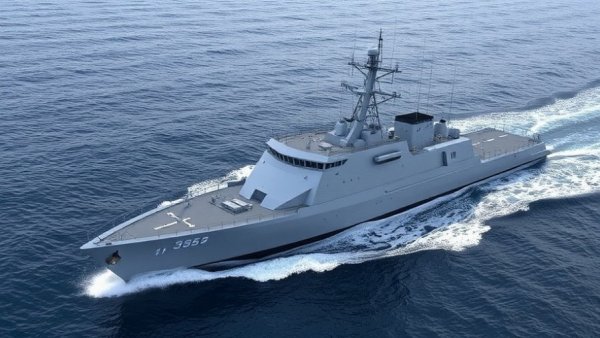
Germany Supercharges Naval Defense with New MEKO A-200 Frigates
In a significant move to bolster its naval defense capabilities, Thyssenkrupp Marine Systems (TKMS) has entered into an agreement with Germany’s Federal Office of Bundeswehr Equipment, Information Technology and In-Service Support (BAAINBw) to construct four additional MEKO A-200 frigates. This development comes after the Bundestag’s Budget Committee approved the procurement in October, helping to streamline Germany's military assets in response to evolving global threats.
Leveraging Existing Infrastructure
TKMS CEO Oliver Burkhard emphasizes the importance of this contract for long-term series production. With production already in motion for the initial batch of four frigates ordered in July, TKMS aims to utilize established manufacturing processes and supplier networks that are in place. Burkhard noted, “This allows us to make full use of existing capacities and help ensure that the German Navy receives the urgently needed capabilities as quickly as possible.” This thoughtful planning not only speaks to efficiency but also signifies a commitment to providing modern, well-equipped vessels to the German Navy.
Shifting Strategy in Naval Procurement
The contract for the MEKO A-200 frigates arrives after Germany's cancellation of its flagship F126 frigate program last June, which was plagued by delays and cost overruns. The German Ministry of Defence opted to pivot its procurement approach, choosing the MEKO A-200 vessels as a more straightforward solution to address immediate naval needs. With the initial two ships already under construction, the military anticipates that the first vessel will be ready by the end of 2029, with subsequent hulls to follow quickly. This shift underscores the urgency and necessity for updated maritime defense capabilities in light of current geopolitical tensions.
Multi-Domain Versatility of MEKO A-200 Frigates
The MEKO A-200 frigates are designed for multi-domain operations, boasting capabilities that cover air, surface, subsurface, and electronic warfare. This versatility equips them for a broad range of missions, from special forces operations to search and rescue efforts. Their adaptability establishes a new benchmark for naval operations, allowing for proactive responses to diverse maritime challenges.
Collaboration with the Maritime Sector
TKMS is committed to retaining its collaboration with established industrial partners, highlighting companies like the Heinrich Rönner Group. This collaboration ensures that the production of the MEKO A-200 frigates provides substantial participation and opportunities within Germany’s maritime sector. Such alliances not only foster economic benefit but also enhance the technological advancements necessary for future shipbuilding.
Looking Ahead: Implications for the German Navy
The addition of the MEKO A-200 frigates represents more than just an expansion of the fleet; it signifies Germany’s strategic intent to modernize its naval forces. As global threats evolve, having a capable and flexible navy is paramount. Moreover, as TKMS transitions to a family of multi-role ships, the implications for operational readiness and defense agreements across Europe cannot be overstated.
The construction of these frigates positions Germany to play a vital role in ongoing security collaborations and can influence maritime stability in Europe. As conditions change on the international stage, the demand for around-the-clock oceanic defense capabilities becomes ever more critical.
Conclusion: A Stronger Navy for a Secure Future
Germany’s decision to procure additional MEKO A-200 frigates not only helps to replenish its naval capabilities but also reflects a broader strategy to adapt to rising security challenges. As production ramps up in the coming years, the country is taking proactive steps toward a highly capable maritime future. To stay informed and prepared, it’s crucial to keep an eye on these developments as they unfold. Understanding the complexities and impacts of such decisions is vital to grasping the state of global naval strategies.



Write A Comment