

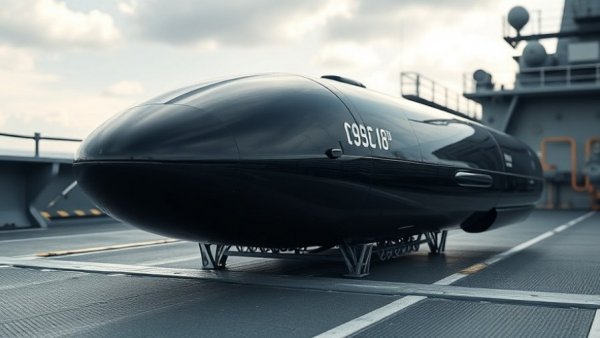
US Navy Expands Order for Lionfish SUUVs: A Step Forward in Undersea Warfare
In a noteworthy move, HII has secured a significant contract with the US Navy to produce 82 additional Lionfish small uncrewed undersea vehicles (SUUVs), culminating in a total of 175 units ordered. This development aligns with the Navy's long-term strategy to enhance its autonomous systems for undersea operations. The Lionfish is based on HII’s successful REMUS 300 platform, initially established through a rapid prototyping initiative involving the Navy and the Defense Innovation Unit (DIU).
Significance of the Lionfish SUUV
The Lionfish has become a center of attention due to its versatility in multi-mission scenarios, which include mine countermeasures, intelligence, surveillance and reconnaissance, anti-submarine warfare, and electronic warfare. This reflects the Navy’s dedication to deploying advanced technology at scale, enhancing operational efficiency while reducing human risk. The modular design and open-architecture of the Lionfish allow for ongoing upgrades, ensuring the vehicle can continuously evolve alongside technological advancements and operational needs.
Milestones in Technology Transition
HII’s partnership with the Navy has marked a successful transition from the prototype phase to full-scale production, demonstrating the vehicle’s reliability and operational effectiveness. As of October 2026, the Navy had received 50 Lionfish units, with more to follow under the current contract. HII has begun its production-scale expansion in Pocasset, Massachusetts, to meet the rising demand for such uncrewed systems.
Future Predictions: The Road Ahead for Undersea Vehicles
Looking ahead, the potential value of the five-year program for the Lionfish could exceed an astonishing $347 million, with options that could elevate total orders to 200 units. This indicates a strong commitment from the Navy toward adapting autonomous underwater technology while also highlighting the importance of cyber-compliance in military operations.
Broader Implications for Defense and Global Markets
The delivery of more than 750 REMUS vehicles worldwide, with 14 nations amongst NATO allies using HII's uncrewed systems, illustrates the global demand for advanced underwater capabilities. Additionally, the emphasis on integrating new technology and payloads into these vehicles reflects an ongoing shift within militaries towards more adaptable and resilient defense strategies.
The Local Impact: Mississippi’s Role in Advanced Defense
In Mississippi, the significance of initiatives like HII’s Lionfish SUUVs cannot be overstated. The state's connection to naval shipbuilding and defense contracting positions it as a crucial player in the future of military technology. As local investments in education and workforce development continue, Mississippi can expect to see job growth in advanced manufacturing, particularly in sectors that support sophisticated programs like the Lionfish.
Conclusion: Unveiling New Opportunities
As advancements in unmanned systems like the Lionfish SUUV unfold, they present new opportunities for the workforce and the economy. The Navy's focus on enhancing these capabilities not only signifies a commitment to national defense but also cultivates growth in the tech sector, impacting local communities positively.
Stay informed about the evolution of defense technologies and their implications for industries in Mississippi. The advancements in the Lionfish SUUV project herald a transformative period for undersea warfare—and perhaps an exciting future for local job markets.



Write A Comment