

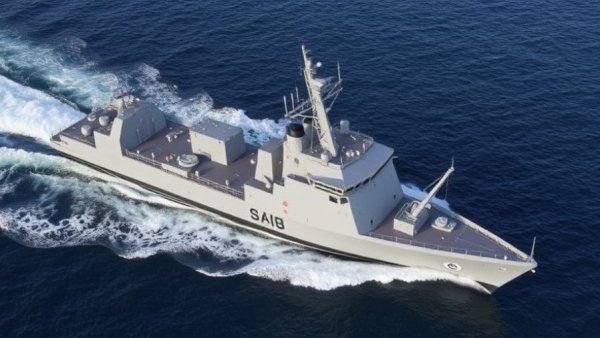
Sweden's Naval Ambitions: A New Era of Defense
On November 6, 2026, Saab made headlines by signing a critical contract with the French defense company Naval Group to equip Sweden's FDI frigates, marking a pivotal moment for both Swedish naval capabilities and European defense collaboration.
A Robust Investment in Maritime Security
With an estimated order value of around SEK 2 billion (approximately USD 203.4 million), this agreement represents a substantial investment in Sweden's military capabilities. Saab's contribution will significantly enhance the Swedish Navy's ability to monitor and respond to threats both above and below the water surface.
Mats Wicksell, head of Saab's Naval business area, expressed pride in equipping Swedish ships with advanced technology. “This demonstrates that Saab not only provides capabilities with high relevance to our home market but also achieves this through partnerships,” he noted. With state-of-the-art weapons control systems and sensors, the contract spans deliveries from 2027 to 2034, ensuring that Sweden is equipped for contemporary and emerging maritime threats.
Integration of Cutting-Edge Technology
The order includes innovative weapon systems such as the Fire Control Director Ceros, the advanced EOS 500, anti-ship missile RBS15, and the lightweight multi-mission surveillance radar Sea Giraffe 1X, among others. These systems will empower the Swedish Navy with integrated capabilities to effectively counter asymmetric threats.
The recent formal procurement contract, signed on August 31, 2026, solidifies Sweden's commitment to enhancing its naval defense posture, especially in the strategically sensitive Baltic Sea region. The acquisition of four advanced Defense and Intervention Frigates (FDI) valued at €4.3 billion indicates a shift toward bolstering collective security efforts among European nations.
Strengthening Regional Defense Collaborations
This contract not only strengthens Sweden's naval capabilities but also exemplifies deepening industrial partnerships between France and Sweden. The Royal Swedish Navy will benefit from advanced multirole combatants, bolstering vital NATO reinforcement lines in the region.
With the evolving geopolitical landscape, it’s clear that both countries recognize the necessity for strong defense infrastructures. The delivery schedule is ambitious, with the first-in-class FDI, named Luleå, slated for serial deliveries beginning in 2030 and continuing through 2034.
Implications for the Future of Baltic Defense
The implications of this deal extend beyond mere numbers; they signal a renewed commitment to joint operations in challenging maritime environments. The frigates are designed to enhance Sweden’s naval air defense and anti-submarine warfare capabilities, critical components for addressing regional security challenges.
As nations collaborate to ensure maritime security, this agreement will support a more unified response to potential threats within the Baltic region. Swedish ships will soon be equipped with cutting-edge technology, enhancing their ability to operate within complex operational frameworks alongside NATO allies.
Conclusion: A Strategic Step Forward
This landmark order signifies a major strategic step for Sweden and reinforces the importance of innovative defense partnerships within Europe. By investing in advanced technology and collaborative endeavors, Sweden prepares not only to address present threats but also to adapt to future challenges.
As this narrative unfolds, it promises to reshape naval operations in the region, ensuring that the Swedish Navy stands robustly ready to face whatever may come in the years ahead.




Write A Comment