

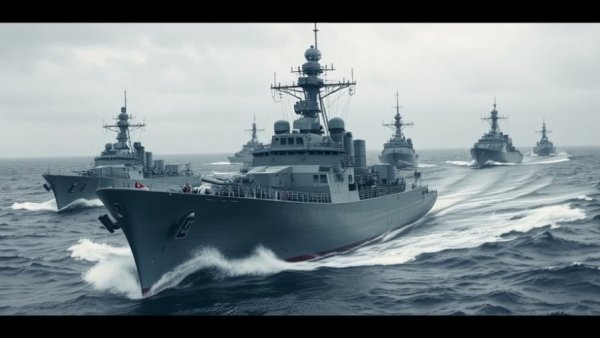
The Growing Threat: China's Naval Expansion Near Japan
Since November 2025, in the aftermath of a political friction ignited by Japanese Prime Minister Sanae Takaichi's remarks, China has significantly increased its naval presence near Japan. Military experts suggest that this maneuver is not only a show of force but also a calculated response to Japan’s stance regarding Taiwan. The normalization of Chinese naval activities has raised alarms among regional powers, with over 100 military-linked vessels tracked around Taiwan in a demonstration of capability.
A Message to Japan: Understanding China's Strategy
China's assertiveness in maritime operations signals its intent to assert dominance in the region. Takaichi's statements regarding a possible blockade or military action surrounding Taiwan as a "survival-threatening situation" have been interpreted by analysts as a trigger for China's heightened military activities. According to Stephen Nagy from the Japan Institute for International Affairs, there exists a direct correlation between Japan's political commentary and the intensity of China's naval deployments. This means Japan’s stance on Taiwan could further dictate regional maritime dynamics.
Conducting Operations: Unpacking Chinese Naval Maneuvers
Since Takaichi’s remarks, Chinese naval movements have escalated dramatically. Live-fire drills, uncrewed drone missions, and aircraft carrier deployments around the southernmost islands of Japan mark a strategic shift aimed at establishing a long-term military presence. Katsuya Yamamoto, a spokesperson from the Sasakawa Peace Foundation, asserts that this strategy is about creating an environment where Chinese naval presence is normalized, fundamentally changing operational norms in the first island chain, which includes Japan, Taiwan, and the Philippines.
Collective Defense: The Role of Allies
The United States and its allies are keeping a close watch on these developments. During 2025, U.S. think tanks noted significant changes in the operational frequency of the People's Liberation Army (PLA) near Japanese waters, with heightened naval activity particularly noticeable around the disputed Senkaku Islands. The continuous joint military exercises conducted alongside Russia can be viewed as an attempt to strengthen military ties and project power in the Sea of Japan.
Global Implications: What This Means for Regional Stability
This evolving military posture raises questions about the future balance of power in East Asia. Should China continue to boost its naval presence, it could lead to increased tensions not just between Japan and China but also among other regional stakeholders, including the United States and Taiwan. The implications extend beyond mere military logistics into geopolitical rivalries impacting broader defense strategies.
Future Trends: Monitoring Developments in Maritime Activity
As we look ahead, it will be essential for defense analysts and policymakers to monitor these naval developments closely. Understanding the motivations behind China’s maritime strategies will be crucial in predicting how the geopolitical landscape may evolve. Increased naval presence may not only symbolize strength but also foreshadow conflicts that could impact global maritime security.
In conclusion, the normalization of China’s naval deployments near Japan is a significant geopolitical development that requires urgent attention. It presents not only challenges but also opportunities for dialogue and potential resolution, reflecting the broader complexities of international relations in a rapidly changing world.

Write A Comment