

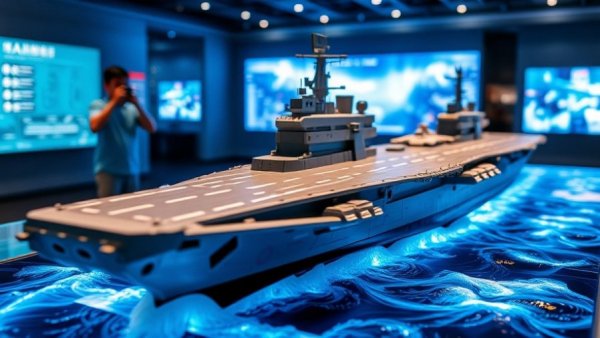
The Rise of China’s Naval Power: A New Era with the Type 004
As China nears the completion of its fourth aircraft carrier, the Type 004, the landscape of global military naval power is set to undergo a significant shift. This colossal vessel not only surpasses its predecessors in size but also introduces nuclear capabilities, enabling faster plane launches during conflicts. Analysts suggest that this advancement is poised to intensify tensions with nations like Japan and the United States, who remain vigilant of China's growing military prowess.
Why the Type 004 Matters
Currently under construction in Dalian, the Type 004 is expected to accommodate between 75 and 90 aircraft, marking a substantial increase in capacity compared to China's earlier carriers, which could typically carry around 50. Measuring approximately 322 meters in length and 46 meters in width, this so-called “supercarrier” represents yet another leap in China's naval capabilities and ambitions.
Nuclear Power: The Game Changer
One of the most striking features of the Type 004 is its nuclear propulsion. This technology affords the ship a level of endurance and operational range not previously available to China’s conventional carriers. By eliminating the need for power generators, nuclear power significantly increases launch efficiency and decreases necessary onboard resources, facilitating rapid combat turnarounds. Experts like David Silbey from Cornell University emphasize that such capabilities could lead to unrestricted global deployment, contrasting sharply with conventional carriers reliant on tanker support.
Strategic Implications and Future Predictions
According to Collin Koh from Nanyang Technological University, the strategic implications of the Type 004 stretch beyond mere military capabilities. Its expected operational deployment appears to signal a growing ambition from China to assert itself on a global scale. With nuclear-powered vessels like this at their disposal, the Chinese Navy is not just looking to patrol its coastlines but to engage globally, significantly escalating the nature of any potential conflicts.
Comparative Analysis: Type 004 vs. U.S. Carriers
When compared with U.S. Navy carriers, notably the Nimitz and Ford classes, the Type 004 stands as a formidable adversary even with a smaller fleet. While the U.S. maintains 11 nuclear-powered carriers, the Type 004 enhances China's naval striking power and reshapes the balance of maritime forces. The capacity to match the number of aircraft one can carry signifies a transformational change in the region's defense dynamics.
Public Reaction and International Response
The unveiling of the Type 004 is bound to evoke strong reactions from neighboring countries and military analysts worldwide. China’s burgeoning naval capabilities have already acted as a catalyst for enhanced defense measures among its neighbors, particularly in Japan and within the U.S.-led alliances in East Asia. Strategic partnerships and military readiness are expected to intensify as nations reassess their defense postures in response to China’s advancements.
Conclusion: A Call for Awareness and Strategy
As China's Type 004 aircraft carrier progresses towards completion, it represents not just a leap in military technology but signals deeper geopolitical shifts. Observers and policymakers must engage with these changes, contemplating their implications for regional security and the global balance of power. Understanding and addressing these dynamics is crucial for fostering a stable and secure international environment.

Write A Comment