

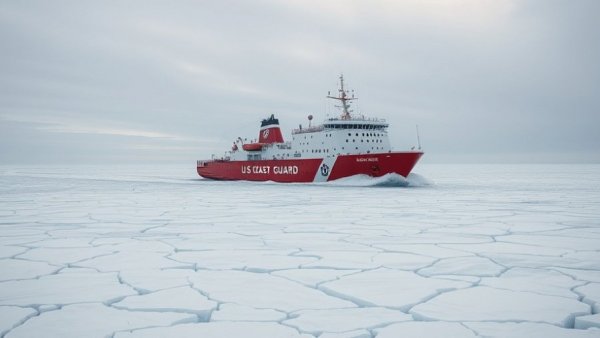
Charting New Waters: The Role of the US Coast Guard in the Arctic
The Arctic region is witnessing unprecedented changes due to climate change, opening up shipping routes and creating new geopolitical concerns. The U.S. Coast Guard's recent maiden voyage of the Cutter Storis is not just a milestone for naval operations but also a crucial move in the evolving dynamics of Arctic exploration. The Coast Guard's enhanced capabilities, demonstrated through advanced operations and technology integration, mark a pivotal shift in America's strategic approach to this increasingly competitive space.
An Icebreaker Revolution: Technology Meets Tradition
The Storis, commissioned in August 2025, is the first of its kind for the Coast Guard in nearly thirty years. Equipped with modern icebreaking technology, the ship performed military operations in the Arctic that had not occurred in decades. Captain Corey Kerns emphasized that the ship's design allows for innovative military operations, such as live-fire gunnery and law enforcement, underscoring the Coast Guard's commitment to ensuring safety and sovereignty in these remote waters.
The Integration of Aerial Drones: A Game Changer for Ice Navigation
During its 133-day deployment, the Storis tested various aerial drones, showcasing their potential in ice navigation and operational efficiency. According to Captain Kerns, these drones provide a significant advantage by enhancing visibility and situational awareness.
"The drones saw farther and allowed us to maintain our position better in the ice," he stated. This innovative approach not only improves navigation but also streamlines operations, demonstrating a forward-thinking strategy that will define the Coast Guard's future missions in challenging environments.
Logistics and Resourcefulness: Expanding Capabilities in the Arctic
The journey also revealed unique logistics capabilities of the Storis that could redefine Coast Guard missions. The ship's design, intended for oil rig support, includes sophisticated expeditionary logistics capabilities that enable it to perform refueling operations for U.S. Navy vessels in the Arctic. This interoperability between the Coast Guard and Navy is essential as the region becomes a focal point of military readiness and deterrence.
The Bigger Picture: Geopolitical Implications of Arctic Operations
As countries eye the Arctic for strategic advantages, the United States is ramping up its military presence in anticipation of larger geopolitical issues. The successful operations of the Storis not only signal military readiness but also highlight the need for international collaboration to address shared challenges in the region. Experts suggest that ongoing developments in the Arctic may permanently alter shipping routes and raise environmental concerns, necessitating a comprehensive response from all stakeholders.
Conclusions: Why the Arctic Matters Now More than Ever
The U.S. Coast Guard's recent operational advancements, anchored by the deployment of the Storis, pave the way for a new era of Arctic engagement. As climate change continues to reshape the landscape, the integration of technological innovations like drones and robust logistical capabilities ensures that the Coast Guard remains equipped to navigate both the ice and the geopolitical complexities of the region. Understanding these developments is crucial, as they not only relate to U.S. national security but to global environmental stewardship and international cooperation.

Write A Comment