

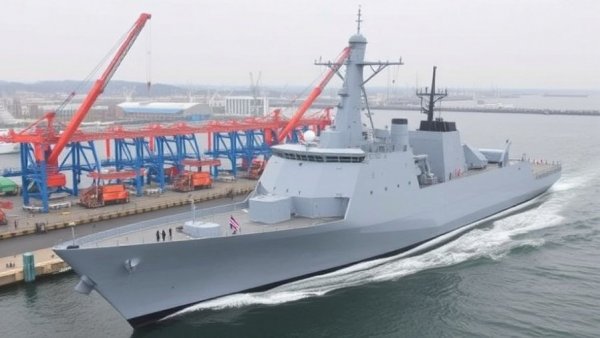
The Launch of ROKS Pyeongtaek: A New Era for South Korean Naval Power
On November 18, **Hanwha Ocean** proudly launched the **ROKS Pyeongtaek (FFG-833)**, the fifth frigate in the country's **FFX Batch-III** program, marking a significant milestone in the modernization of South Korea's naval capabilities. The ship, built at the Okpo shipyard in Geoje, showcases enhanced electronic warfare and cybersecurity systems that are crucial for modern maritime operations.
Upgrades and Innovations: What Makes ROKS Pyeongtaek Stand Out?
The **ROKS Pyeongtaek** is 129 meters long, 14.8 meters wide, and weighs **3,600 tons**, presenting a formidable presence at sea. It replaces older frigates and patrol corvettes, reflecting the Navy's commitment to maintaining a robust defense fleet. One of the standout features of this class of frigate is the **Korean Vertical Launching System (KVLS)**, allowing for multiple weaponry configurations, including a 5-inch naval gun and advanced missile systems.
Notably, the ship's combat management system acts as its 'brain,' integrating various defense technologies designed and manufactured in South Korea. Among the crucial technologies aboard is the **multifunction phased-array radar (MFR)** capable of tracking and engaging multiple air targets simultaneously, significantly enhancing combat effectiveness. Furthermore, the Integrated Sensor Mast (ISM) boasts a stealth design that conceals vital systems, contributing to the frigate's advanced capabilities.
A Tradition Revived: The Significance of the Name Pyeongtaek
In keeping with naval tradition, South Korea honors its cities and provinces by naming its ships after them. **Pyeongtaek**, home to the Second Fleet Command and previously associated with a salvage ship decommissioned in 2016, symbolizes continuity and respect for maritime heritage. It’s not just a name; it encapsulates a relationship with the region and its history, ensuring that the legacy of naval efforts remains strong.
Celebrating the Launch: A Ceremony of Hope and Unity
The launch ceremony was attended by notable figures, including **Minister of National Defense Kang Shin-chul**, who emphasized the importance of this new addition to the Navy's fleet. Surrounded by representatives from the Navy and the Defense Acquisition Program Administration (DAPA), a collective spirit of celebration characterized the event. A symbolic moment came when **Lee Hye-kyung**, wife of the defense minister, cut the launch line, akin to giving life to a newborn.
Looking Ahead: Future of South Korean Naval Strength
This launch is not merely a new ship; it’s a step towards enhancing South Korea’s defense against evolving threats. As global maritime dynamics shift, the ability to fend off potential aggressors while maintaining peace becomes more critical. The **FFX Batch-III program** plans to integrate additional ships with improved capabilities, making the ROK Navy a significant player in international waters.
Innovation in Shipbuilding: A Collaborative Future
As we celebrate the launch of ROKS Pyeongtaek, the commitment from companies like **Hanwha Ocean** showcases the collaboration between military needs and domestic manufacturing. South Korea’s defense industry continues to grow, providing innovative solutions that not only meet the Navy’s requirements but also bolster economic development through job creation and technological advancement.
Conclusion: Embracing Change on the Waves
The launch of the **ROKS Pyeongtaek** encapsulates a wave of change in South Korea’s naval sector. Improved technology and a deeper respect for naval tradition repeat the narrative of growth and resilience, ensuring the country can defend its interests. As we observe these advancements, it raises exciting questions: What future enhancements lie ahead for the ROK Navy? How will they continue to adapt and innovate in an unpredictable maritime landscape?


Write A Comment