

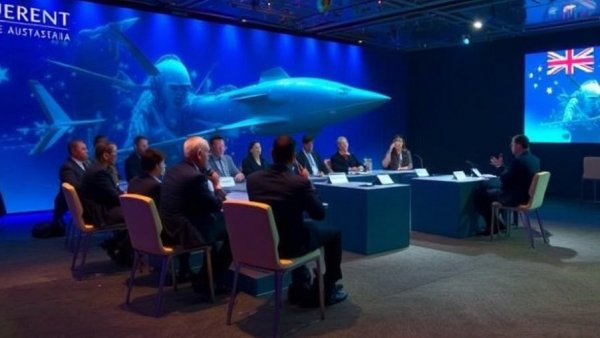
Understanding the Undersea Domain
The inaugural UDT Australia conference, set for December 2026, promises to be a pivotal moment in discussing Australia’s strategic approach to undersea warfare. With the growing importance of the underwater domain in both national and regional security, Rear Admiral Steven Tiffen highlights the necessity for dedicated discussions that extend beyond traditional submarine narratives. The undersea arena, which encompasses submarines, seabed infrastructure, autonomous systems, and communication technologies, is crucial for Australia’s defense infrastructure. It opens the door to endless strategic possibilities, underscoring why such a focus is not merely beneficial but essential.
A New Era for Australian Defense Policy
With reports pointing to an ongoing contest in the Indo-Pacific, nations around Australia are enhancing their underwater capabilities at an unprecedented pace. The need for Australia to prioritize its undersea capabilities is reflected in its National Defence Strategy – a comprehensive plan that outlines the country’s defense priorities up to and beyond 2026. As part of this framework, UDT Australia aims to encourage collaboration across different sectors, fostering partnerships between the government, industry, and defense communities. The collaboration extends to universities and research institutions, which are essential in developing innovative solutions and improving workforce readiness for the challenges ahead.
The Indo-Pacific's Undersea Contest
The strategic importance of the Indo-Pacific region has put a spotlight on undersea security. As Rear Adm Tiffen elaborates, the emergence of numerous regional navies developing their submarine programs, coupled with threats like naval mine warfare, means that Australia must consider the profound implications of the underwater domain. Understanding and operating effectively below the waves is not simply about military strength; it is integral to maintaining regional stability. The waterways around Australia are vital trade routes, and any instability can have immediate repercussions for the economy and the security of trade relationships. Hence, the UDT Australia conference is not only timely but necessary for affirming Australia’s strategic interests.
Broader Conversations Beyond Submarines
The agenda of UDT Australia is not limited to submarines but also embraces innovative technologies and strategies across the underwater spectrum. By broadening the discussion, the conference seeks to engage various stakeholders in addressing a range of relevant topics from autonomous underwater vehicles to the protection of seabed critical infrastructure. This expansive approach helps ensure that all potential vulnerabilities are accounted for, allowing Australia to anticipate risks in the undersea landscape that were previously overlooked. Additionally, by incorporating perspectives from international partners, the conference can foster a more comprehensive understanding of collaborative security measures.
Collaborative Efforts for Undersea Readiness
Rear Adm Tiffen is optimistic about the potential outcomes of UDT Australia. He asserts that with the right policies, funding, and urgency, the conference can catalyze a sustained national effort toward enhancing Australia’s undersea capabilities. This could mean investing in education and workforce training to foster the next generation of defense professionals skilled in the complexities of underwater warfare. By engaging schools and educational institutions in these discussions early, Australia can build a workforce ready to tackle emerging challenges in the undersea domain. Moreover, these efforts can inspire youth to consider careers in defense and technology, reinforcing a pipeline of talent crucial for national security.
Conclusion: The Urgent Need for Focus
The upcoming UDT Australia conference stands to be a transformative event for the nation’s defense strategies. With a focus on the undersea domain, it could unlock new pathways for collaboration and innovation, paving the way for significant advancements in Australia’s military capabilities. As Australia faces an intricate web of challenges and opportunities, the conference is a crucial step toward establishing a comprehensive and cohesive approach to undersea defense. Participants will include not only military leaders and policymakers but also academics and industry experts, each contributing valuable insights that can shape the country's future.
As the date approaches, participants from various sectors must engage deeply with the discussions to ensure that Australia’s undersea capabilities meet the future challenges it will inevitably face. Recognition of the undersea domain’s strategic importance is not just a tactical concern—it is a critical issue for national security that requires immediate attention and action. Continued dialogue and action following the conference can help solidify Australia’s position as a key player in the Indo-Pacific security landscape.

Write A Comment