

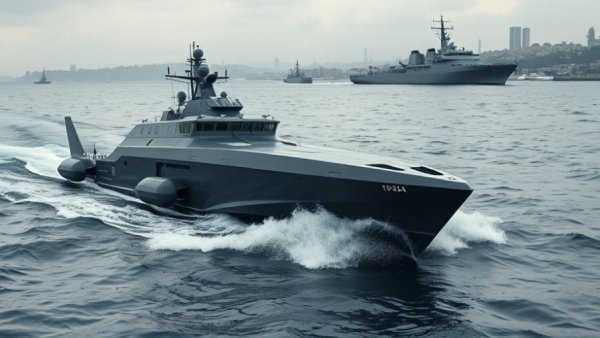
The Dawn of a New Era in Naval Operations
The Royal Navy has taken a significant stride towards modern military capabilities with the launch of its first autonomous squadron, officially commissioned on November 5 at His Majesty’s Naval Base Portsmouth. This historic event saw the unveiling of the 1st Autonomous Squadron, which will command a fleet of uncrewed surface vessels (USVs), including the Kraken and Rattler. These developments mark a landmark shift for the Royal Navy as it transitions into a more hybrid operational model that embraces uncrewed technology.
Investment in Hybrid Navy: A Strategic Move
The establishment of the autonomous squadron is not simply a show of technological prowess; it represents a £1.5 billion investment aimed at strengthening the Royal Navy's operational capabilities. Fleet Commander Vice Admiral Steve Moorhouse emphasized, "The seas are becoming more contested and dangerous. A hybrid navy offers our people better tools to ensure they can protect our shores effectively." This dual structure, combining traditional manned vessels with uncrewed systems, aims to enhance the navy's striking power and adaptability to new threats.
The Importance of Technological Innovation
Amidst rising global tensions and evolving threats, the rapid development of military technologies has never been more critical. Defence Secretary Wes Streeting highlighted that "a major determinant of military power now is who can innovate fastest." By harnessing autonomous systems, the Royal Navy aims to stay ahead in the technological arms race that characterizes modern warfare.
Building Skills and Confidence
Commander Helen Coxon, the leader of the newly commissioned squadron, remarked on the importance of directly integrating these technologies into frontline operations. "Today marks the start of something new for the Royal Navy. Our job now is to put these vessels to work, collaborating closely with our allies." This push to develop uncrewed systems not only benefits operational efficiency but also ensures that personnel gain the necessary skills to use them effectively.
Operational Insights and Future Predictions
As the squadron prepares for its inaugural missions, the implications of their operations extend beyond mere technological advances. Operating alongside traditional ships, the uncrewed vessels will provide a significant tactical advantage, allowing for more extensive surveillance and operation without risking personnel. According to Admiral Moorhouse, the strategy will ensure the fleet is more difficult to target and quicker to respond to maritime challenges.
The Hybrid Navy and Collective Security
The commissioning of the 1st Autonomous Squadron also comes at a strategically significant time as military and political leaders gather in Oslo for discussions on Euro-Atlantic security. This meeting will address the growing emphasis on shared defence strategies among NATO allies. As uncrewed technologies redefine naval warfare, having a robust hybrid navy will be crucial for collective security and readiness against potential threats.
Revolutionizing naval operations through the integration of autonomous vessels exemplifies a broader trend in military innovation where the focus is on maintaining an edge against adversaries. The Royal Navy's commitment to technological adaptation speaks volumes about the future trajectory of military operations worldwide. As we look ahead, this pioneering squadron will set the stage for new operational paradigms as the navy continues to evolve.

Write A Comment