

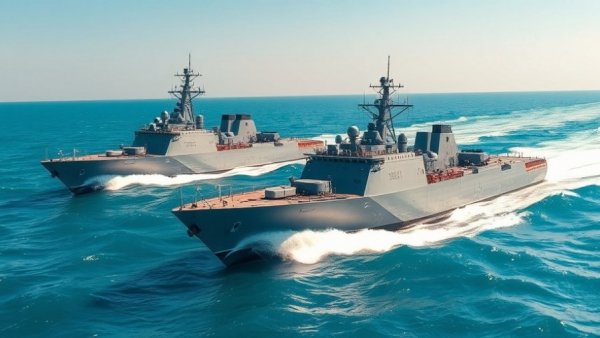
Turkey and Egypt's Joint Naval Ambitions
Turkey and Egypt recently ignited interest in collaborative military capabilities, particularly in naval shipbuilding, during the Sea of Friendship 2026 exercise held in Alexandria. This venture marks a pivotal evolution in their military relationship, influenced by regional dynamics in the Eastern Mediterranean.
Building Stronger Naval Ties
Adm. Ercüment Tatlıoğlu, the Turkish naval commander, indicated significant progress towards enhancing regional cooperation by announcing plans for joint shipbuilding initiatives with Egypt. During the recent naval exercises, previous rivalries gave way to partnership discussions, showcasing both nations' intent to collaborate closely in defense.
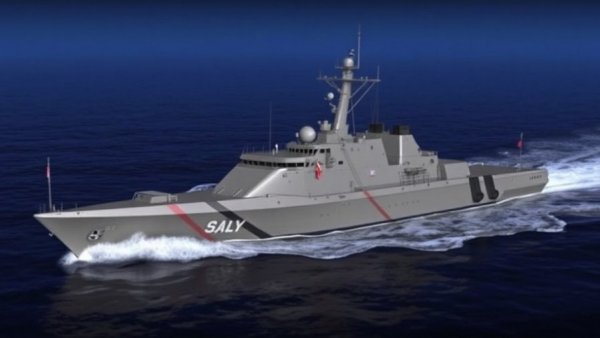
The discussions centered around leveraging Egypt’s shipbuilding capacity in conjunction with Turkey’s burgeoning naval technology, particularly the successes seen from the MILGEM Project. This initiative, which has previously seen Turkey build advanced naval platforms like the Ada-class corvettes and frigates, could set a new standard for defense collaboration in the region.
Navigating Challenging Seas
This month’s naval exercise was characterized as well-organized, despite difficult sea conditions—a testament to the respective navies' resilience and adaptability. The ability to conduct joint training and operations, such as ship boarding drills, hints at a future where these naval forces might work in unison, reflecting a shift in regional defense posture.
Vice Adm. Mahmoud Adel Fawzy from Egypt echoed this sentiment, emphasizing their preparedness to operate shoulder to shoulder in future missions. Such ambitions represent not merely military cooperation but a strategic redefining of maritime assertions in a geopolitically fraught area.
Strategic Implications of the Turkey-Libya Maritime Agreement
Compounding these developments is the recent ratification of a Turkey-Libya maritime jurisdiction agreement by Libya’s House of Representatives. This agreement, originally established in 2019, significantly impacts the geopolitical landscape, granting Turkey protections for its maritime jurisdiction while enabling Libya to assert its own rights in the Eastern Mediterranean.
This has drawn criticism from Greece, which believes the agreement undermines its maritime claims, particularly due to its perceived encroachment on waters claimed by Greek islands. Thus, while Turkey seeks to bolster its influence through partnerships with Egypt and Libya, such moves invite challenges from other regional players.
Future of Defense Collaboration in the Eastern Mediterranean
The alliance between Turkey and Egypt in naval shipbuilding is indicative of a broader trend towards increased military cooperation driven by mutual interests. Nations are recognizing that shared security in contested regions can enhance regional stability. As navies evolve to integrate cutting-edge technologies, such as autonomous systems highlighted during their recent exercises, the future of defense collaboration is ripe with potential.
Both Turkey and Egypt stand to gain significantly should they realize the proposed joint shipbuilding projects, opening pathways for shared resources, knowledge transfer, and potentially stronger positions in the face of geopolitical adversities. As these collaborative discussions unfold, regional dynamics will likely continue to shift, requiring close attention from global powers.
Concluding Thoughts
Turkey and Egypt's exploration of joint naval projects is not just a military strategy; it represents an essential step towards diplomacy in the highly geopolitically charged Eastern Mediterranean. Understanding the implications of such partnerships will help observers gauge the balance of power and the nature of international relations in this critical region.


Write A Comment